REVIEW · DUBROVNIK
Dubrovnik Old Town History Walking Tour
Book on Viator →Operated by Dubrovnik Walking Tours · Bookable on Viator
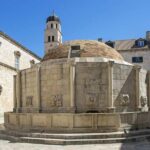
Dubrovnik feels overwhelming at first. This 90-minute walk strings together the key sights and the stories that explain why the city looks like it does today, starting at Large Onofrio’s Fountain. I love that it kicks off with the big picture right away, including how this area ties into Ragusa’s rise and the water system linked to the fountain.
I also love the way the tour connects medieval Dubrovnik to later chapters, including the troubles of the 1990s and how the city rebuilt after them. You’ll hear local-style storytelling from guides such as Ermina and Ivana, who make the history feel personal instead of like a list. One heads-up: Dubrovnik Old Town involves lots of stairs and crowded lanes, so if mobility is tough, you’ll want to plan carefully.
In This Review
- Key takeaways before you go
- Entering Dubrovnik’s story from Onofrio’s Fountain
- How the first stops explain Ragusa’s rise
- Franciscan Church and Monastery: where everyday faith met big learning
- Stradun (Placa): the promenade that ran the show
- Orthodox, Jewish, and Muslim influences along the way
- Gundulic Square market stop: the local flavor break
- Rector’s Palace: power, administration, and fear all in one building
- Cathedral of the Assumption: the Richard the Lionheart legend
- City Harbor: quarantine, fortresses, and the working edge of the Old Town
- Orlando Column and Luza Square: the final concentration of monuments
- Pace, group size, and practical comfort
- Price and value: what you’re really paying for
- Who this tour suits best
- Should you book this Dubrovnik Old Town history walking tour?
- FAQ
- How long is the Dubrovnik Old Town History Walking Tour?
- Where is the meeting point?
- What is the tour route like, and where does it end?
- Is the tour in English?
- What’s included in the price?
- What is not included?
- How big are the groups?
- Are the attractions you stop at included?
- What if weather is bad?
- Are service animals allowed?
Key takeaways before you go
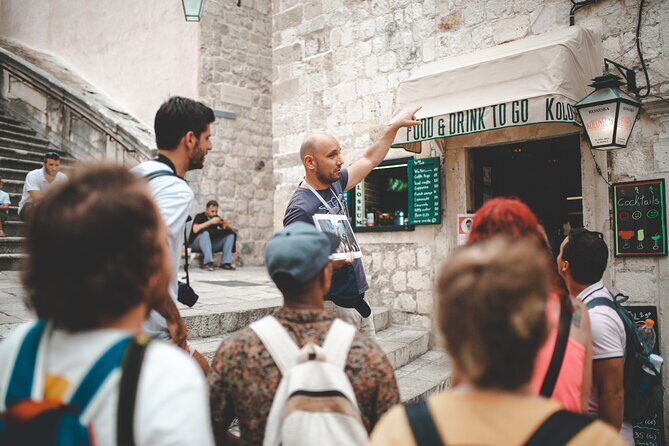
- 90 minutes, high-impact route that hits multiple top landmarks in the Old Town area
- Onofrio’s Fountain is the smart starting point, with a quick city-history setup before you move
- Religion, trade, and power show up at nearly every stop, not just one theme
- Port stories add context about quarantine and fortresses near the harbor
- Luza Square wraps it up well with big monuments like Orlando Column and St. Blaise
- Small groups (max 30) keep the pace manageable for most people
Entering Dubrovnik’s story from Onofrio’s Fountain
Most first-time visits to Dubrovnik start with the walls—and then you scramble to figure out what you’re actually looking at. This tour flips that. You meet at Onofrio’s Large Fountain in Poljana Paska Miličevića, right by the Hard Rock Cafe area. Your guide gives a short intro, then you’re walking immediately through the Old Town in a way that helps everything later make sense.
The price is about $24.19 per person, which matters in a city like Dubrovnik where even simple activities can add up fast. For this kind of short, guided route, you’re paying for orientation plus historical context, not a long sit-down experience.
And yes, you can pick a departure time that fits your day. That flexibility is genuinely useful here, because the sun and crowd levels can change fast.
You can also read our reviews of more walking tours in Dubrovnik

How the first stops explain Ragusa’s rise

The first stretch uses Onofrio’s Fountain as more than a photo stop. Your guide frames Dubrovnik’s early identity as a small maritime trading city-state of Ragusa, and you get a quick sense of what made it powerful: commerce, shipbuilding, and the ability to organize life around the harbor.
Right from the start, the fountain also gets tied to the innovative aqueduct system, so it’s not just pretty stone. It’s infrastructure—one of those quietly important things cities do when they want to last.
Then you walk down the main artery toward the inner lanes. Soon you’ll pass the votive Church of Holy Savior, and your guide explains how religion shaped public life and the look of the city. This is one reason I like this tour for beginners: it doesn’t just name buildings. It tells you what role they played.
Franciscan Church and Monastery: where everyday faith met big learning
Next up is the Franciscan Church and Monastery, a substantial complex of the Order of Friars Minor. The tour spotlights the fact that it includes multiple components—monastery, church, library, and pharmacy.
Here’s what you’ll take away if you’re paying attention (and you should). You’ll learn that the earliest monastery dates to the 13th century, originally built outside the walls. That detail alone helps you understand how the city expanded over time.
The library is another standout moment. It’s described as being built in the 17th century and holding over 20,000 books, including about 1,200 valuable old manuscripts. That’s the kind of number that makes the place feel real, not symbolic.
And then there’s the pharmacy from 1317, described as the third oldest, still functioning pharmacy in the world. Even if you’re not a museum-person, this kind of continuity is striking: the tour is showing you that Old Town Dubrovnik wasn’t only about ships and statues. It also served learning and healthcare in a way that survived through centuries.
Stradun (Placa): the promenade that ran the show
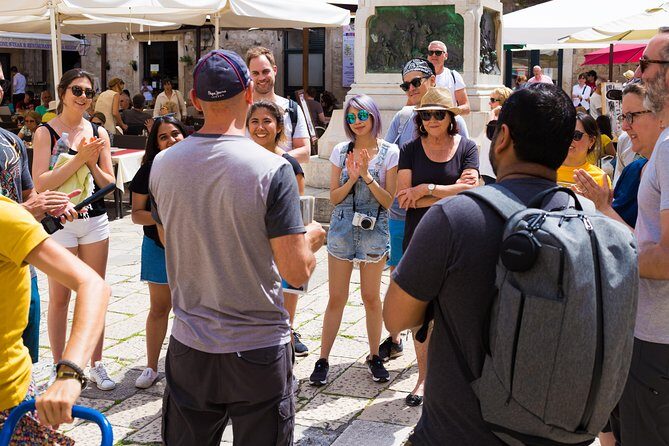
You resume along Stradun, also called Placa—the favorite promenade and gathering place. It’s the public stage for processions and feasts, but it’s also the main business street. That mix—celebration and commerce—is a huge part of why Stradun matters.
The guide also helps you visualize how Stradun divides the city into northern and southern halves. Then comes the heavier context: you’ll hear about the demise of the Ragusa Republic, followed by more recent history that includes the Yugoslavia period and the Homeland War in the 1990s, plus the troubles Dubrovnik endured.
This is where the tour shifts from sightseeing to meaning. It’s not about doom for doom’s sake. It’s about understanding why some parts of the city feel both ancient and newly repaired.
Orthodox, Jewish, and Muslim influences along the way
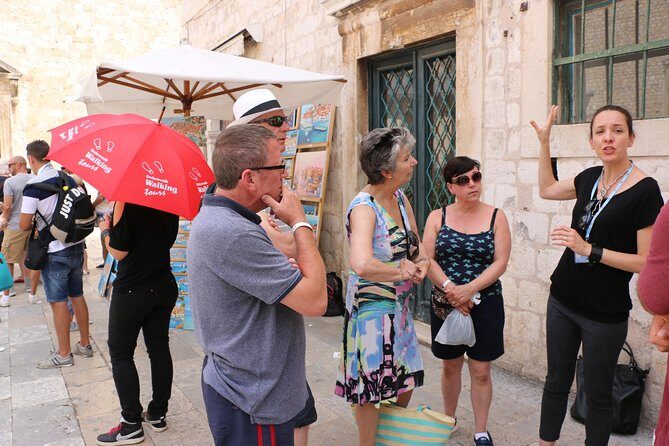
Not far from Stradun, you turn off into a narrower inner street walking toward the port area. Here you stop by the Orthodox Christian Church, and your guide explains how other religious communities—Orthodox, Jewish, and Muslim—influenced Dubrovnik’s history.
I like this part because it stops the story from feeling one-note. Dubrovnik may be visually Catholic-dominant today, but the city’s position in Mediterranean trade routes meant different communities left their imprint.
Even if you only catch small details while you’re walking, you’ll leave with a better sense of why the city’s history can feel layered instead of linear.
You can also read our reviews of more historical tours in Dubrovnik




Gundulic Square market stop: the local flavor break
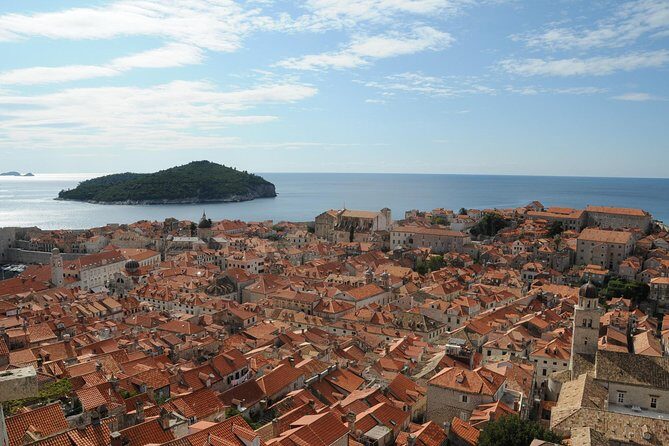
You’ll then reach Gundulic Square and the Monument of Poet Ivan Gundulic. This segment works like a palate cleanser from heavy history, but it’s still connected to the city’s life.
Near the market area, you can observe and discuss local produce and traditions. The tour doesn’t turn into a shopping trip, but it gives you a chance to see how Old Town still functions as a living place, not only an open-air photo set.
If you’re the type who likes to keep your eyes open for textures and everyday rhythms, this is one of the easiest stops to enjoy. It’s also an ideal moment to decide what you want to snack on later.
Rector’s Palace: power, administration, and fear all in one building
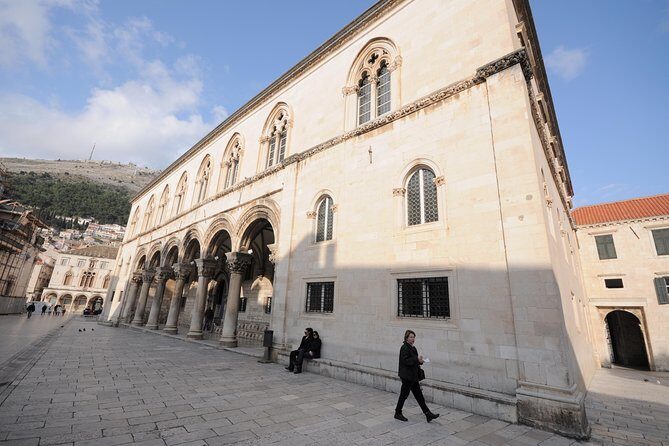
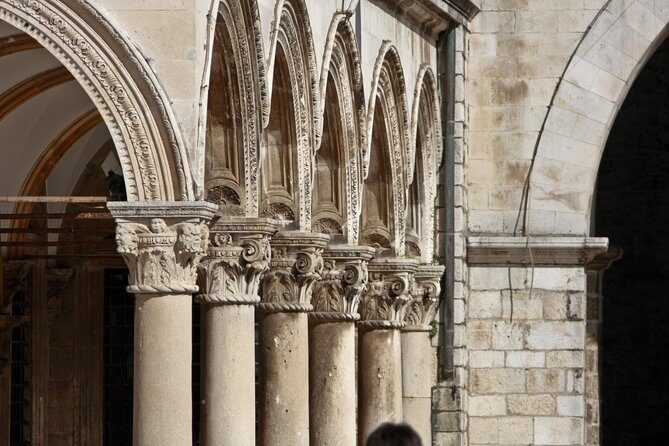
Next comes one of Dubrovnik’s most important buildings: the Rector’s Palace. The tour explains that it served as the seat of the Rector of the Republic of Ragusa between the 14th century and 1808.
That’s the headline. But the palace’s story is bigger than one official office. Your guide also describes other roles it housed over time, including the seat of the Minor Council and state administration, plus practical and darker functions like an armoury, a powder magazine, a watch house, and a prison.
So yes, you’re looking at a grand political building. But the tour makes sure you also see it as a control center—where Dubrovnik protected itself, stored critical supplies, and enforced order.
Cathedral of the Assumption: the Richard the Lionheart legend
Then you reach the Cathedral of the Assumption of the Virgin Mary. One of the key tour facts here is a legend: Richard the Lionheart was returning from the Crusades in 1192, was shipwrecked in a storm, and cast aground on Lokrum Island in front of Dubrovnik.
Legends can be tricky—half history, half story. But this one matters because it anchors Dubrovnik in the wider medieval imagination. If you’re into how myths travel with trade routes, this is a memorable stop.
Even if you don’t know the legend before arriving, your guide makes it easy to place within the city’s identity and why this kind of storytelling sticks.
City Harbor: quarantine, fortresses, and the working edge of the Old Town
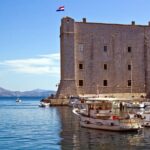
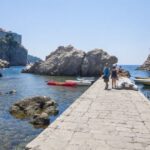
The tour then moves to the City Harbor. Dubrovnik ships were renowned across the Mediterranean, and you’ll hear that the Republic’s galleons could be found in navies across Europe and beyond.
This stop also connects to shipbuilding. Your guide explains that ships were built and loaded in the legendary Arsenal, which is described as another stop on the tour.
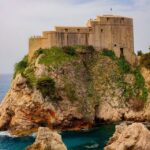
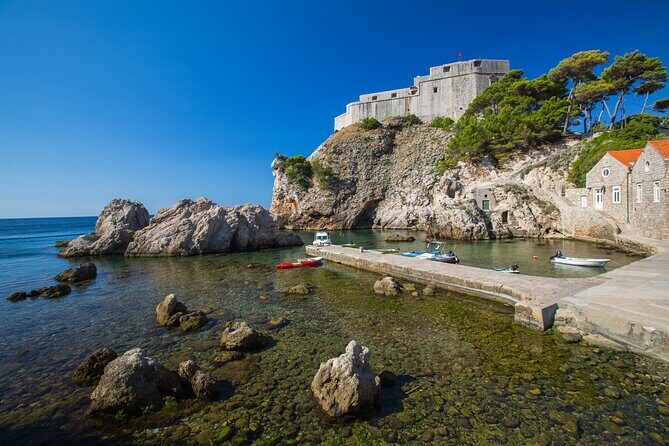
Once you’re at the port, the stories shift to how the city managed risk. You’ll hear about the Quarantine and the nearby fortresses of St. Luke and St. John. That combo—trade plus disease control plus defense—is exactly what makes port history feel real. It’s not abstract; it’s the practical survival math of a trading republic.
One small tip: harbor areas can be breezy and bright. If you’re sensitive to sun glare, bring sunglasses. If it’s windy, you’ll want a layer.
Orlando Column and Luza Square: the final concentration of monuments
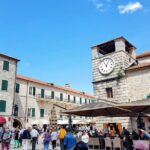
You finish by moving from the port area to the eastern end of Stradun, under the City Bell Tower on Luza Square. This is a strong close because so many landmarks are clustered here, and your guide ties them together.
You’ll hear stories connected to:
- the church dedicated to St. Blaise, the patron
- the legend of the knight Orlando and his column
- Sponza Palace
- the Small Onofrio’s Fountain
- the high Bell Tower
The effect is good. You get one last burst of names and symbols, but the guide also helps you understand how they relate to the city’s identity—religion, protection, memory, and civic pride.
When the tour ends, you’re back at the meeting point, which is convenient if you want to keep wandering without reorganizing your route.
Pace, group size, and practical comfort
This experience runs about 1 hour 30 minutes. The walk is not described as too long for the route, and there’s frequent stopping for short explanations. Still, Dubrovnik Old Town is steep and layered, and you should expect steps.
Also note the group limit: up to 30 people. That’s big enough to feel like a group, but small enough that your guide can keep a workable pace. Many short tours in Dubrovnik feel rushed; this one tries to hit a balanced tempo where you can absorb facts and still look around.
If you’re planning to take in more afterward, this tour pairs well with the idea of exploring the city walls later. A common pattern is: do this to learn the map in your head, then go back out under your own steam.
Price and value: what you’re really paying for
At roughly $24.19 per person, the value comes from three things:
1) Multiple major Old Town stops in one loop
You see the Onofrio fountain area, Franciscan complex, Stradun, cathedral, Rector’s Palace, port/harbor context, and Luza Square.
2) Context that turns landmarks into a story
The tour’s goal isn’t only to point at buildings. It explains how aqueducts, religion, trade, government, and later conflicts shaped the city.
3) Included guide plus taxes
Local guide and all taxes/fees are included, which keeps the final bill clearer.
For Dubrovnik, where food and transport can spike, a guided history walk at this price is a sane way to spend your time early in the trip. It’s also useful if you prefer structure but still want freedom afterward.
Who this tour suits best
This walking tour is a strong match if:
- you’re in Dubrovnik for the first time and want orientation fast
- you like history but don’t want a long, museum-heavy day
- you want a guide who connects medieval Ragusa to later rebuilding
- you enjoy hearing real local stories from guides such as Ermina, Ivana, Josef, Sara, Jelena, and others named in recent experiences
It may be less comfortable if:
- you need step-free routes and you strongly prefer minimal walking on busy streets
- you’re easily stressed by crowds and tight lanes during peak hours
Should you book this Dubrovnik Old Town history walking tour?
I’d book it if your priority is getting oriented and understanding what you’re seeing in Dubrovnik’s Old Town. The route is built to move you from the fountain to the port and back through the key civic and religious sites, with explanations that help you read the city instead of just looking at it.
Skip it only if you already know the city well and you’re looking for a longer, wall-focused day, or if mobility and crowded stairs are major dealbreakers for you.
If you can handle a lively walk and you want the why behind the sights, this one is an efficient way to start.
FAQ
How long is the Dubrovnik Old Town History Walking Tour?
The tour lasts about 1 hour 30 minutes.
Where is the meeting point?
Meet at Onofrio’s Large Fountain at Poljana Paska Miličevića 2000, 20000 Dubrovnik, Croatia. The meeting point is next to the Hard Rock Cafe area.
What is the tour route like, and where does it end?
It’s a walking route through the Old Town’s main landmarks, and the tour ends back at the meeting point.
Is the tour in English?
Yes. It is offered in English.
What’s included in the price?
A local guide is included, along with all taxes, fees, and handling charges.
What is not included?
Hotel pickup and drop-off are not included.
How big are the groups?
The maximum group size is 30 people.
Are the attractions you stop at included?
The stops listed include admission ticket information marked as free.
What if weather is bad?
This tour requires good weather. If it’s canceled due to poor weather, you’ll be offered a different date or a full refund.
Are service animals allowed?
Yes, service animals are allowed.