REVIEW · DUBROVNIK
Dubrovnik By Night Walking Tour
Book on Viator →Operated by Experience Dubrovnik · Bookable on Viator
Night makes Dubrovnik make sense. This 90-minute walk is a smart way to see the Old Town when it feels calmer, the light is kinder, and the stories come through. I like that it hits the big landmarks in a tight route while keeping you moving at a human pace, with guides such as Mihaela and Petra known for clear explanations and real-world context.
What I like even more is the “why this place matters” angle. You’ll learn the city layout from Pile Gate and then connect the dots from Stradun to squares and major churches, with many guides bringing in honest talk about the 1990s war and how it shaped daily life. One drawback to factor in: this is mostly an outdoor stroll, so if you’re hoping to go inside multiple buildings, you may find it more of an overview than an in-depth tour of interiors.
In This Review
- Key things to know before you go
- Why Dubrovnik at night feels different
- Meeting at Brsalje ul. 2, then walking toward Luza Square
- Amerling Fontana to Pile Gate: finding the city’s backbone
- Franciscan Church and Monastery area: pharmacy and water stories
- Stradun: the main street that organizes everything
- Luza Square: Sponza, the bell tower, and the church in the middle
- Rector’s Palace: the building everyone notices (and why)
- Cathedral of the Assumption: biggest church and its treasury
- Ivan Gundulic, Jezuits stairs, and Prijeko street’s maze feeling
- The guide factor: what makes this tour worth your time
- Price and value: why $24-ish can make sense here
- Best timing: when the night walk works hardest
- What to expect from the pacing and stops
- Who this tour suits (and who might want a different plan)
- Should you book this Dubrovnik By Night Walk?
- FAQ
- How long is the Dubrovnik By Night Walking Tour?
- How much does the tour cost?
- Is the tour offered in English?
- Where do I meet and where does the tour end?
- Are there admission tickets involved for the stops?
- Is hotel pickup included?
- What’s the group size limit?
- Is there any weather dependence?
Key things to know before you go
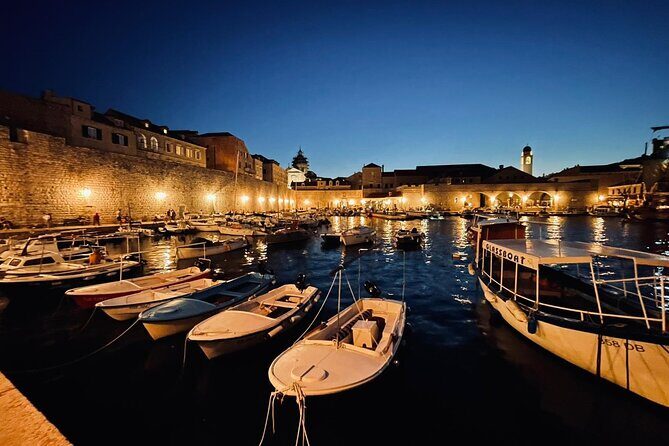
- A late-evening Old Town orientation: you’ll walk the core route and learn how the walled city hangs together.
- Big sights, short stops: you see a lot in 1 hour 30 minutes without feeling stuck in lines.
- History told in plain language: guides often connect architecture, daily life, and the 1990s war impact.
- Crowd control by timing: night lighting helps, and the streets feel more comfortable than mid-day.
- Small-ish group: the tour caps at 20 people, so questions are realistic.
- Good value for the price: you get a licensed guide and local taxes included for about $24.
Why Dubrovnik at night feels different
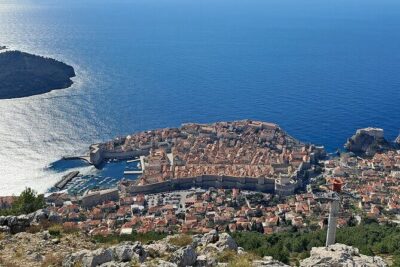
Dubrovnik looks like a postcard by day. At night, it looks like a lived-in city. The walls and towers still do their thing, but the streets stop feeling like a conveyor belt. That shift matters because it changes what you notice.
On this walk, I’d treat the tour like your orientation map—except you’re also getting the backstory. You’ll stand at the points that help you understand the Old Town’s layout, then hear why each place looks the way it does. It’s also a good match for people who don’t want a long museum day but still want context.
And timing is the hidden win. One common theme from the experience: late-evening starts help you avoid the worst heat and big daytime crowds. If summer is in your plans, this is one of the easiest ways to make the Old Town more comfortable.
You can also read our reviews of more walking tours in Dubrovnik



Meeting at Brsalje ul. 2, then walking toward Luza Square
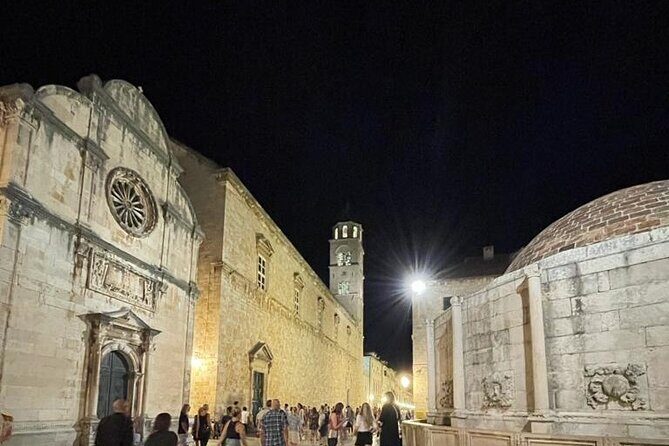
The tour starts at Brsalje ul. 2 (meeting point area), then ends at Luza Square (Luža ul.). That matters because you can use the ending point as a springboard. After the tour, Luza Square sits right where you can keep exploring without backtracking.
You’ll also move through compact streets and stairways. Even though each stop is short, wear shoes that can handle uneven stone and gentle climbs. This is a night walk, not a sit-down history lecture.
Group size is kept to a maximum of 20. That’s big enough to feel like a real group, but small enough that a guide can usually speak to everyone clearly—assuming the group stays focused and everyone stays close at the front.
Amerling Fontana to Pile Gate: finding the city’s backbone
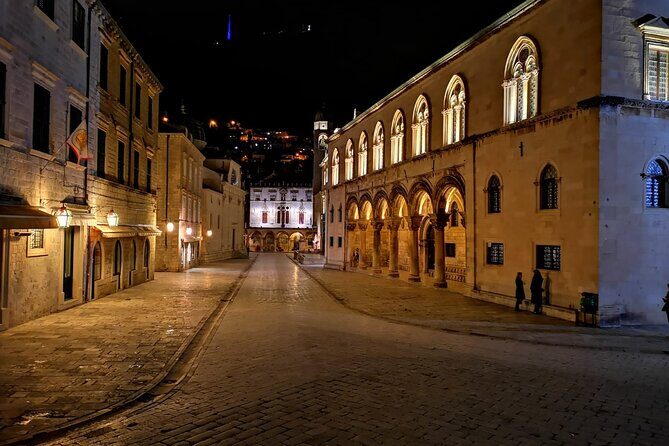
Your first stop is Amerling Fontana, where the guide waits with a blue umbrella. It’s outside the city walls near Pile Square, next to the Dubravka gift shop. It’s a simple start—but it sets up what comes next.
From Amerling Fontana, you shift into the city’s structure through Pile Gate. Here you’ll get an introduction to how Dubrovnik is organized, plus a quick grounding in early history. Even if you already know Dubrovnik is walled, you’ll start to see the logic: where you are inside the system, what roads connect, and why some streets feel like alleys while others open up fast.
This early part is especially useful if you’re on a tight schedule. You finish the tour knowing what to chase the next day—and what you can skip.
Franciscan Church and Monastery area: pharmacy and water stories
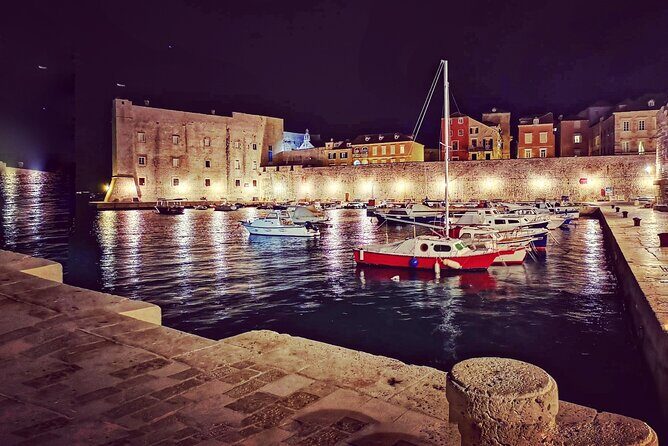
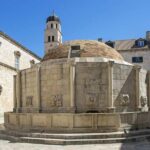
Next comes the Franciscan Church and Monastery area. Once you reach Stradun, the guide talks about the old pharmacy and the first water supply—linking the story to the Onofrio Fountain. That water connection is more important than it sounds.
Dubrovnik isn’t just pretty. It’s built around survival problems: where water comes from, how a city functions under pressure, and why certain public spaces matter. When you hear it tied to the fountains and street life, the Old Town starts to feel like a working machine, not just a set of monuments.
You don’t need to be a history nerd for this to land. The best guides keep it clear and human, with architecture as the evidence.
Stradun: the main street that organizes everything
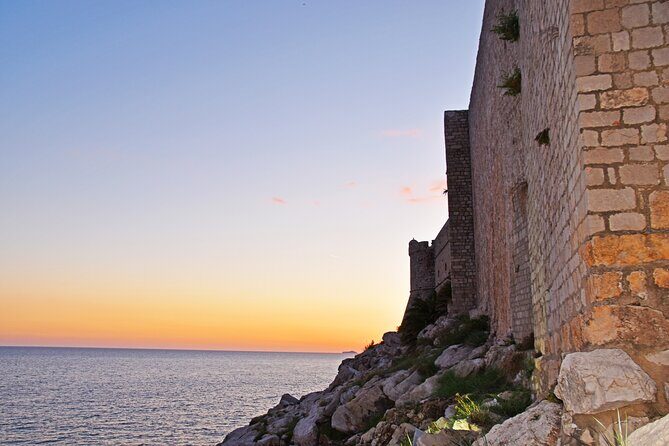
Then you hit Stradun, Dubrovnik’s most popular main street, lined with houses and shopping. At night, it looks especially crisp because the buildings catch the light and the street reads like a long hallway.
Why this stop is valuable: Stradun is the spine. Once you understand where it sits, your next walks around town feel easier. You can turn off to side streets without getting lost in the maze, because you know what direction the spine runs.
Also, Stradun gives you a taste of how tourism and tradition coexist here. You’ll see why this street is always busy—and why the night still feels calmer than the day.
You can also read our reviews of more evening experiences in Dubrovnik




Luza Square: Sponza, the bell tower, and the church in the middle
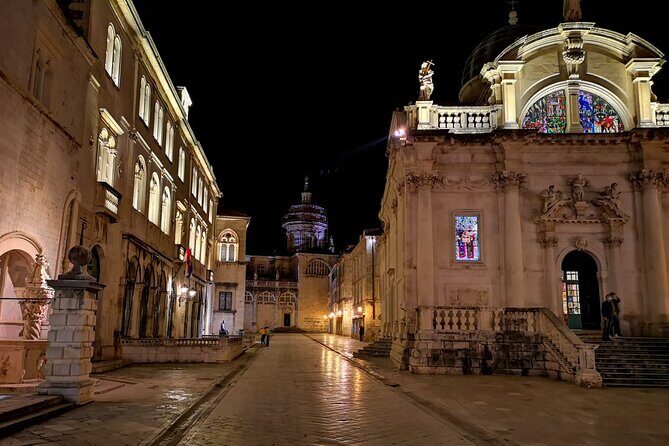
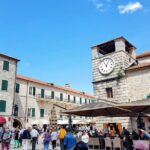
Your tour moves to Luza Square, the main square of the Old Town. Here the guide points out the patron church in the middle, plus the bell tower and Sponza Palace.
Squares are where cities perform. Luza is Dubrovnik’s stage: it’s open enough to catch the big views, but enclosed enough to keep the atmosphere intimate. If you want a quick mental snapshot of the Old Town, this is it.
From this point, the walk starts to feel like a guided circuit through the city’s power centers—religious, civic, and administrative.
Rector’s Palace: the building everyone notices (and why)
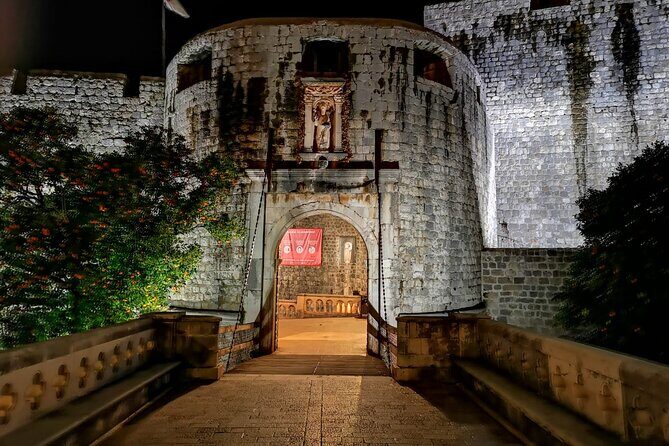
Next is Rector’s Palace, often described as the most beautiful building in the city. This stop isn’t just about admiring the facade. The guide typically tells stories about the building’s structure, its history, and how it’s used today.
Even without entering, you’ll learn what to look for: how the design reflects authority, how the palace relates to the rest of the square, and why this kind of architecture shows up where it does.
It’s one of the stops that tends to get the strongest praise in other walks, because a good guide turns stone and symmetry into a story you can picture.
Cathedral of the Assumption: biggest church and its treasury
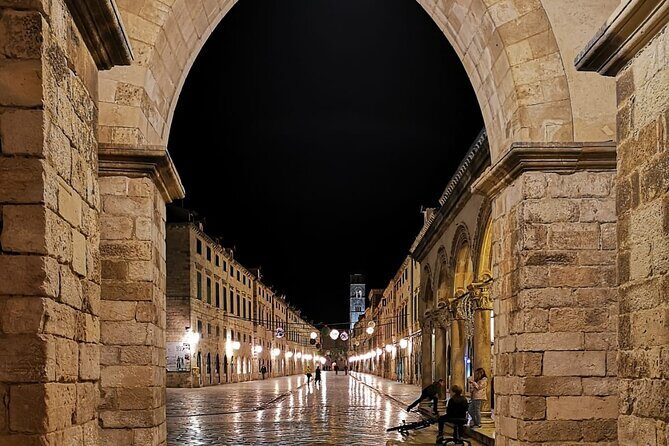
Then you’ll reach the Cathedral of the Assumption of the Virgin Mary, described as the biggest church in Dubrovnik, including its treasury. This is another “listen first” stop. The exterior gives you your bearings, and the guide fills in what the place means in the city’s story.
A treasury stop can be hit-or-miss on tours, depending on how it’s handled. Here the value is the context: you learn why this cathedral sits at the center of religious life and how it fits into the city’s identity.
If you like church history but don’t want a full-day church plan, this is a good compromise.
Ivan Gundulic, Jezuits stairs, and Prijeko street’s maze feeling
You’ll finish with a shift from the main monuments into the side-street feel.
First comes the Monument of Poet Ivan Gundulic, near the Jezuits stairs. It’s a small stop, but it matters because it breaks the pattern. After the big civic and religious landmarks, you get a human-scale moment that signals the city’s cultural roots.
Then the tour turns into Prijeko street—a narrow corridor where you’ll stroll through smaller lanes and side streets. The idea here is to see Dubrovnik the way locals experience it: not just the postcard angles, but the paths in between.
This part is also where the night walk shines. Narrow streets compress sound, and the lighting makes details pop. If you like wandering after a tour, Prijeko is a great place to learn where to linger.
The guide factor: what makes this tour worth your time
This walk is only as good as the person leading it. The good news: the tour has a strong track record for guides who explain well and tell stories in a way that sticks.
Names that have shown up with top marks include Goran, Daniela, Danielle, Davor, Makayla, Mikhaila, and Mihaela. The consistent praise centers on a few things:
- Clear English and an easy pace
- Stories that feel personal, including how the city changed during and after the 1990s war
- Practical tips for what to do next, not just what you see on this route
- Handling mixed group energy smoothly when needed
In other words, you’re not just paying for sights. You’re paying for translation—from buildings to meaning.
One fair note: a smaller set of people reported issues when the tour ended up larger than expected, with sound/radio communication problems. That’s worth considering if you’re someone who struggles to hear in groups. If that’s you, arriving a bit closer to the guide at each stop can help.
Price and value: why $24-ish can make sense here
At about $24.19 per person for roughly 1 hour 30 minutes, the math is pretty straightforward. You’re paying for:
- A licensed local guide
- Local taxes included
- A walking tour format that skips transport costs
- Admission fees for the listed stops that are free
So you’re not paying museum-style entry fees. You’re paying for guidance—plus the time you’d otherwise spend piecing the city together yourself.
If you only have one night in Dubrovnik, this is a strong “get your bearings fast” option. If you have more time, you still benefit because the tour teaches what to notice when you revisit landmarks on your own.
Best timing: when the night walk works hardest
The biggest “pro” from the experience is simple: night helps. People highlight how the illuminated Old Town looks beautiful and how the cooler evening hours make walking easier.
In practical terms, aim for the slot that lines up with sunset into early night. Some reported an 8pm start and others called out a 6pm departure as the heat-saver option. If your schedule allows it, that late-evening window is usually your best bet.
What to expect from the pacing and stops
The stops are designed to stay focused. You’ll spend about:
- 5 minutes at the Amerling Fontana start point
- 10 minutes at Pile Gate and Luza Square
- Around 10–15 minutes around Stradun, Rector’s Palace, the Cathedral area, and the Gundulic/Prijeko stretch
This is why the tour feels like a tour-through-the-map. You’ll see the city’s highlights in one loop. You won’t have time to wander deep into each site.
If your travel style is about long hangs—like lingering inside chapels or doing slow museum reads—plan to pair this with independent time later.
Who this tour suits (and who might want a different plan)
This Dubrovnik By Night Walking Tour fits best if you:
- Want an Old Town orientation on day one (or your first full evening)
- Prefer walking with commentary over self-guided reading
- Appreciate honest context about the 1990s war and its impact on the city
- Like architecture and city layout more than ticketed attractions
It may not be ideal if you:
- Want a lot of interior time inside multiple buildings
- Need a quieter, low-stimulation experience at night (the streets still carry energy)
- Struggle with group audio when communication fails (rare, but it happened for some groups)
Should you book this Dubrovnik By Night Walk?
Yes, with a couple smart conditions.
Book it if you want the easiest way to understand the Old Town’s layout and to hear clear, story-led context while the city is lit up and cooler. The strong ratings, the emphasis on major highlights, and the fact that the route covers both monuments and side streets make it a high-return choice for most first-time visitors.
Skip it or consider a different format if you’re hoping for lots of indoor time, because this is primarily an outdoor route. Also, if you’re especially sensitive to sound, position yourself closer to the guide at the start of each segment.
FAQ
How long is the Dubrovnik By Night Walking Tour?
It runs about 1 hour 30 minutes.
How much does the tour cost?
The price is $24.19 per person.
Is the tour offered in English?
Yes, it’s offered in English.
Where do I meet and where does the tour end?
You start at Brsalje ul. 2, 20000, Dubrovnik, Croatia, and the tour ends at Luza Square (Luža ul., 20000, Dubrovnik, Croatia).
Are there admission tickets involved for the stops?
Admission tickets for the listed stops are free.
Is hotel pickup included?
No. Hotel pickup and drop-off are not included.
What’s the group size limit?
The tour has a maximum of 20 travelers.
Is there any weather dependence?
Yes. The experience requires good weather, and if it’s canceled due to poor weather, you’ll be offered another date or a full refund. Service animals are allowed.