REVIEW · DUBROVNIK
Dubrovnik Walking Tour
Book on Viator →Operated by Divine Croatia · Bookable on Viator
City walls beat the chaos in 2 hours. This tour keeps you moving through Dubrovnik Old Town on a small-group pace, with a guide who makes the highlights easy to follow. I really liked the clear, organized flow—and I liked getting a close look at major stops inside the walls without feeling swallowed by crowds. The only drawback: you’re on your feet for the full walk, so plan for steady walking time rather than a sit-down sightseeing session.
You also get more than just photo stops. The route is built around standout sites like the Franciscan Church and Monastery (complete with one of Europe’s oldest pharmacies) and Sponza Palace, plus two of the Old Town’s signature streets. If you want a totally free-form stroll where you wander off at will, this is more structured than that.
One more note on style: the vibe is smart casual, and the meeting point is right at Pile Gate. Come ready with comfortable shoes, because you’ll be between historic walls, churches, and stone streets for about two hours.
In This Review
- Key points that make this tour worth your time
- Why a small-group walk inside Dubrovnik’s city walls works
- Starting at Pile Gate: the tour’s simple rhythm
- Franciscan Church and Monastery: the pharmacy museum moment
- Sponza Palace: medieval palace exterior, modern memorial room
- Prijeko Street and Stradun: the medieval streets you’ll remember
- Architecture notes you can spot on your own afterward
- The guide makes or breaks the experience
- Price and value: what $91.39 buys in real terms
- Who this Dubrovnik Walking Tour is best for
- Should you book this Dubrovnik walking tour?
- FAQ
- How long is the Dubrovnik Walking Tour?
- Where is the meeting point and where does the tour end?
- What stops are included on the tour?
- What’s included in the price, and what isn’t?
- How big is the group?
- What’s the cancellation window?
- Can I bring a service animal?
Key points that make this tour worth your time
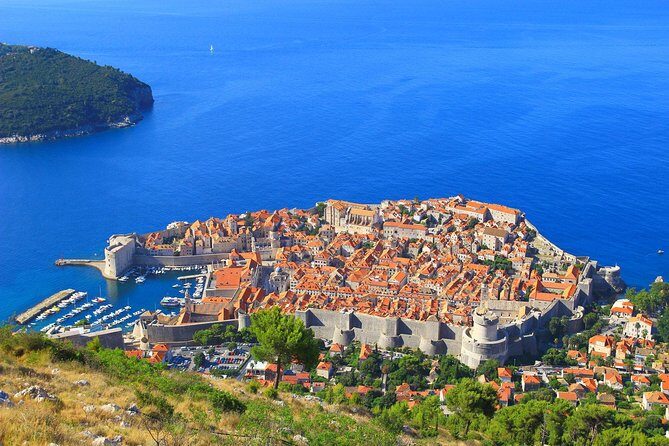
- A max of 15 people keeps the guide’s explanations actually audible
- City-wall walking gives you a clear sense of Old Town layout fast
- Franciscan Monastery stop includes a pharmacy museum connection to European history
- Sponza Palace memorial room adds a modern history layer to the medieval setting
- Stradun and Prijeko Street cover the Old Town’s most recognizable medieval street experience
- Mobile ticket means less fuss once you’re there
Why a small-group walk inside Dubrovnik’s city walls works
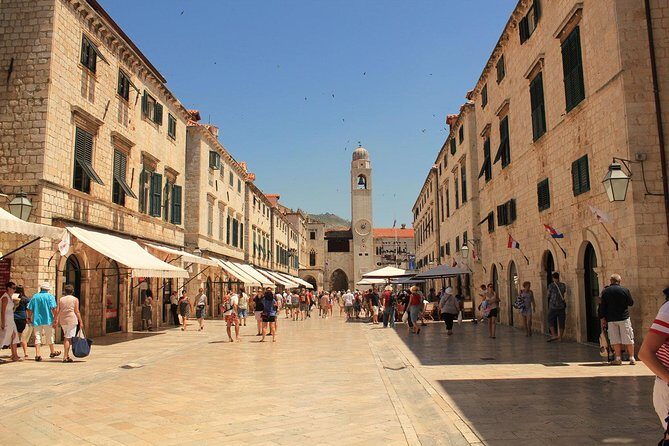
Dubrovnik can feel like a standing line. Even when you’re not trying to rush, the Old Town pulls you into crowd rhythms—stop, shuffle, stop again. This tour is designed to avoid that problem by keeping the group small and the route focused, so you can actually hear what you’re looking at.
The big win for me is that you’re inside the medieval city walls, not just poking around outside them. You start at Pile Gate, then work your way through the Old Town’s core areas with a guide who points out key architecture and context. That matters because Dubrovnik isn’t one single “attraction.” It’s a dense, walkable system of streets, churches, monasteries, and palaces. With a guide, you understand the pattern instead of just collecting buildings like postcards.
And yes, two hours is long enough to feel you did something, but short enough that you don’t lose the rest of your day to logistics. It’s the kind of tour that helps you get oriented early—so later, when you wander on your own, you’re not guessing where everything sits.
You can also read our reviews of more walking tours in Dubrovnik



Starting at Pile Gate: the tour’s simple rhythm
The meeting point is at Pile Gate (Dubrovačke Gradske Zidine, 20000, Grad, Dubrovnik). That’s a smart start because it’s one of the main entrances to the walled Old Town. You’ll also return to the same meeting point, which helps you plan the rest of your time without needing a second transit hop.
Timing is built into the experience: the tour runs about 2 hours, and the stops are scheduled in short blocks—roughly 15 minutes at the bigger sites, plus brief street time. That’s not “rushed” in a bad way. It’s paced to keep you moving through Old Town while still getting something meaningful at each stop.
Also, this tour is set up for people who want structure. It’s not a long lecture in a classroom. You’ll be walking, looking, listening, and then walking again.
Franciscan Church and Monastery: the pharmacy museum moment
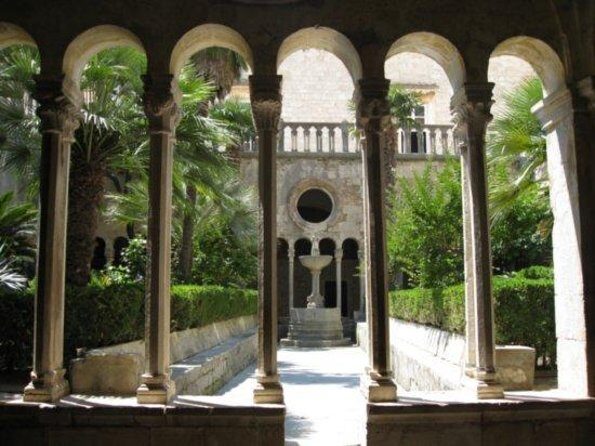
This is the kind of stop that makes the tour feel special, because it’s not just about an exterior view. The Franciscan Church and Monastery is described as built in a Romanesque-Gothic style, and the visit includes a museum that displays priceless historical and cultural objects.
What I’d mark as the standout detail here is the pharmacy connection. The monastery houses one of Europe’s oldest pharmacies. Even if you’re not a “museum person,” that’s an intriguing hook because it connects everyday life—medicine, herbs, apothecaries—to the religious and scholarly world that monasteries often supported.
A practical way to get the most out of this stop: don’t just scan for impressive architecture. When the guide talks about the monastery setting and what the museum items represent, let it change how you see the space. Monasteries can look similar from the street. A guide helps you understand why this one is different.
One consideration: the stop is short (about 15 minutes). If you love slow museum wandering, you may want to return later on your own after the tour ends. For the tour itself, though, the time allocation makes sense—you get the main story beats without turning your day into a full museum marathon.
Sponza Palace: medieval palace exterior, modern memorial room
After the monastery stop, you head to Sponza Palace. This is another “don’t just look up” moment. The tour focuses on a memorial room dedicated to local fallen heroes of the Homeland War, and it explains contemporary history of Dubrovnik.
That pairing is powerful. Dubrovnik’s famous look often makes it easy to treat the city like a time capsule. But adding the Homeland War memorial context reminds you that this city’s story didn’t stop centuries ago. It’s still tied to real people and recent events.
The setting is also practical for understanding Dubrovnik. Sponza Palace sits right in the middle of Old Town’s historical flow, so it’s the kind of site that helps you connect one street to the next. You start to see the city as a functioning place—past and present—rather than a museum you can only visit for a few hours.
The main “watch out” here is emotional, not logistical. If memorial rooms are tough for you, it might feel heavier than the earlier stops. If you’re open to that blend, though, it adds depth in a way a standard architecture-only tour can’t.
Prijeko Street and Stradun: the medieval streets you’ll remember
Two brief street moments are built into this route, and they’re there for a reason.
First is Prijeko Street, timed at about five minutes. This is your quick hit of medieval Dubrovnik spirit—less about a formal museum stop and more about experiencing the street feel. Even in a short window, the guide’s narration helps you understand why this street matters and what to notice as you walk.
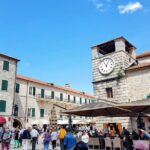
Then you reach Stradun. Stradun is the best-known street in Croatia, and this stop is about 15 minutes with a professional local guide. Here, you’re not just looking at buildings. You’re getting the “anchor street” experience: a sense of the central spine of Old Town, plus guide commentary that ties what you see to Dubrovnik’s Renaissance and Baroque architectural flavor.
What I like about this street pair is that it gives you texture. After monastery and palace, the streets are the release valve. You see how people move, where the city’s energy concentrates, and why Stradun is so famous that you’ll recognize it immediately in any future photos.
If you’re the type who likes to linger, this is the part where you might wish the timing were longer. But the short duration works as a setup: once you finish the tour, you can choose how long you want to stay on your own.


Architecture notes you can spot on your own afterward
The tour’s overview promises Renaissance and Baroque architecture highlights. In practice, that means the guide points out details you’d easily miss if you were just scanning for “big postcard” views.
For me, the key value isn’t that the tour gives you one cool fact per stop. It’s that it trains your eyes. Dubrovnik’s historic beauty can feel repetitive if you don’t know what to look for. After a couple of guided explanations, you start noticing how different styles show up in churches, palaces, and streetscapes.
So the real payoff shows up after the tour. When you walk away on your own, you’re more likely to stop at the right corners, zoom in mentally, and connect one place to the next.
And because you’re moving inside the World Heritage–listed city walls, the context is stronger. The walls themselves help you understand the Old Town layout—like a frame around the main subject.
The guide makes or breaks the experience
The strongest praise tied to this tour is the guide’s presentation. The experience is described as extremely well presented and insightful, with a guide whose personal history is deeply embedded in Dubrovnik.
You can feel the difference between a guide who reads facts and a guide who speaks from lived context. I look for clarity in small-group tours, and this one delivers that: you’ll hear the guide clearly, and the explanations land because the route is set up for listening, not for you shouting over noise.
Also, the guide doesn’t just list “what is this?” The narration gives context—why each place matters and how it connects to the city’s past and present. That’s the difference between sightseeing and actually learning what you’re seeing.
One small practical tip: during street time (especially the Prijeko Street stretch), stay close to the guide instead of drifting to the sides for photos immediately. It’s the short moments that carry the most “sticky” context.
Price and value: what $91.39 buys in real terms
At $91.39 per person for about two hours, you’re paying for a licensed guide plus a curated walk through major Old Town anchors. That’s not the cheapest way to see Dubrovnik, so you want to know what makes it worth it.
Here’s the value logic I’d use:
- You get a small group (max 15), which improves the experience because you can actually hear the guide.
- You’re not planning the sequence yourself. You get an efficient order: Franciscan Monastery, Sponza Palace, then the street highlights.
- The tour description lists admission ticket free for the listed stops, which suggests your paid portion is mainly about guided interpretation and time in the right places, not about paying separate entry fees at each stop.
If you’re visiting Dubrovnik for the first time and you don’t want to spend your energy figuring out where everything is, this price starts to feel fair. If you already know the Old Town well, you might prefer a cheaper DIY walk. But if you want orientation plus meaningful context in a short window, the cost-to-time ratio makes sense.
Who this Dubrovnik Walking Tour is best for
I think this works best for three types of travelers:
- First-timers to Dubrovnik Old Town
You’ll learn how the spaces connect, then you can explore on your own with less wandering.
- People who hate being lost in crowds
A small group and clear audio make a real difference when you’re walking Stradun and its nearby lanes.
- Travelers who like a blend of art, faith, and modern context
You get monasteries and palace architecture, then you also get a memorial room tied to more recent Dubrovnik history.
If you want a long, slow, detailed museum day, this likely won’t satisfy on its own. The stops are timed, so you’ll get the essentials rather than a deep, hour-by-hour exploration of every corner.
Should you book this Dubrovnik walking tour?
I’d book it if you want an efficient introduction to Dubrovnik Old Town that’s easy to follow and doesn’t sacrifice context. The combination of city-wall pacing, major anchor stops like Franciscan Monastery and Sponza Palace, and the signature street experience on Stradun makes it a strong “orientation tour.”
Skip it if you’re the type who already knows the Old Town layout and prefers to wander without structure. In that case, you might get similar sights by self-guiding.
If you do book: wear smart casual clothing and comfortable shoes, bring your camera, and don’t treat the street stops as “just walking.” That’s where the tour’s feel and rhythm really click.
FAQ
How long is the Dubrovnik Walking Tour?
The tour lasts about 2 hours.
Where is the meeting point and where does the tour end?
You meet at Pile Gate at Dubrovnik City Walls (Dubrovačke Gradske Zidine, 20000, Grad, Dubrovnik, Croatia). The tour ends back at the same meeting point.
What stops are included on the tour?
The tour includes the Franciscan Church and Monastery, Sponza Palace, Prijeko street, and Stradun.
What’s included in the price, and what isn’t?
Included is a licensed tour guide. Not included is hotel pick up and drop off, and gratuities are optional.
How big is the group?
The maximum group size is 15 travelers.
What’s the cancellation window?
You can cancel for a full refund up to 24 hours before the experience starts.
Can I bring a service animal?
Service animals are allowed on this tour.