REVIEW · DUBROVNIK
Dubrovnik: Insider 90-Minute Walking Tour With a Local
Book on GetYourGuide →Operated by Dubrovnik Local Guides · Bookable on GetYourGuide
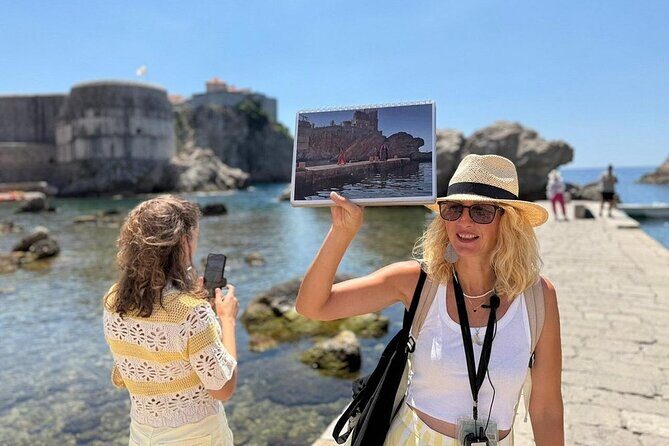
Dubrovnik makes more sense with a local beside you. This 90-minute Old Town walking tour is built for close-up stories, from maritime Ragusa power at the Old Harbor to daily-life hints tucked into everyday corners. You’ll meet your guide just inside the Old City gates and walk a tight loop through the city’s most recognizable sights—plus a few playful twists that make the history stick.
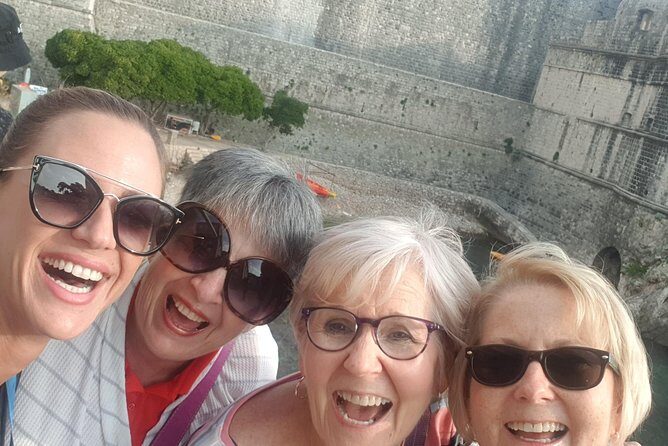
I especially like the small group cap of 8, because it turns the tour into real back-and-forth instead of a lecture with no breathing room. I also love the way the guide connects architecture to Dubrovnik’s big political shifts, so the Cathedral, Rector’s Palace, and Sponza Palace feel like parts of one system—not random photos.
The one drawback to consider is that this style can lean fact-heavy by landmark. If you want one long, continuous story thread with fewer stops and more narration in between, you may need to ask your guide to connect the dots as you go.
In This Review
- Key things to know before you go
- Entering Dubrovnik’s Old Town through Ploče Gate
- Ploče Gate to the Dominican Monastery: the city’s layers start fast
- Old Port and the Republic of Ragusa trade story
- Dubrovnik Cathedral: Baroque details and the rebuild story
- Crkva sv. Ignacij: a short stop that sets up bigger contrasts
- Gundulić Square and the poet moment (yes, you’ll try Croatian)
- Rector’s Palace: where government meets the aristo-cats
- Sponza Palace and the mid-tour architecture checks
- Church of Saint Blaise: the patron saint comes alive (and gets playful)
- Side streets and quick photo stops: where local life shows up
- Large Onofrio’s Fountain: the classic landmark that wraps the loop
- Price and value: is $32 a good deal for 90 minutes?
- Who this tour fits best (and who should choose another format)
- A quick guide to making the most of your 90 minutes
- Should you book Dubrovnik’s Insider 90-Minute Walking Tour?
- FAQ
- How long is the Dubrovnik insider walking tour?
- What is the group size?
- How much does it cost?
- Where do I meet the guide?
- Is the tour available in English?
- Is there a cancellation option or pay-later booking?
Key things to know before you go
- Max 8 people keeps the tour intimate and question-friendly
- English licensed guide means you get clear context, not just sight descriptions
- Saint Blaise scavenger game helps you notice details you’d normally miss
- Old Harbor Ragusa focus gives you the trade-and-power background behind the walls
- Rector’s Palace cats stop adds humor to a serious government building
- Lunch and food tips help you plan your next hours in town
Entering Dubrovnik’s Old Town through Ploče Gate
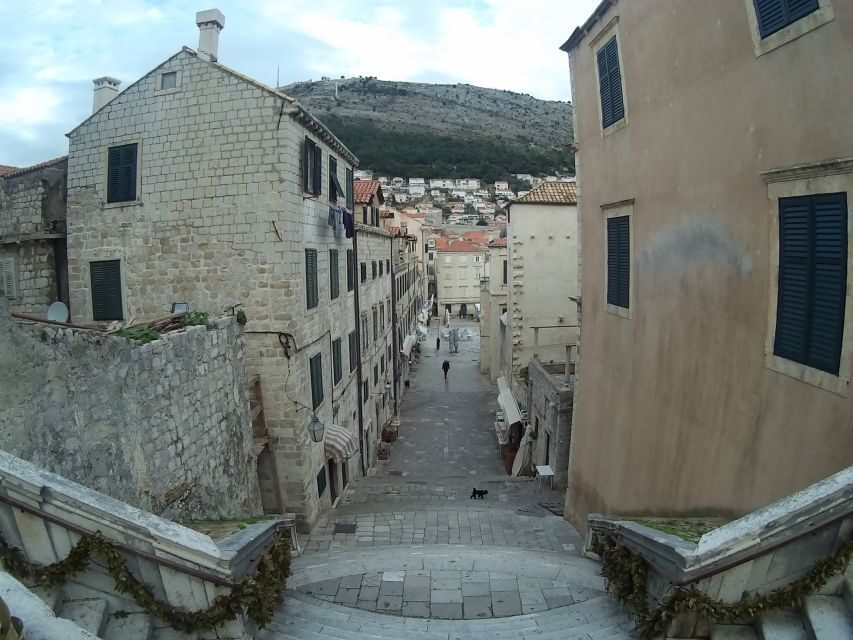
Your tour starts at the Harbour Viewpoint area, but the key “find your guide” moment is at the meeting point: in the corner of the square in front of Revelin Fort, just inside the Ploče Gate (the eastern entrance to the Old Town). The guide waits by the cannon holding a red and white flag. It’s a simple setup, and it helps because Dubrovnik’s entry points can feel busy and confusing right when you arrive.
This is the smart way to start. You’re getting your bearings as you walk in, not after you’ve already drifted into the Old Town maze. And with a small group, you don’t lose people every few minutes—meaning you can keep momentum instead of re-grouping like a school trip.
Even the first minute matters here. Ploče Gate isn’t just a photo stop. It’s the boundary between the modern arrival zone and the old city rhythm. Your guide frames it as a “start of the story,” which makes the rest of the walk feel like it has direction.
You can also read our reviews of more walking tours in Dubrovnik


Ploče Gate to the Dominican Monastery: the city’s layers start fast
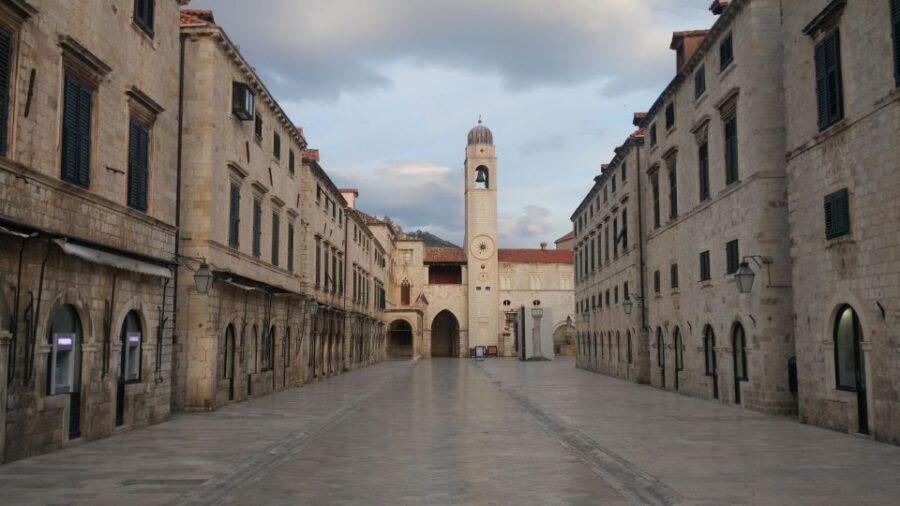
Your first named stop is Ploče Gate, then you move quickly to the Dominican Monastery and Museum area for a short guided look. The time is brief on purpose—this is a 90-minute tour, so you’re spending your minutes where the guide can explain the most.
What I like about this early pacing: it sets the theme. Dubrovnik’s Old Town looks uniform at street level, but it’s not. Buildings and institutions show you different eras of power, faith, and wealth. A short stop here primes you to notice those differences later when you reach the big civic sites like Rector’s Palace.
You also get an early reminder that this place keeps changing. Your guide points you toward a key idea: Dubrovnik didn’t just “freeze” in time. It was rebuilt, adapted, and redefined after major events. That theme comes back again when you reach the Cathedral.
Old Port and the Republic of Ragusa trade story
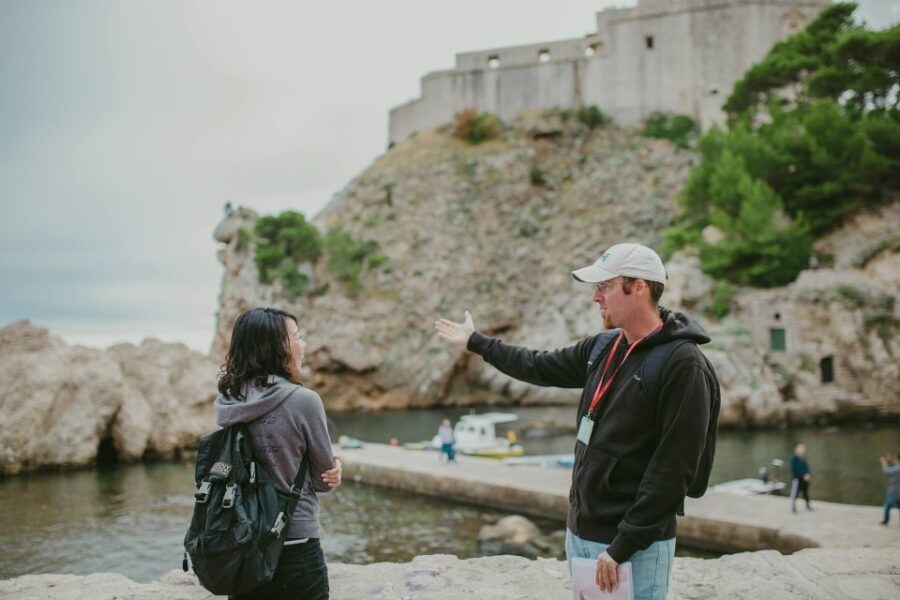
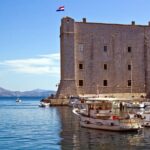
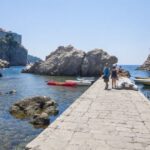
Then you hit the Old Port, one of the most important backdrops for understanding Dubrovnik. This is where the guide gives you the maritime “why” behind the city’s importance: Dubrovnik grew as a crossroads between East and West, and the old Republic of Ragusa built success through trading and shipping.
Standing near the harbor, you can almost see the logic: where ships come and go, commerce follows; where commerce thrives, you get wealth; where wealth concentrates, you get politics and impressive buildings. The tour keeps that chain clear instead of tossing dates at you.
This is also where you’ll likely hear the balance of local pride and historical realism. The guide describes Dubrovnik’s economic success even while bigger powers shaped the region—examples like Venice and the Ottoman Empire are part of the context. You come away understanding that Dubrovnik’s greatness wasn’t only artistic. It was strategic.
And because this is a local-led walk, you’re not just hearing big-picture history. You’re also getting a sense of how the harbor area fits into everyday life now—what people notice, what’s practical, and what’s worth your time when you’re deciding where to eat or wander next.
Dubrovnik Cathedral: Baroque details and the rebuild story
Next you’ll walk to Dubrovnik Cathedral, where the guide focuses on its Baroque architecture and, crucially, its resilience. The Cathedral was rebuilt after damaging earthquakes, and that rebuilding changes how you read the building. It’s not only about beauty—it’s about recovery and continuity.
If you’ve ever visited a historic church and felt like you were staring at decoration without meaning, this stop fixes that. You’re taught what to look for and why it matters to Dubrovnik’s identity. It’s a fast guided visit, but it’s the kind that makes the building feel less like a museum object and more like a living symbol.
You’ll also get the thread of Saint Blaise, the city’s patron saint. That name won’t stay “just a fact.” It becomes part of a fun, interactive moment later when you start hunting for saint-related details around town.
Crkva sv. Ignacij: a short stop that sets up bigger contrasts
After the Cathedral, the tour continues to Crkva sv. Ignacij (the Church of St Ignatius) for another quick guided look. The stop is brief, but it matters because it adds variety. Dubrovnik isn’t one architectural style. Religious buildings show shifts in taste and emphasis over time.
Even without getting stuck inside, this kind of short stop helps you train your eye. You start to recognize how façades and church exteriors reflect who had influence and what that influence wanted to signal—faith, learning, authority, and civic image.
If you’re the type who enjoys comparing details across landmarks, this is a good rhythm: quick look, guided context, then you move on.


Gundulić Square and the poet moment (yes, you’ll try Croatian)
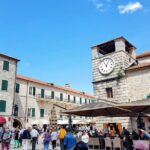
Next is Monument to Ivan Gundulić, plus time in Gundulić Square, described as a lively marketplace zone where local produce and souvenirs show up. Here the tour switches from big civic architecture back into people life.
This is where the guide brings in the “old Dubrovnik” cultural layer: Gundulić is highlighted as the city’s famous poet and playwright. The guide also brings in a playful language challenge—expect a bit of tongue gymnastics as you try to pronounce Croatian. It’s not about perfection. It’s about making the names stick so you can connect the art and the story you’re seeing.
This stop is also practical. The guide points out what the square is good for, and then you get recommendations for lunch, dinner, snacks, and drinks. That matters because Old Town is full of options, and having a local’s filter saves time and prevents you from spending your appetite on the wrong thing.
Rector’s Palace: where government meets the aristo-cats
Then comes one of the most satisfying stops on the route: Rector’s Palace. Your guide frames it as the historic seat of government for the Republic of Ragusa, where aristocrats met and handled political matters. That context transforms the building from “pretty old palace” into “the machinery behind the city’s power.”
And yes, the tour includes the humor you want in a walking tour. You’ll notice the aristo-cats—cats that hang around the palace area—described as lazy and chubby and impossible to ignore. It’s a light moment placed right after a serious one, which makes the overall experience feel more human.
This stop is also a lesson in how Dubrovnik presents authority. The guide helps you see that civic power wasn’t separate from architecture. The way you govern shows in the spaces you build and the messages those spaces send.
Sponza Palace and the mid-tour architecture checks
You’ll pass through Sponza Palace next. Your guide uses these palace-and-institution stops to keep the political and economic story moving. Even if you’re not a “palace person,” Sponza works because it adds texture to the Ragusa picture you started at the Old Port.
The tour keeps these stops tightly timed, so you aren’t trapped in one place. Instead, you build momentum and keep your mental map updated. That makes it easier to come back later on your own and spot details you first heard about during the guided portion.
Church of Saint Blaise: the patron saint comes alive (and gets playful)
As you reach Church of Saint Blaise, the patron saint thread becomes hands-on. The Cathedral introduced Blaise; here, you’re set up for the interactive element: a fun game where you try to find saint Blaise statues scattered across town.
It’s a clever approach. When a guide gets you moving with a goal—spot X, notice Y—you stop treating the Old Town like a static sightseeing loop. You become a participant, not a spectator.
Even if you’re not into “scavenger hunts,” the value is in observation. Those statues and symbols are part of why Dubrovnik feels unmistakably itself. The game trains your eyes to notice meaning in what you might otherwise scroll past.
Side streets and quick photo stops: where local life shows up
Toward the middle and later parts of the walk, you’ll take short hops through surrounding streets, including places that are described as still full of local life. The guide doesn’t only steer you to the biggest monuments. You’ll also get a sense of where residents’ daily rhythm happens around the tourism core.
One reason I like this section: it gives you balance. Dubrovnik can feel like a stage set if you only see the famous wall-to-wall sights. Short detours help you remember this is still a working city, not only a backdrop.
You’ll also get more chances to ask questions. With a group limited to a maximum of 8, you can get answers without waiting for a lull.
Large Onofrio’s Fountain: the classic landmark that wraps the loop
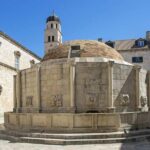
Finally, the route brings you to Large Onofrio’s Fountain. This is the kind of stop that works both as a visual anchor and as a mental reset. After the civic buildings, churches, and palace history, the fountain gives you a clear point to mark the end of the guided arc.
Your guide uses this final section to reinforce what you learned. If you leave Dubrovnik feeling like you just saw a list of sights, your mind doesn’t connect the dots. But because the tour keeps returning to the same core themes—trade power, civic government, faith, rebuilding—you’re more likely to remember how the Old Town pieces fit.
You also finish with enough energy to keep walking. That matters because Dubrovnik is best when you continue to explore after the tour has given you context.
Price and value: is $32 a good deal for 90 minutes?
At $32 per person for 90 minutes, the value comes down to two things: time efficiency and guide quality.
First, 90 minutes is a smart length in Dubrovnik Old Town. It’s short enough that you don’t feel stuck, but long enough that a local guide can explain more than “what this building is.” You get context at the Cathedral, political framing at Rector’s Palace, and the maritime backbone at the Old Port.
Second, the small group (max 8) is what makes the price feel fair. You get closer interaction and a better chance to ask follow-up questions. That’s especially useful in a city where history changes shape depending on the era you’re looking at.
Also, there’s real value in having a local help with your next steps. The tour includes recommendations for food and practical suggestions for enjoying your remaining time in town.
If you’re the type who learns best by asking questions while you walk, you’ll feel the “you paid for interaction” value. If you prefer a quiet self-guided pace, the tour may feel fast.
Who this tour fits best (and who should choose another format)
This is a great fit if you:
- Want an introduction to Dubrovnik’s Old Town without spending hours figuring out what matters
- Enjoy architecture when someone connects details to events and politics
- Like playful elements, like the Saint Blaise statue game and the pronunciation challenge
- Appreciate local recommendations for where to eat and what to do next
It’s especially compelling when the guide includes both old power and more recent context. Some guides on this tour style also share insights into more recent history, including the homeland war, which adds emotional weight and realism beyond the medieval postcard view.
You might choose differently if:
- You want a slower pace with fewer stops, or you feel most comfortable with long explanations at one location
- You prefer a single, continuous narrative over a landmark-by-landmark format
A quick guide to making the most of your 90 minutes
Here’s how you’ll get the best outcome from the tour:
- Arrive on time at the meeting point just inside Ploče Gate by Revelin Fort, where the guide holds the red and white flag
- Bring curiosity for both the old and the rebuilt parts of the city, especially around the Cathedral
- Plan to ask one or two questions about how the old maritime power connects to the government buildings you see later
- Stay ready for the small interactive moments. You don’t have to win anything; you just have to look
Guides can make or break a walking tour, and you’ll see this operation has earned high praise for humor, clear explanations, and answering questions. Names you may hear include Marko, Lucija (Lucy), and Bruno, each with a style that leans toward history with a human touch.
Should you book Dubrovnik’s Insider 90-Minute Walking Tour?
I’d book it if you want a fast, local-led orientation that explains why Dubrovnik’s main landmarks look the way they do. The small group size, the blend of Ragusa maritime power plus civic government, and the interactive Saint Blaise game are strong reasons to choose this over a generic stroll.
I wouldn’t book it as your only experience if you crave long museum-style depth or a slow wander with no scheduled stops. But for most first-time visitors, it’s a smart first layer: you leave with a mental map, better questions, and a clearer sense of what to see next on your own.
FAQ
How long is the Dubrovnik insider walking tour?
The tour lasts 90 minutes.
What is the group size?
It’s a small group limited to a maximum of 8 participants.
How much does it cost?
The price is $32 per person.
Where do I meet the guide?
Meet your guide in the corner of the square in front of Revelin Fort, just inside Ploče Gate (the eastern entrance to the Old town). The guide will be waiting by the cannon holding a red and white flag.
Is the tour available in English?
Yes. The guide provides an English live walking tour.
Is there a cancellation option or pay-later booking?
Yes. You can cancel up to 24 hours in advance for a full refund, and there is also a reserve now and pay later option.