REVIEW · DUBROVNIK
Dubrovnik Old City Private Tour
Book on Viator →Operated by My Dubrovnik Tours · Bookable on Viator
Dubrovnik’s story is easier on foot. This private Old City tour turns the famous sights into a clear timeline, from medieval power to the 1990s conflict. You walk with a guide who keeps the route tight to your group and explains what you’re looking at.
I especially like the focus on major landmarks you’ll see again in photos—Pile Gate, Stradun, and Rector’s Palace—without turning it into a rushed checklist. The tour also adds depth with the Franciscan Church and monastery museum, plus other key religious and civic sites tucked into the old streets.
One heads-up: Dubrovnik’s center involves lots of stone steps and uneven ground, so good shoes matter. Also, museum stops can be swapped based on time/date/season, so plan to be flexible if you’re aiming for a specific museum.
In This Review
- Key highlights to know before you go
- Meeting at Nautika: how the 2.5-hour flow works
- Pile Gate to Stradun: the wall views and the city’s main spine
- Franciscan Church and monastery museum: the old pharmacy stop
- Church of St. Ignatius, Granary details, and Ivan Gundulić Square
- Cathedral and Rector’s Palace: where civic power becomes visible
- City harbor fortifications: St. John, Lazareti, Revelin, Ploče
- Luza Square finale: Sponza, clock tower, and St. Blaise
- What you actually get for $133.03 per person
- Tips that match how this tour works in real life
- Should you book this Dubrovnik Old City Private Tour?
- FAQ
- What is the duration of the Dubrovnik Old City Private Tour?
- Where do you meet the guide, and where does the tour end?
- Is this a private tour?
- Is the tour offered in English?
- What’s included in the price?
- Are museum tickets always included?
- What is not included?
- Do I need good weather?
- Can I get a full refund if I cancel?
- How far in advance should I book?
Key highlights to know before you go
- Private-group pace: only your group, with time to ask questions and adjust to comfort needs
- Old walls to main street: Pile Gate, the Minčeta tower area, and the Stradun spine
- Museum time included (usually): two museum entrance fees, often choosing between Franciscan/Dominican and cathedral treasury options
- Harbor fortifications loop: St. John, Lazareti quarantine, Revelin, and the East Gate Ploče area
- History through the siege: stories reach from ancient times all the way to the 1990s conflict
- Guide-driven details: people like Vlaho, Antun, Paolo, Tea, and Paula—each brings local context and practical recommendations
Meeting at Nautika: how the 2.5-hour flow works
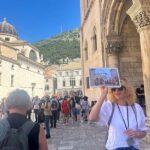
This is built as a walking tour that starts at Nautika (Brsalje ul. 3, Dubrovnik) and ends at Luža Square by the church of St. Blaise on the east end of the main street. Expect about 2 hours 30 minutes of guided time. The route is designed to give you a full “first understanding” of Old Town without trying to do everything at once.
You’ll move through the heart of the historic core in a way that helps you orient quickly. That’s not a small thing in Dubrovnik, where a lot of streets curve, the walls look different from each angle, and the sites are close but not always intuitive to connect. Having a guide do the linking makes the place feel less like a set of monuments and more like a lived-in city.
A practical note: this is a city-walking experience. Even if the tour is paced for your group, you should still expect steps and tight lanes. If you’re sensitive to hills or stairs, tell your guide early. In the same way, if you want more shade and fewer crowd-pressure moments, asking for it usually helps.
You can also read our reviews of more city tours in Dubrovnik
Pile Gate to Stradun: the wall views and the city’s main spine
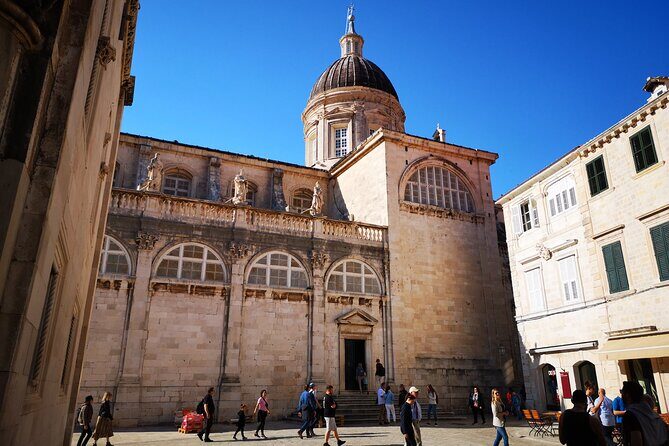
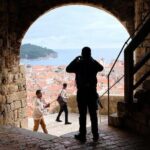
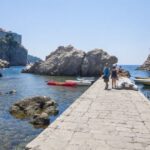
One of the best parts of Dubrovnik is how the city begins at the edges. The tour’s early focus on Pile Gate puts you right at the West Gate area with views tied to the old city walls and the Tower of Minčeta. This is where you start seeing how defensive architecture shaped everyday movement—what people could see, what they could reach, and where entry control mattered.
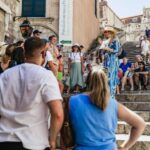
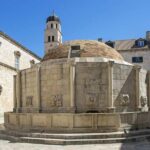
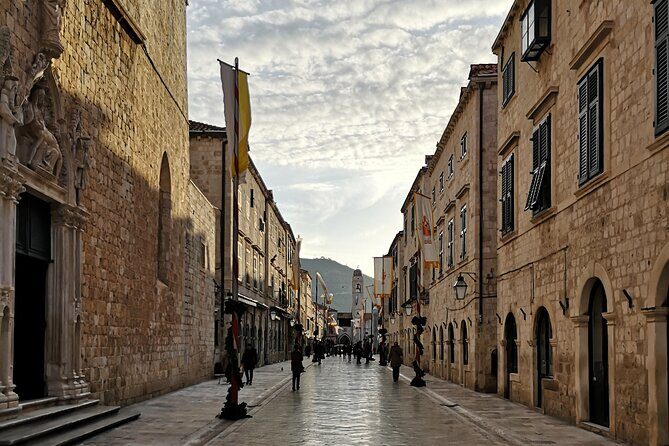
From there, you transition toward Stradun, the main thoroughfare. This is the street that visually holds Old Town together, and it moves at your pace when you’re not fighting crowds. On Stradun, you’ll pass major landmarks like Onofrio’s Fountain and the Church of the Holy Saviour. The key value here is context: you’re not just looking at buildings; you’re learning why they’re placed where they are and what roles they played.
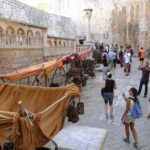
If you’re a fan of TV history, this is also a good moment to ask your guide about Game of Thrones references—multiple guides on this tour are known for spotting relevant corners and pointing out where the city’s look got reused. Even if you’re not into the show, these side notes can help you notice details you’d otherwise miss.
Franciscan Church and monastery museum: the old pharmacy stop
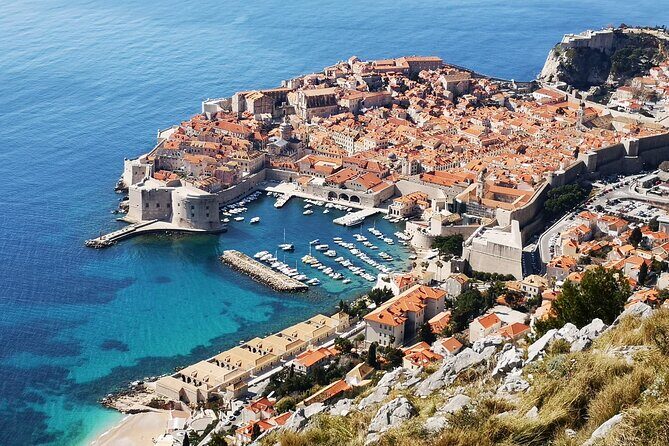
The Franciscan Church and Monastery visit is one of the more memorable breaks in the route. You spend about 20 minutes here, and it’s where the tour adds hands-on cultural texture instead of staying purely in the street-view mode. The museum portion includes the old pharmacy, which gives you a different angle on Dubrovnik—how knowledge, medicine, and trade intersected in a walled city.
This is also where you’ll likely notice the difference between a fast “photo walk” and a guide-led explanation. Monasteries can feel like they’re about rules until someone ties them to how city life worked. In this stop, the guide’s job is to connect the Franciscan setting to the larger story of Dubrovnik’s development.
Museum access is important to plan around. The tour includes two museum entrance fees, but the specific museum selection can change based on tour time/date/period of year. In general, the Franciscan or Dominican monastery museum and the cathedral treasury are the usual options. If a museum is closed, you get funds refunded, and the stop can be adjusted.
Church of St. Ignatius, Granary details, and Ivan Gundulić Square
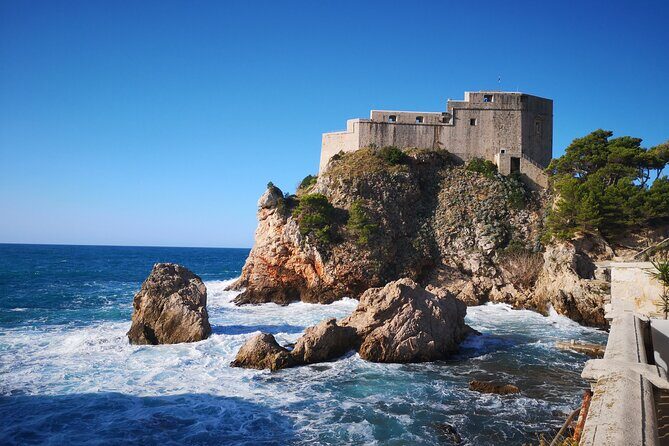
As the tour moves deeper into the Old City’s lanes, it leans into architecture that feels more “hidden in plain sight.” The stop at the Church of St. Ignatius of Loyola takes you through the smaller streets where the scale of Dubrovnik can feel surprising—then the buildings suddenly rise into view.
This area also includes the Jesuit Church and its stairway, plus the Great Granary. That granary detail is a good reminder: Dubrovnik wasn’t only about defense and religion. It was also a trading and supply city. When the guide points out what these buildings likely did in daily life, you start seeing why the city looks the way it does.
The tour also reaches Square of Ivan Gundulić, named for the writer connected with Dubrovnik’s cultural identity. Even if you only spend about 15 minutes here, you leave with a clearer sense of why certain public spaces matter. Squares in Old Town are rarely random; they’re where life gathered, events happened, and civic meaning got staged.
Cathedral and Rector’s Palace: where civic power becomes visible
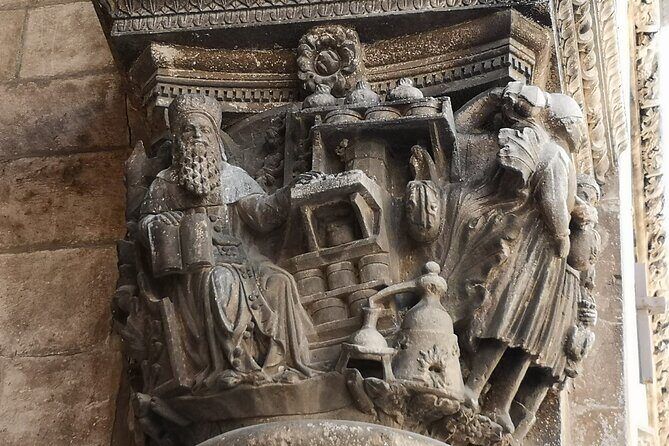
Two stops here make a big difference to how you understand Dubrovnik: the Cathedral of the Assumption of the Virgin Mary (about 20 minutes) and Rector’s Palace (about 10 minutes). These aren’t just pretty. They show you where authority sat—spiritually and politically.
At the cathedral, you’ll see the main religious landmark and the Treasury of the Republic. That treasure component matters because it ties to how the Republic of Dubrovnik managed wealth and identity through time. For many first-timers, it’s the kind of detail you can’t fully grasp from outside views.
Then Rector’s Palace brings you to the civic core: the seat of government for the Republic of Dubrovnik. Even a short visit can feel like a turning point. The guide typically uses this stop to explain how Dubrovnik ran itself and why its leaders looked outward to survive while also investing in local institutions.
If you want a practical strategy, spend a minute before you enter each major site and ask one question. For example: what was the Republic trying to protect here, and who benefited? You’ll get much more out of the time inside, especially on a tour that’s only 2.5 hours long.
You can also read our reviews of more private tours in Dubrovnik


City harbor fortifications: St. John, Lazareti, Revelin, Ploče
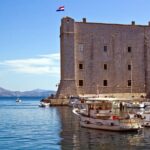
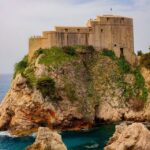
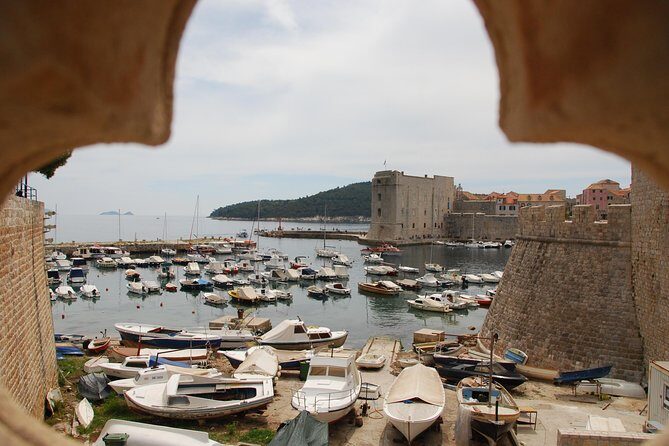
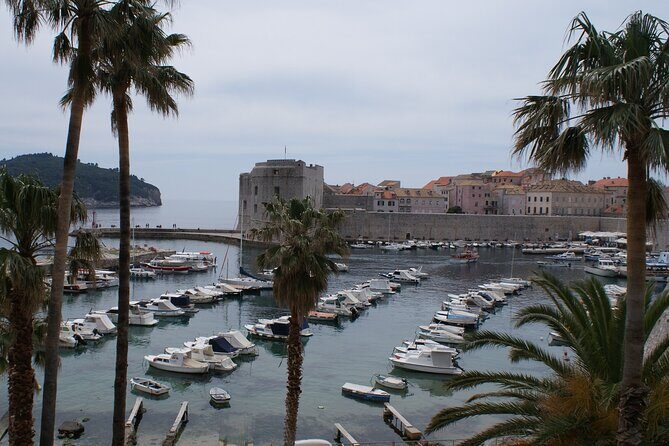
Old Town isn’t only the walls you can walk on. A lot of Dubrovnik’s defensive thinking also lives in the harbor area. The City Harbor stop runs about 15 minutes, but it covers a surprisingly wide set of key structures and meanings.
You’ll see:
- Fortress of St. John
- Lazareti Quarantine
- Fortifications of St. Luke
- Revelin Fortress
- East Gate Ploče
- Dominican Monastery
The big value here is learning how a coastal city protected itself in multiple ways. Fortresses weren’t only for war. Quarantine sites like Lazareti show how the city dealt with health threats and trade connections at the same time. When your guide ties these points together, the harbor becomes more than a pretty photo backdrop—it becomes a system.
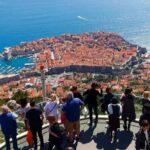
Also, this is where city views start clicking into place. You’ll often get angles that make it easier to picture where you’ve been and where you’ll go next on your own.
Luza Square finale: Sponza, clock tower, and St. Blaise
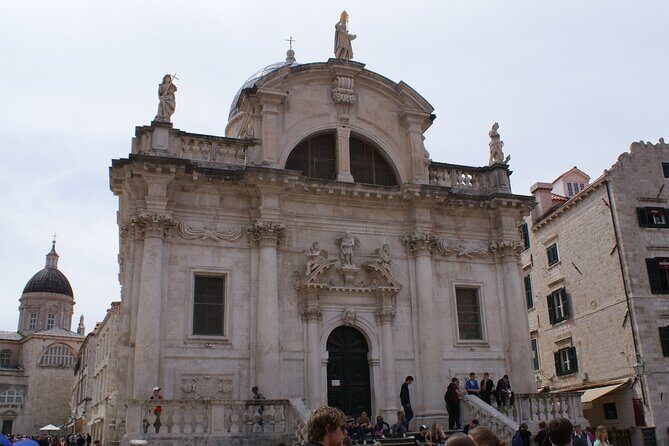
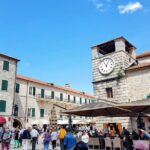
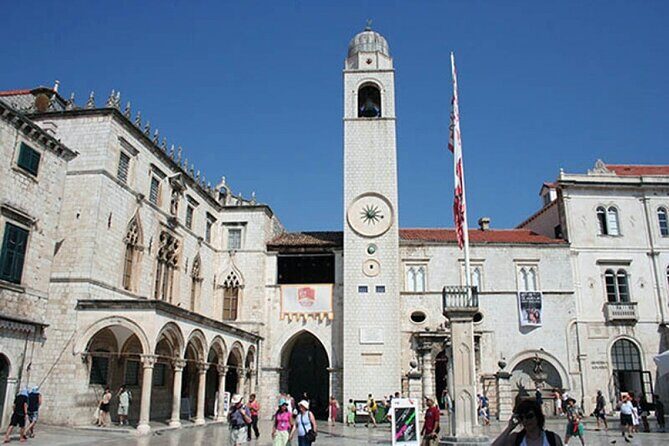
The tour ends in Luža Square, with about 20 minutes here. This square is a natural landing spot because it holds a lot of important landmarks close together. You’ll see Sponza Palace, the Clock Tower, a Small Onofrio’s Fountain, the City Hall, and the Church of St. Blaise.
Sponza Palace is one of those buildings that feels instantly famous once you’re standing near it, but the context is what turns it from a postcard into a place with meaning. The City Hall and the church connection add a civic-religious link that makes sense after you’ve already heard the Republic story earlier on.
If you’re continuing your day on foot, this ending spot is convenient. Luza is right on the main axis where it’s easier to choose your next move—whether that means heading toward viewpoints, eating nearby, or just wandering for the fun of it.
What you actually get for $133.03 per person
At $133.03 per person for about 2.5 hours, the value question depends on what you want out of Dubrovnik.
Here’s the deal: you’re paying for a guide who does three things at once.
- Time-saver: you don’t have to map the story yourself across gates, squares, palaces, and harbor defenses.
- Interpretation: buildings only feel “important” when you know why. The tour’s whole structure is built around that explanation.
- Targeted museum access: entrance fees for two museums are generally covered (chosen based on timing), which is not always the case on budget-style walking tours.
Private format matters too. Only your group participates, so you’re not getting drowned out or forced to follow a one-size-fits-all pace. Many guides associated with this tour are praised for keeping things comfortable, answering questions, and even managing crowd pressure or shade—useful in summer when stones can feel like a furnace.
If you’re traveling as a small family or a group of friends, this often pencils out better than it seems, because you share the cost of a guide. If you’re going solo, it’s still a strong choice when you want clarity fast and don’t want to spend your energy decoding the city on your own.
Tips that match how this tour works in real life
Based on how guides describe their approach, you’ll get more from the experience if you show up with a few priorities.
Ask about the 1990s siege context. The tour’s timeline includes ancient beginnings through the 1990s conflict. If that topic matters to you, ask how the city’s defensive design and community decisions connect to that period. It’s often handled with care, and the personal framing can make it hit harder.
Use the guide’s local lens for food and shopping. Several guides are known for suggesting local places rather than generic tourist stops, including residents’ shops. If you tell the guide what kind of meal you want—quick bite, traditional dish, or something lighter—they usually steer you well once the tour ends.
If you can, request Tea. One of the standout recurring tips is that asking for Tea is a good move. People describe her as clear, friendly, and able to shape the right amount of history for the time you have.
Wear shoes built for steps. Multiple comments point out that there are plenty of steps. You’ll spend most of your time walking on historic stone, so sneakers with grip are safer than any “pretty” footwear.
Should you book this Dubrovnik Old City Private Tour?
Book it if you want Dubrovnik to make sense quickly. This is ideal for first-timers who feel overwhelmed by the sheer number of famous spots, and for anyone who wants both the headline sights and the human story behind them.
Skip it (or adjust expectations) if you want a long, slow day with lots of free time in museums on your own. This tour is efficient. It’s designed to cover the big sites and give you context in a tight window, so you’ll likely want to come back later for extra wandering.
If you’re flexible on museum swaps and comfortable with steps, you’ll leave Luza Square with a much clearer picture of how this city worked—then defended itself—and why those walls, palaces, and squares still matter.
FAQ
What is the duration of the Dubrovnik Old City Private Tour?
The tour lasts about 2 hours 30 minutes.
Where do you meet the guide, and where does the tour end?
You start at Nautika (Brsalje ul. 3, Dubrovnik) and end at Luža Square near the church of St. Blaise (east end of the Placa/Stradun).
Is this a private tour?
Yes. It’s a private experience, and only your group will participate.
Is the tour offered in English?
Yes, it’s offered in English.
What’s included in the price?
The price includes professional tour guidance and two museum entrance fees in general.
Are museum tickets always included?
In general, museum entrance fees (Franciscan or Dominican monastery museum and/or the cathedral treasury) are included, but they can be substituted based on tour time/date/period of year. If museums are closed, funds are refunded.
What is not included?
Food and beverages, personal expenses, and gratuities are not included.
Do I need good weather?
Yes. The experience requires good weather. If poor weather cancels it, you’ll be offered another date or a full refund.
Can I get a full refund if I cancel?
Yes. Cancellation is free, and you can cancel up to 24 hours in advance for a full refund.
How far in advance should I book?
On average, this tour gets booked about 85 days in advance, so booking earlier is a smart move if you have fixed travel dates.