REVIEW · DUBROVNIK
Dubrovnik: 3 Hour Private Tour – Old Town & City Walls
Book on Viator →Operated by Dubrovnik Walks · Bookable on Viator
Walls in Dubrovnik change the whole day. I like how this private 3-hour plan gets you oriented fast, then flows into the places that explain the city’s power and pride. You’ll walk with a licensed English guide, and you’ll start by learning what you’re about to see at the Old Town western entrance.
Two things I really appreciate: you get guided meaning behind the views (not just photo stops), and the route mixes the walls with major Old Town landmarks like Luza Square and Stradun. One thing to factor in before you go: the City Walls entrance fee is not included, so your budget needs that extra cost.
Key moments and why they matter
- Private group pacing: it’s only your group, so the guide can slow down for your questions.
- Licensed, English-speaking guide: you’re not stuck guessing; you get clear context as you walk.
- City wall time with specific forts: Fort Revelin and Minceta Tower aren’t random stops; they’re part of the defense story.
- Luza Square highlights in minutes: St. Blaise’s Church, Orlando’s Column, Sponza Palace, Onofrio’s Fountain, and the bell tower get you quickly oriented.
- Old Town history on Stradun: you’ll connect the 1,400-year timeline to real monuments like the Rector’s Palace and Cathedral after 1667.
- Ends near the port: the tour finishes where it’s easy to keep exploring or grab a meal.
In This Review
- Meeting at Brsalje: why this start point matters
- A licensed guide gives you the story behind the stones
- Western entrance to the Old Town: instant orientation
- City Walls time: Fort Revelin and Minceta Tower
- A key consideration: the wall fee is extra
- Fort Lovrijenac: what you’ll learn even if you don’t go inside
- Luza Square in minutes: monuments with names you’ll remember
- Old Town on Stradun: 1,400 years made walkable
- Porat Dubrovnik finish: wrapping up near the port
- Price and value: is $168.03 per person fair?
- Small-group comfort: headsets, private pace, and fewer awkward moments
- Who should book this tour, and who might want a different plan
- Practical tips to get the most out of your 3 hours
- Should you book this Dubrovnik Old Town and City Walls private tour?
Meeting at Brsalje: why this start point matters
The tour begins at Dubrovnik Walks, at Brsalje ul. 8, with an orange umbrella as your landmark. If you like to avoid the first-day scramble, this type of meeting point is a big deal. You’ll spend less time locating your guide and more time getting your bearings in the Old Town.
The timing is also built for reality. The tour is around 3 hours, so you’re not signing up for a full day. Instead, you’re getting a tight, guided hit of the city’s “why it mattered” locations.
One practical note: you should plan on walking on mixed surfaces. Dubrovnik’s Old Town is stone-and-steep by nature, and the walls add extra stairs and uneven ground. I’d call it moderate fitness, meaning comfortable shoes and steady steps are non-negotiable.
A licensed guide gives you the story behind the stones
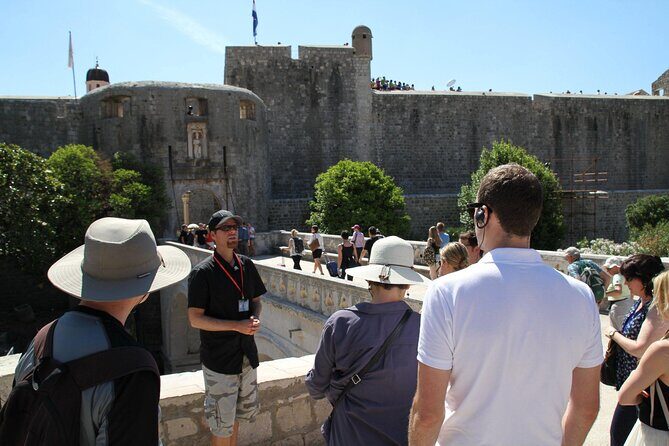
Right at the start, your guide introduces themselves and gives a quick summary of what you’ll cover. Then you’ll get the basic points for what you’re about to see. I like this approach because it turns the city from “cool buildings” into “a place with a plan.”
You’ll also have options for hearing the guide. If your group is 4+ and you request it, you can use audio headset devices, and they’re also provided even in smaller groups if requested. In a noisy Old Town street, that can make the difference between catching everything and losing the details.
The guide is licensed by the Croatian Ministry of Tourism and speaks English. That matters on this kind of tour because the walls and fort structure depend on understanding the logic, not just memorizing names.
You can also read our reviews of more city tours in Dubrovnik


Western entrance to the Old Town: instant orientation
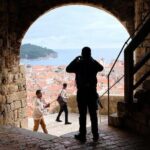
You begin at the main western entrance to the Old Town. That’s a smart first move because it places you at the threshold of the city’s historic core. Within minutes, you’re not just walking—you’re stepping into the defensive and trading mindset that shaped Dubrovnik.
From this point, you’ll get the “map in your head” effect. The guide’s explanations help you connect what you see now (towers, streets, squares) to how the city once defended itself. Even if you’re short on time, this start helps you get more out of every later glance.
And because the tour is private, you can ask follow-ups right away. If you care about architecture, trade, or military history, this early orientation keeps the rest of your walk from feeling random.
City Walls time: Fort Revelin and Minceta Tower
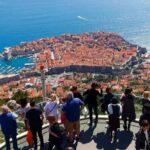
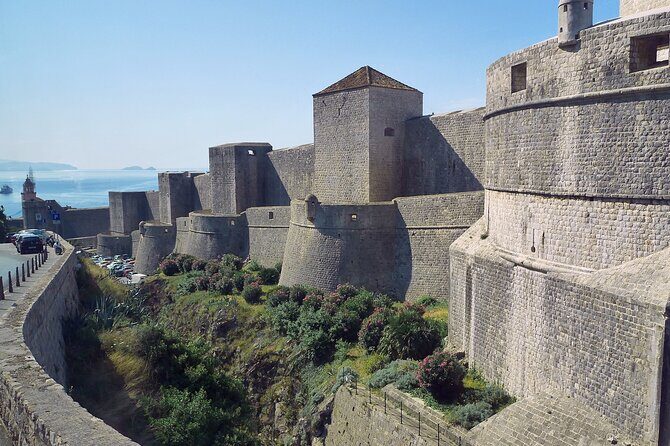
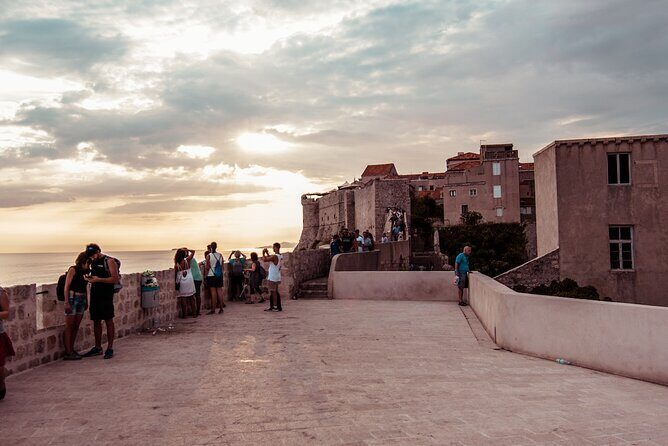
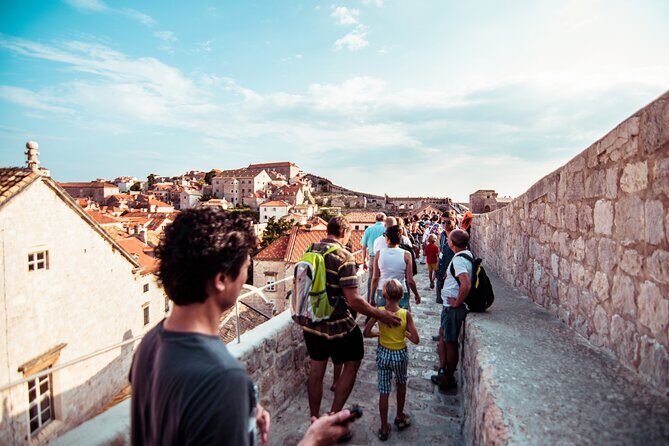
The highlight for many people is the City Walls portion, roughly 2 hours. Your guide purchases the wall tickets on the day, and then you’ll stroll the walls with Adriatic views as the visual reward. These aren’t just scenic walks; you’re moving along the city’s built-in argument for why Dubrovnik stayed independent.
Here’s the kind of context you’ll hear while walking: the walls trace back to how the city’s sea channel was covered with earth in the 11th century. The guide explains how a single defensive wall concept grew into a system restored closer to its original look over time.
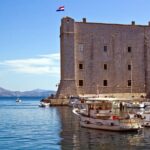
Within the walls, you’ll explore Fort Revelin and Minceta Tower. I like this pairing because it gives you both the defensive function and the “command-and-control” feel. Minceta Tower is especially good for understanding how heights and sightlines mattered. Fort Revelin helps explain how defenses worked as a system rather than one wall line.
Expect lots of photo moments, yes, but also stretches where you’re learning while you walk. That balance is part of the value here. It’s not a casual stroll with no context; it’s a guided walk where the viewpoints and the architecture get explained together.
A key consideration: the wall fee is extra
The City Walls entrance fee is not included in the tour price. You should plan on €40 per person for the walls. If you’re using the Dubrovnik Pass, it covers 1 visit to the city walls, but you need to purchase that in advance.
This is worth planning for. If you’re trying to keep costs tight, decide before you book whether you’ll actually do the walls. Once you’re standing on them, it’s hard to regret the extra spend—but you do need it in your budget.
Fort Lovrijenac: what you’ll learn even if you don’t go inside
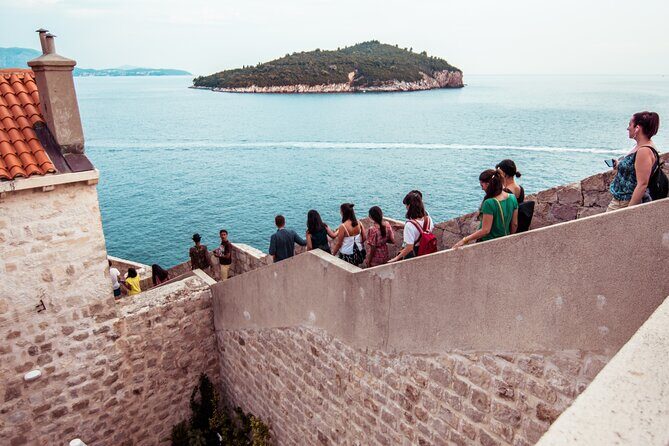
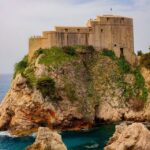
You’ll also learn about Fort Lovrijenac. It’s separate from the main wall circuit, and it’s visitable after the tour. That’s a helpful heads-up because it keeps you from thinking your tour covers everything on the wall strategy map.
I like tours that connect dots across locations like this. You end up understanding the defensive landscape better, even if you’re not walking to every related fort during the allotted time.
If you have extra energy afterward, consider adding Fort Lovrijenac on your own. If you’re short on time, the explanations you get on the walls will still help you recognize its role when you see it from outside.
You can also read our reviews of more private tours in Dubrovnik



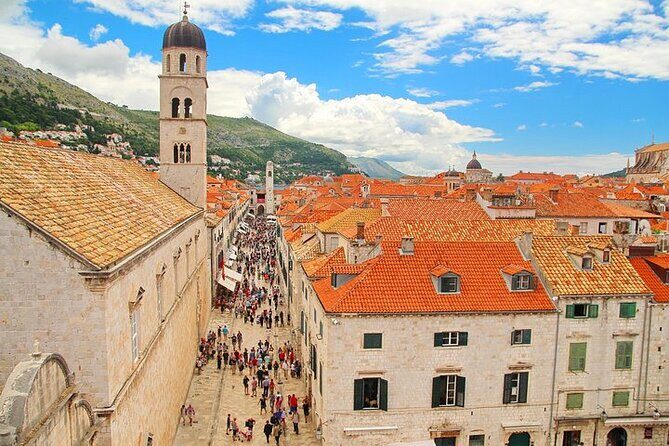
Luza Square in minutes: monuments with names you’ll remember
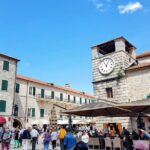
Next you’ll reach Luza Square, the Old Town’s main square, and the stop is brief—about 5 minutes. You might think “short stop, so it must be superficial,” but the guide uses the time to hit the key landmarks that anchor Dubrovnik’s identity.
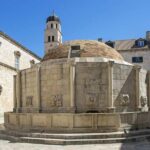
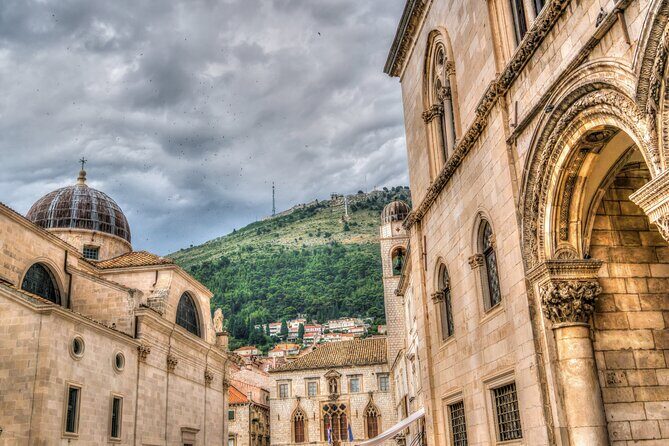
You’ll see a cluster of famous pieces here: St. Blaise’s Church, Orlando’s Column, Sponza Palace, Onofrio’s Fountain (Small Onofrio), and the bell tower. The value is that you don’t just look at them—you get basic orientation on what they represent and why they’re connected to civic life.
If you’re visiting for the first time, this stop helps you calibrate your walking route. Luza Square is a natural “center of gravity,” and once you understand it, the rest of the Old Town feels easier to navigate.
Old Town on Stradun: 1,400 years made walkable

The Old Town portion runs about 45 minutes, and this is where the tour becomes more than sightseeing. You’ll hear stories that connect Dubrovnik’s long stretch of history to its wealth as a port city, then to the pressure of war and the survival of local culture.
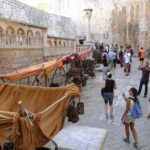
The walk includes major landmarks and the kind of details that make a place feel specific. You’ll pass the Franciscan Monastery and see Orlando’s Column on the Stradun. This monument is tied to the city’s long-standing freedom and sovereignty, so you understand why a column matters beyond aesthetics.
You’ll also encounter Onofrio’s Fountain, built in 1438. The guide explains it was powered by an 8-mile (12-km) aqueduct that brought water into the city. I really like this kind of fact because it reframes “cool fountain” as “infrastructure that enabled daily life,” including trade and density in a city hemmed in by defense.
On the route you’ll pass the Rector’s Palace and Sponza Palace too. Both are major civic and economic symbols, so you get a clearer picture of how Dubrovnik organized power and commerce.
Then you’ll see the Cathedral of the Assumption, a baroque church built after the devastating earthquake of 1667. This matters because it shows you the city’s ability to rebuild and reshape itself after catastrophe—again, not just a pretty stop, but a timeline marker.
Porat Dubrovnik finish: wrapping up near the port
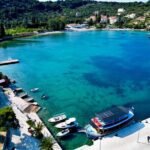
The tour ends close to the old town port at Porat Dubrovnik, with the final stretch lasting only a few minutes. I like ending near the port because it gives you choices right away: you can keep walking on your own, find a spot to eat, or shift to whatever your next plan is.
Finishing near where ships and ferries relate to daily life also feels appropriate for a city that became important as a port. If you end somewhere deep in the walls, you sometimes feel stuck. Here, you get an easy exit.
It’s also practical for photos. You’re likely to want a final look over the water, and ending near the port makes that simpler.
Price and value: is $168.03 per person fair?
This tour runs about 3 hours and costs $168.03 per person. That price can sound steep on paper until you factor in what you’re actually buying: a licensed guide, private group handling, and a structured route that hits the walls plus core Old Town landmarks.
The biggest cost variable is the wall entrance fee. Since the City Walls ticket is not included (and you should expect €40 per person), your real all-in cost depends on how you plan to pay for the walls.
In return, you’re getting:
- a guided wall walk with specific forts (Fort Revelin and Minceta Tower)
- Old Town stops that connect civic monuments to stories
- a tour length that fits a busy Dubrovnik schedule
If you’re only going to do one “major guided” experience in Dubrovnik, this one makes sense. It covers the city’s defense mindset and its civic landmarks without turning into a marathon.
If you already have the City Walls tickets and you love monuments with explanations, it feels more like a “how to see the city” ticket than a simple walking tour.
Small-group comfort: headsets, private pace, and fewer awkward moments
This is a private tour/activity, meaning only your group participates. That matters for comfort and for learning. You can move at a pace that works for you, and you’re not competing to hear explanations.
Headsets are also available if requested, especially in groups of 4+. Even if you’re not in a large group, it can help you catch the guide’s details in louder stretches. It’s a small operational thing, but it changes the experience.
Expect the guide to manage the day’s flow across multiple locations in a short time. For first-time visitors, that’s a real benefit because Dubrovnik can feel like a lot of choices with very limited time.
Who should book this tour, and who might want a different plan
I think this tour fits best if you:
- want Old Town and the City Walls but don’t want to piece it together yourself
- like history explained while you walk
- plan to spend most of your time inside the Old Town area
- prefer a private format so you can ask questions without pressure
It might be less ideal if you have trouble with sustained walking, stairs, or standing for viewpoints. The tour calls for moderate physical fitness, and the walls in particular include uphill and step sections.
It also helps if you’re okay paying an added entrance fee for the walls. If you only want ticket-inclusive pricing with no extras, you’ll need to plan differently.
Practical tips to get the most out of your 3 hours
Wear shoes you can trust on stone. The walls and Old Town streets aren’t flat and smooth, and you’ll want grip for steady steps.
Bring water and plan for sun. Even with a guide pacing breaks, you’ll be outdoors for most of the experience.
Decide ahead of time whether you’re doing the walls. Because the ticket isn’t included, having the plan clear before you meet makes the day smoother.
If you’re traveling in a group of 4+ and you care about hearing every word, request the headset option. It’s one of the simplest ways to make a guided walk feel truly guided.
Finally, use the first 30 minutes as your “learning window.” When the guide gives context early, the rest of the walk clicks faster—especially around Luza Square and Stradun.
Should you book this Dubrovnik Old Town and City Walls private tour?
If you’re aiming for value, this is a strong pick for first-timers who want both the Old Town monuments and the City Walls in one guided session. The private format and the licensed English guide add real comfort, and the way the guide ties forts, civic symbols, and water infrastructure into one storyline makes the walking time feel worth it.
Book it if you can budget for the wall entrance fee (or if you already have the Dubrovnik Pass for one wall visit). Skip or rethink if you’re unsure you’ll do the walls or if your mobility is limited enough that stairs and viewpoints would slow you down too much.
In short: for a 3-hour plan that helps you understand Dubrovnik fast, this tour is easy to recommend.