REVIEW · DUBROVNIK
Small Group Tour; Balkans & Central Europe – Dubrovnik to Vienna
Book on Viator →Operated by Choose Balkans · Bookable on Viator
A week of walls, rivers, and mountain air. This small-group tour strings together UNESCO towns, Danube cities, and real hiking in Albania, all guided by one professional leader. I like that it’s designed for people who want both big sights and the quieter moments in between.
Two things I especially like: first, you get a true small-group experience (max 10), and the guide team has a strong track record for keeping the day moving while still leaving you real free time. You’ll hear guide names like Bilbil, Mira, Sokol, Armando, and Ani show up again and again in the feedback because they’re consistently described as friendly, hands-on, and quick to organize options for downtime.
Second, the centerpiece is the two-day Albanian Alps hiking around Komani Lake and Valbona Valley, with time for the famous scenery—and even a Komani Lake boat ride is a standout detail that keeps coming up. One consideration: the schedule is packed with driving plus walking (including uneven terrain in Sarajevo), and lunch/dinner are on your own most days, so budget for daily meals and plan for an active pace.
In This Review
- Komani Lake to Vienna: What Really Makes This Tour Work
- Leaving Dubrovnik: Getting Set for a Balkan-to-Central-Euroupe Road Trip
- Mostar’s Stari Most and Blagaj: Where Two Worlds Meet
- Sarajevo’s Ottoman + Austro-Hungarian Split (Plus the Latin Bridge Story)
- From Zvornik to Belgrade: Drina River Calm to Danube Power Views
- Wine Towns and Fortress Views: Sremski Karlovci and Novi Sad
- Subotica’s Austro-Hungarian Details to Budapest’s Big Finale
- Győr and Bratislava: The Quiet Wins on a Danube Route
- Ending in Vienna: A Clean Finish After a Big Circle
- Price and Logistics: Is $3,773.83 Worth It?
- What Kind of Traveler This Tour Suits Best
- Should You Book This Dubrovnik to Vienna Small-Group Tour?
- FAQ
- How long is the Dubrovnik to Vienna tour?
- Where does the tour start and where does it end?
- What group size should I expect?
- Is hotel pickup included in Dubrovnik?
- What meals and accommodations are included?
- Are site entry tickets included?
- Is there a fitness requirement?
- Is lunch or dinner included?
- What happens if I cancel?
- Does the tour use mobile tickets?
Komani Lake to Vienna: What Really Makes This Tour Work
- Max 10 people, one leader: easier navigation and more chances to ask questions.
- Two full hiking days in Albania: Komani Lake and Valbona Valley are the emotional payoff of the whole itinerary.
- Guided stops across four countries: Mostar, Sarajevo, Belgrade, Budapest, Bratislava, plus the Albania segment.
- Big-name sights, smaller-city feel: fortress viewpoints, castle walks, and old-town wander time.
- Pickup and drop-off by vehicle: hotel-to-hotel start in Dubrovnik and hotel drop in Vienna.
- Clear inclusions, clear gaps: accommodation and breakfasts are included; many meals are not.
Leaving Dubrovnik: Getting Set for a Balkan-to-Central-Euroupe Road Trip
The trip starts early in Dubrovnik with hotel pickup around 7:00 am, then you move toward the border to meet your tour leader. It’s a smart way to kick things off because you’re not spending your first day figuring out transport between countries.
Once you’re underway, the feel shifts fast: Dubrovnik is polished and coastal, but the route that follows is about layered borders—place names, religions, empires, and everyday life all mixed together. The tour format helps here: you’re not just passing through. You’re stopping long enough to understand what you’re seeing.
And since it’s small-group (up to 10), you’re more likely to get personal attention—especially when the schedule changes due to weather or site operations. That flexibility matters when you’re moving through multiple cities.
You can also read our reviews of more tours and experiences in Dubrovnik.
Mostar’s Stari Most and Blagaj: Where Two Worlds Meet
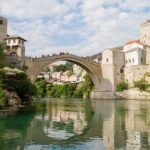
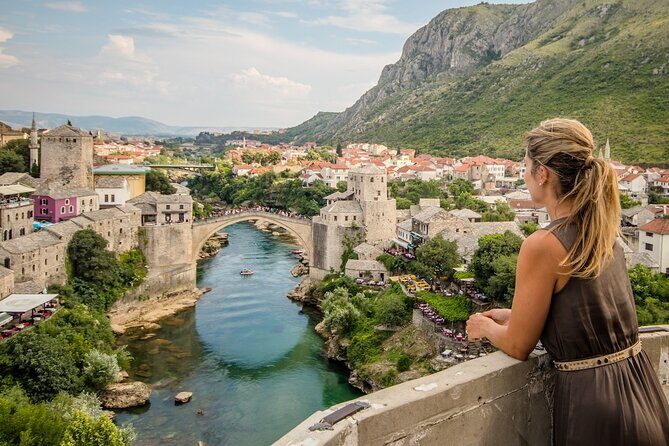
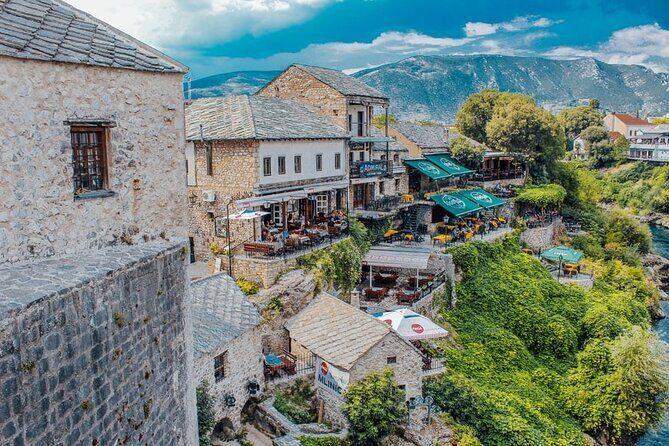
Mostar is the first big UNESCO hit, starting with the Old Bridge (Stari Most). You get to stand where history is visually loud: Ottoman-era design, river views, and that classic “how did they build this?” feeling that comes from a bridge that’s been rebuilt and preserved over centuries.
Then you move into the Old Bazaar area, where the city’s past shows up in the tight alleyways and the way the town is built for foot traffic. You’ll also notice memorial details around the city—small reminders of the more recent conflicts that still shape how people talk about their hometown.
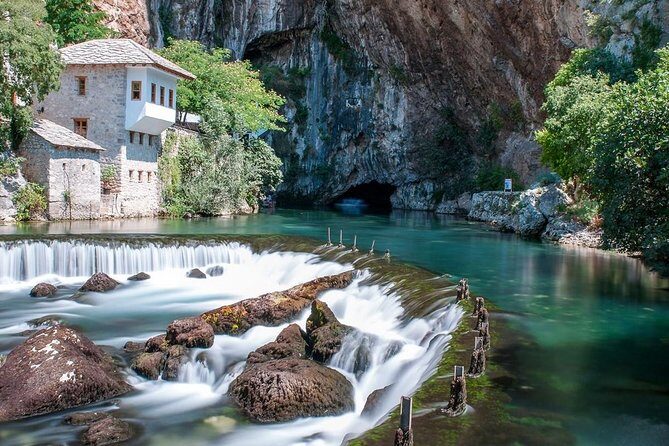
A major bonus stop is Blagaj tekija, outside Mostar. It sits in a dramatic spot near the cliff, and the river Buna’s spring feeds bright blue water right in front of the monastery area. This isn’t just photo time. It’s a breather stop—one of those places where you can slow down and reset your brain after crossing borders and switching cultures.
Possible drawback in this stretch: Mostar works best if you’re comfortable walking cobblestones and moving through busy pedestrian areas. If you prefer wide, easy streets, you’ll still enjoy it, but you’ll feel the old-city terrain more than in modern districts.
Sarajevo’s Ottoman + Austro-Hungarian Split (Plus the Latin Bridge Story)
After Mostar, you head to Sarajevo, and the tour’s big skill here is making you read the city like a map. You don’t just see buildings; you see how Ottoman and Austro-Hungarian influences shape markets, mosques, churches, and synagogues.
One detail you’re guided through is how the city still shows reminders of the Yugoslav War, including bullet holes and cannon marks. That can be heavy to look at, but it’s also part of understanding Sarajevo as a lived-in place, not a museum set.
You also visit the Latin Bridge, famous for the World War I assassination trigger connected to the story. What I like about including this is the way it links a small stretch of geography to world events—so you don’t have to memorize names without context.
Later, you get time to enjoy Sarajevo’s food and desserts on your own. If you’re picky about meals, plan for that: lunch and dinner are not included on most days, so Sarajevo is one of your chances to choose something you genuinely want rather than rushing.
Terrain consideration: the Sarajevo day includes walking on uneven ground and some ruins. It’s doable for people with moderate mobility, but you shouldn’t schedule this day if you want an easy walking pace.
From Zvornik to Belgrade: Drina River Calm to Danube Power Views
The Serbian leg begins with Zvornik along the Drina River. This is one of those “pause and look” stops. You get a chance to take a break, have lunch, and walk the streets at a more relaxed pace than the big-city segments.
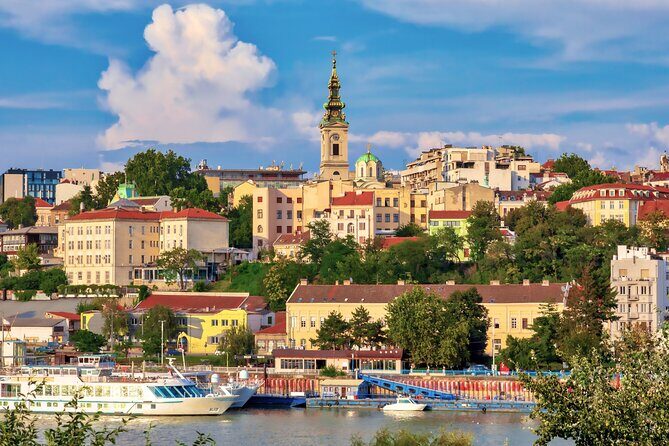
Then you roll into Belgrade, and the tour focuses on two anchors: Belgrade Fortress and Kalemegdan Park. The fortress sits where the Sava and Danube meet, and the view from up there is a natural way to understand how the city grew: water routes, defense lines, and trade all at once.
Inside the fortress area, you visit the Pobednik monument (1913) and then walk along Knez Mihailova toward Republic Square. This is a classic Belgrade movement route because it’s built for pedestrians and it gets you seeing the city’s energy rather than only standing still at viewpoints.
Value note: Belgrade is the kind of stop where a guide helps you avoid the common trap—walking around without understanding what matters. You don’t need to know everything, but you do want the context, and the tour format gives you that without turning the day into a lecture.
Wine Towns and Fortress Views: Sremski Karlovci and Novi Sad
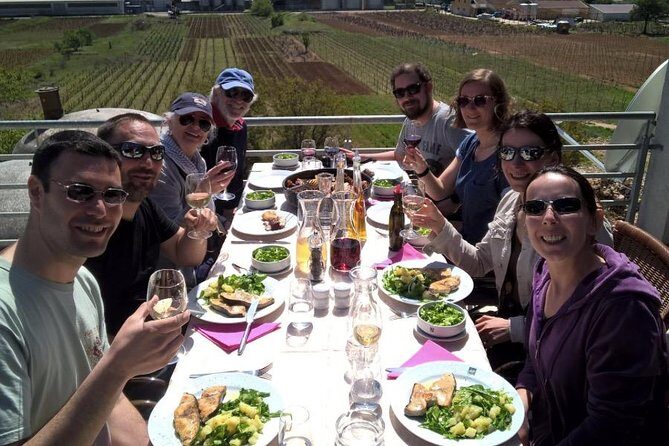
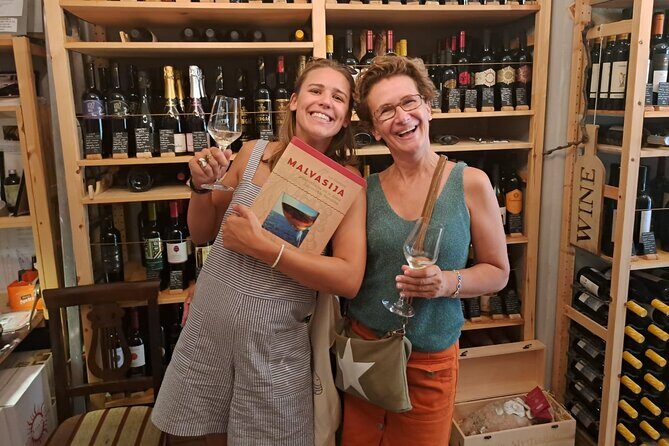
Next up is Sremski Karlovci, a town tied to Serbian culture and wine production traditions. You get time to tour the area’s Baroque center vibe and then have free time to taste local wine specialties with vineyard views in the background.
I also like that the tour includes the legend of the Four Lions fountain—the idea that drinking from it makes you return and get married in Karlovci. It sounds like tourist lore, but in places like this, those stories are part of how locals keep memory alive.
Then you shift to Novi Sad, described as the cultural capital of northern Serbia. The tour makes the city’s history visible by pointing out Ottoman and Austro-Hungarian influences side by side. In practice, that means you’ll notice architectural styles that don’t look like they belong in one straight timeline.
A highlight here is Petrovaradin Fortress, nicknamed the Gibraltar on the Danube. Fortress viewpoints are always worth it, but this one also helps you understand the Danube’s role in defense and power—because you can see why the location was chosen.
You’ll also get guided strolling through pedestrian streets around areas like Zmaj Jovina and Dunavska, plus time to explore Novi Sad on your own. The overnight in Novi Sad matters because it spreads out the experience and gives you a real evening in the city rather than sprinting through everything.
Subotica’s Austro-Hungarian Details to Budapest’s Big Finale
From Novi Sad to Subotica, the pace stays human-sized. Subotica is known for architecture that’s heavily influenced by its Austro-Hungarian wealth period, and what I like about this stop is that the city center isn’t dominated by a single cathedral. Instead, the City Hall anchors the main square area with parks, fountains, and open space.
You’ll visit the Cathedral of St. Teresa of Avila and the synagogue as part of the city experience. It’s a good reminder that Central Europe’s culture isn’t only Catholic churches and town squares—it’s also Jewish heritage and civic buildings that signal how the city used its wealth.
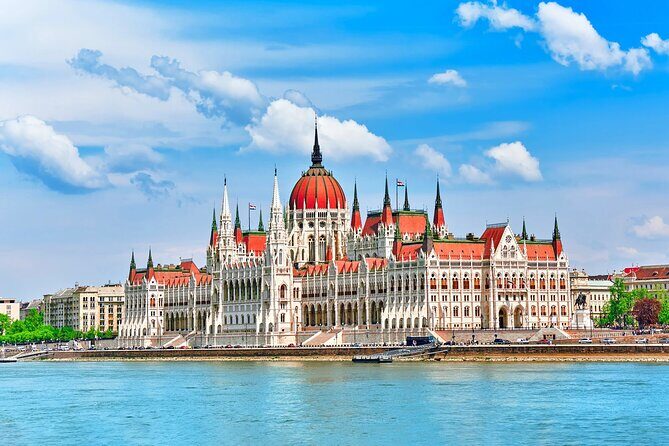
Then you cross into Budapest, and this is where the tour’s “finish strong” energy shows up. Budapest is divided by the Danube into Buda and Pest, and you’ll get a drive-by and walk-by mix that gives you big-picture orientation quickly.
In Budapest, the tour takes you past key landmarks including Saint Stephen’s Basilica, the Opera, Parliament, Heroes’ Square, and the Fisherman’s Bastion viewpoint. This is the right kind of overview because it helps you decide what you want to return to later.
Then comes Buda Castle—a UNESCO World Heritage Site—with guided time inside the castle area. When you’re finished, you also get free evening time to explore at night. Budapest after dark can be a different city, and having that time is what turns “sightseeing” into “experience.”
Győr and Bratislava: The Quiet Wins on a Danube Route
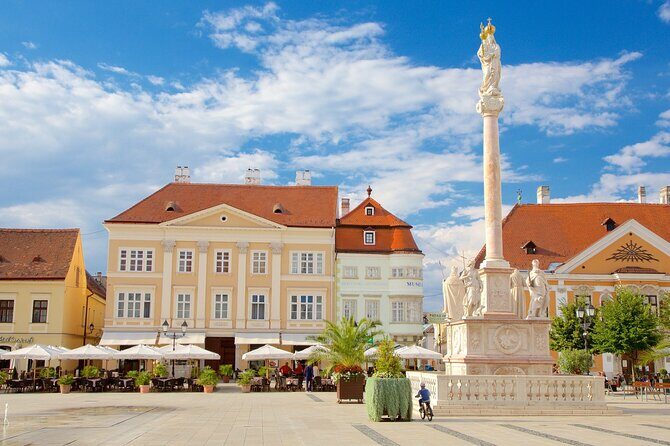
After Budapest, you head to Győr, often described as the “City of Rivers.” It’s the kind of town that feels comfortable after the bigger, louder capitals. The tour includes the town center and highlights like the Győr Town Hall, with its 59-meter tower and green-topped look.
You’ll also visit the Cathedral of The Virgin Mary (Roman-style, built in the 11th century) and see the Győr Synagogue—whose architecture inspired other synagogues across Central Europe. Even if you don’t love architecture, this stop gives you a sense of how cultures travel by people, not just by armies.
Then there’s a walk along Baross Gábor Way, a pedestrian street full of places to eat and browse. If you want a local-style refreshment, the tour mentions blueberry beer, which is exactly the kind of small detail you remember later.
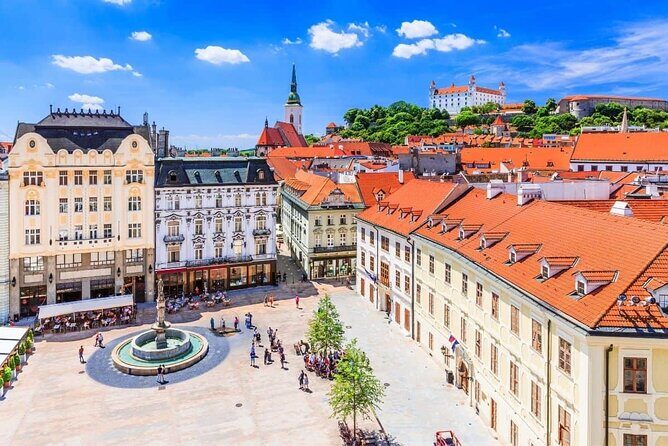
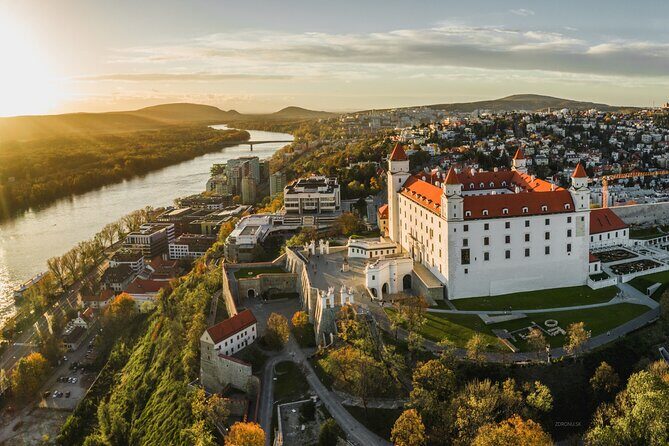
From Győr, you continue to Bratislava, where the focus turns to old-town structure. You’ll walk through the Old Town Hall area, visit Michalská brána (the only preserved medieval fortification gate), and climb up to Bratislava Castle for an overlook.
I like that the castle includes a built-in payoff: hilltop views, then time back down in the city center. The tour also points out Bratislava’s café culture and suggests trying the famous coffee in traditional coffee shops—useful advice if you want to end the trip with something more personal than another monument photo.
Ending in Vienna: A Clean Finish After a Big Circle
The last day is a drop-off in Vienna, with the tour leader taking you to your hotel. Vienna isn’t just a “final stop”—it’s the kind of place where you’ll either love your next days for museums and cafés, or you’ll use it as a reset point before flying home.
Because the tour ends with hotel drop instead of a train station scramble, you’ll arrive less frazzled. And after 10 days of borders and bus days, that matters more than you’d think.
Price and Logistics: Is $3,773.83 Worth It?
This price sounds steep until you map what’s included. You’re paying for a guided, cross-border route with 3-star accommodations and breakfast, a professional tour leader, hotel pickup in Dubrovnik, and hotel drop-off in Vienna. You also get entry tickets for the sites visited, plus international car insurance and the taxes/road costs that typically get tacked on later in independent travel.
Where the value gets real is how it removes decision stress. You don’t have to stitch together driving, border timing, and guided context across multiple countries. Also, the group stays capped at 10, so you’re not stuck in a giant crowd.
The main cost consideration is that lunch and dinner aren’t included, so you’ll want to budget daily meals and snacks. If you’re someone who likes to eat out well and often, you’ll spend more here. If you plan simply—bakeries, lunch plates, and one sit-down meal a day—you can keep costs under control.
What Kind of Traveler This Tour Suits Best
This one fits you if you want guided clarity plus active time. You’ll enjoy the tour if you like:
- walking through old towns and learning why places were built where they were
- a balance of guided stops and free time to wander on your own
- a meaningful nature segment with the Komani Lake and Valbona Valley hiking days
It’s less ideal if you want a slow cruise-style rhythm. There’s enough driving and enough uneven walking to feel it, and Sarajevo’s terrain is specifically noted. You’ll still be fine with moderate fitness, but you shouldn’t book this as a “rest days only” vacation.
Should You Book This Dubrovnik to Vienna Small-Group Tour?
I’d book this if you’re excited by the idea of combining two different travel styles: guided European city layers and an Albanian Alps outdoor segment that’s not just sightseeing. The Komani Lake and Valbona Valley portion is the kind of experience that sticks, especially with the guide support and time on the water that shows up as a highlight in past departures.
I wouldn’t book if you know you get cranky with tight schedules and paying for most meals yourself. Also, if you dislike uneven walking terrain, skip the idea and look for a more step-light itinerary.
If you want a guided route that feels efficient without feeling robotic, and you’re okay budgeting for lunch/dinner, this is a strong choice.
FAQ
How long is the Dubrovnik to Vienna tour?
The tour runs for about 10 days.
Where does the tour start and where does it end?
It starts with pickup in Dubrovnik, Croatia, and ends with drop-off at your hotel in Vienna, Austria.
What group size should I expect?
The maximum group size is 10 travelers.
Is hotel pickup included in Dubrovnik?
Yes, hotel pickup in Dubrovnik is included.
What meals and accommodations are included?
Accommodation and breakfast are included for the overnights in 3-star hotels. The experience details also indicate meals are part of the program for the hiking adventure segment.
Are site entry tickets included?
Yes, entry tickets for the sites that will be visited are included where applicable.
Is there a fitness requirement?
The tour asks for travelers with a moderate physical fitness level.
Is lunch or dinner included?
No. Lunch, dinner, drinks, and snacks are not included.
What happens if I cancel?
This experience is non-refundable and cannot be changed for any reason.
Does the tour use mobile tickets?
A mobile ticket is listed as a feature, and confirmation is received at booking.