REVIEW · DUBROVNIK
Dubrovnik to Tirana; Semi – Private Tour with Tour Leader & Car
Book on Viator →Operated by Choose Balkans · Bookable on Viator
Mostar, Sarajevo, Kotor, and Tirana in one drive. I like how this route turns big-name sights into a small-group Balkan experience with a car and a real tour leader, not a giant bus shuffle. Two things I especially love are the included taste moments (Ottoman coffee in Sarajevo and the Tirana food tour with meal and grape raki) and the way the itinerary keeps switching styles—Ottoman, Austro-Hungarian, and Venetian influences side by side. One drawback to plan around: you’re moving daily, with early pickup and some days that feel more like long touring marathons than slow wandering.
You should also know this is the kind of trip where logistics matter. Pickup is offered in Dubrovnik Town (cars can’t reach all streets), then you shuttle to the border to meet your tour leader, and the pace stays busy across Bosnia, Montenegro, Kosovo, and Albania. Still, I’m encouraged by the operator’s track record for responsive planning and guides named in feedback such as Ana, Taulant, Nelly, and Gezim, with support from Sirma—so if something goes sideways, you’re not stuck alone.
Small-group pace with a tour leader and car (max 10)
Multiple included food stops: Ottoman coffee and a Tirana meal with grape raki
Real religion-and-empires variety: mosques, churches, bazaars, and forts
Historic checkpoints: Stari Most, Latin Bridge, UNESCO Kotor
A practical route with breakfast included each night (3-star hotels)
In This Review
- Entering The Balkan Mix: Why Dubrovnik to Tirana Works So Well
- Price and Logistics: What $3,433 Really Covers
- Day 1: Dubrovnik to Mostar, Plus the Ottoman House
- Day 2: Sarajevo’s War Marks, Ottoman-Austria Corners, and Latin Bridge
- Day 3: Blagaj’s Buna Spring and Kotor’s Fortress-Street Maze
- Day 4: Budva and Sveti Stefan Photos, Then Shkoder and Handmade Masks
- Day 5: Slow Food at Mrizi i Zanave, Then Prizren’s Mosques and Fortress Views
- Day 6: Gjakova Bazaar, Decan Monastery UNESCO Frescoes, and Rahovec Wine Country
- Day 7: Krujë Old Bazaar and Castle Tunnels
- Day 8: Tirana Food Tour With Byrek, Markets, and Grape Raki
- The Guide Team and Small-Group Feel You’re Buying
- Who This Tour Fits Best (and Who Should Rethink)
- Should You Book This Dubrovnik to Tirana Semi-Private Tour?
- FAQ
- Pickup is offered in Dubrovnik Town?
- What time does the tour start?
- Where do you meet the tour leader?
- How many travelers are on the tour?
- What kind of accommodations are included?
- Is lunch or dinner included?
- Are any admissions/tickets included?
- Do you get any included food tastings?
- What language is the tour offered in?
- What happens if I cancel?
Entering The Balkan Mix: Why Dubrovnik to Tirana Works So Well
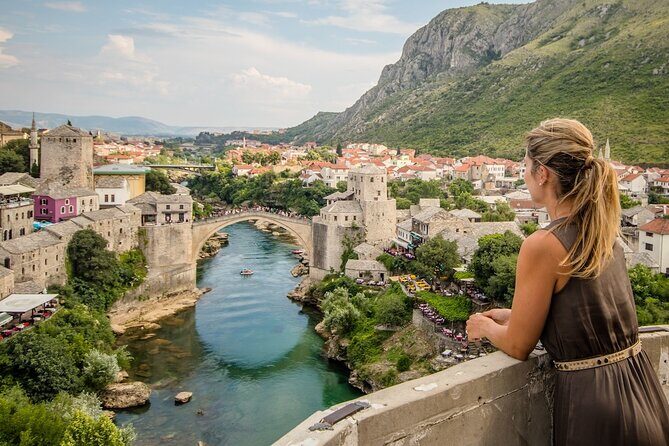
This trip is built like a sampler plate—just enough time in each place to understand the “why,” and then on to the next town before you start feeling museum fatigue. The big win is variety. You go from medieval Dubrovnik’s Adriatic calm to Ottoman-era architecture in Mostar and Blagaj, to Sarajevo’s layered European quarters, to Montenegro’s coastal old-town streets, and then inland toward Kosovo’s monasteries and market cities, ending in Tirana’s food-and-market culture.
It also helps that the tour is explicitly semi-private, with up to 10 travelers. In practice, that usually means fewer time sinks: quicker regrouping, more time for questions, and a tour leader who can adjust pacing when the group moves at different speeds. You also get a car through long distances, which matters on a route like this, where public transport connections aren’t always simple.
Price and Logistics: What $3,433 Really Covers
The listed price is $3,433.11 per person for an approx. 8-day trip. That sounds steep until you break down what’s included: you’re getting breakfast for 7 nights (with hotel accommodations in 3 stars), transport by the company, a professional tour leader, tourist/road taxes/petrol, plus a few included admissions and specific food stops (not just a basic sightseeing day).
Where you’ll spend extra is the predictable stuff: lunches, dinners, drinks, and snacks are not included, and souvenirs are on you. Also, the itinerary includes several short visits where you may want to pay for optional extras or time-saving choices on your own once you’re there. My advice: build a daily food budget and keep a little cash for markets, small entrances, and transport quirks.
One more practical point: the tour says prices are calculated on double/twin/triple/quadruple occupancy. If your room plan changes, your final number can too. So before you book, confirm the room occupancy match to avoid surprises.
You can also read our reviews of more private tours in Dubrovnik
Day 1: Dubrovnik to Mostar, Plus the Ottoman House
You start with a sunrise-style setup: pickup at 7:00 am from your Dubrovnik hotel area (cars may not reach all parts of Dubrovnik Town). Then it’s a shuttle to the border, and that’s where you meet the tour leader who guides the rest of the route.
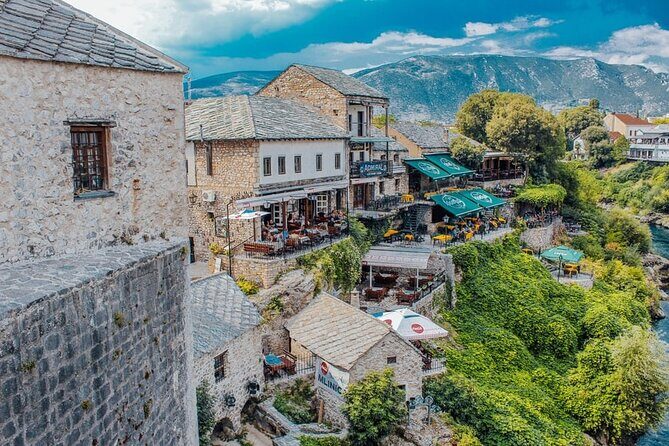
Mostar is the opening act. You get the iconic Stari Most (Old Bridge), UNESCO, and the surrounding Old Bridge area. The key value here is context. This isn’t just “see a bridge and leave.” You also walk the Old Bazaar with its colorful lanes and everyday energy, plus the memorial stones marked with Don’t Forget—small details that connect the city’s history to what you’re seeing now.
Then you add Bišćevića Kuća, a preserved Ottoman riverside house. The payoff is texture. A bazaar tells you how people trade. A house shows you how they lived. The visit is only about 30 minutes, so you won’t overdo it, but you’ll come away with a clearer sense of Ottoman residential architecture in the region.
Consideration: Day 1 is more “transfer and orient” than deep dive. It’s ideal for setting momentum, but if you’re craving long, unstructured exploring on day one, you’ll have to save that for later free time on other days.
Day 2: Sarajevo’s War Marks, Ottoman-Austria Corners, and Latin Bridge
Sarajevo is where the tour gets heavier—in the right way. After breakfast, you drive from Mostar to the capital of Bosnia and Herzegovina. The walking includes uneven terrain and some ruins, and the town still shows visible reminders of conflict, like bullet holes and cannon marks.
The itinerary’s strength is how it frames Sarajevo as a crossroads—Ottoman and Austria-Hungarian parts in the same urban space. When you see bazaars, mosques, churches, and synagogues in one day, you stop thinking in single-culture categories. The nickname European Jerusalem gets a practical meaning here.
You also visit Latin Bridge, including the story of how WWI was triggered there. Even if you already know the facts, it hits differently when you connect the event to the exact bridge and neighborhood logic—how a crossing connected quarters and shaped movement.
And yes, you get a pause: you stop at Caffe Divan for a complimentary Turkish coffee or tea. That small break matters on a day like this. It’s not just a drink. It’s a chance to reset your brain between emotionally charged architecture and the next walking stretch.
Consideration: Sarajevo can take more out of you physically because of uneven ground, and emotionally because the town’s scars are not hidden. If you prefer light, scenic-only touring, this day might feel intense.
Day 3: Blagaj’s Buna Spring and Kotor’s Fortress-Street Maze
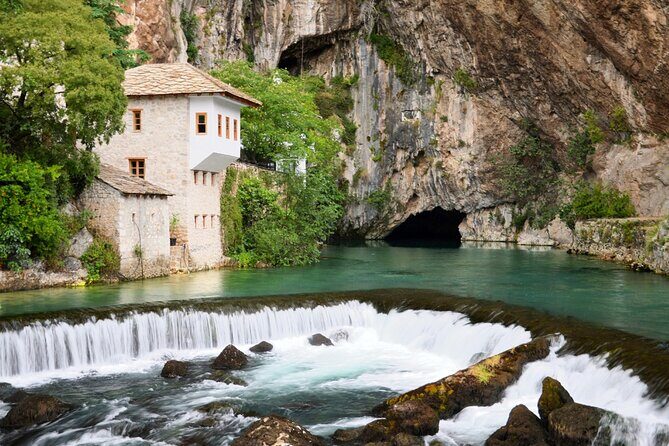
Day 3 begins outside the main city flow with Blagaj, a small Ottoman town under a cliff with the blue-green spring of the Buna River. The value here is the combination of nature and architecture in one stop. The spring setting helps you understand why places like this became religious and cultural magnets.
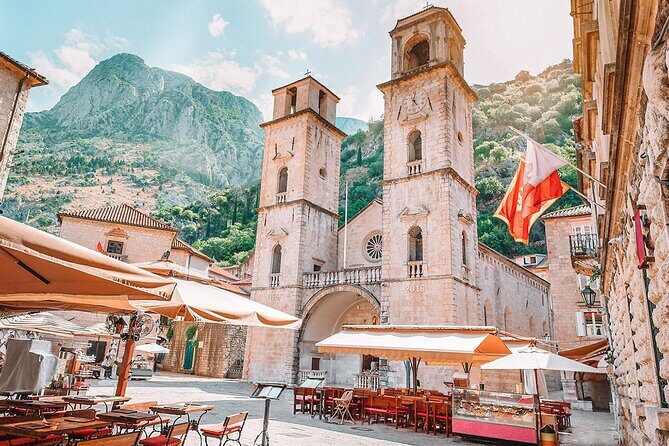
Then it’s on to Kotor, Montenegro—another UNESCO stop. Kotor’s old town is a maze of narrow cobblestone streets, and the tour explains why the plan looks chaotic: it was made to confuse intruders. You’ll wander through that geometry, which is more interesting than it sounds. A street layout can be defensive design, not random urban planning.
You’ll also visit Saint Luke’s church, noted as significant to locals and tied to ideas of unity. Then you get afternoon time to explore on your own. That free block is where you can slow down and choose what to linger over: viewpoints, smaller side streets, or just the calm rhythm of a historic harbor town.
Consideration: Kotor’s streets are narrow and uneven, and you’ll walk more than you might expect. Wear shoes that don’t punish your feet by hour three.
Day 4: Budva and Sveti Stefan Photos, Then Shkoder and Handmade Masks
Today splits into coast first, then northern Albania.
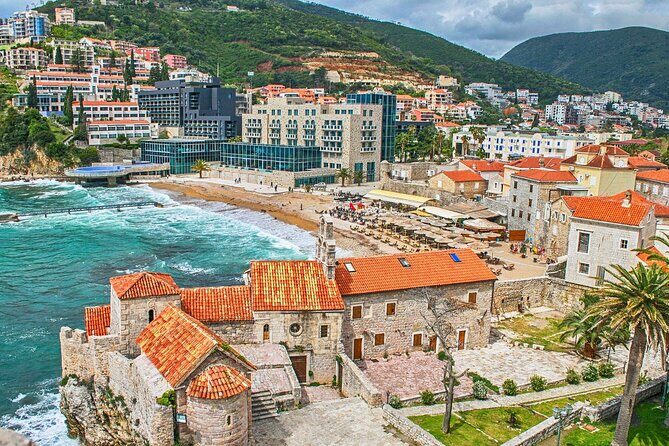
Budva comes with a built-in contrast: the New Budva side with modern buildings and offices, and the Old Budva with the historic center. The tour focuses on Old Budva sights, including St. Ivan Church and short time in the medieval center. Even the short timing works because it gives you a sense of what’s old versus what’s newer development.
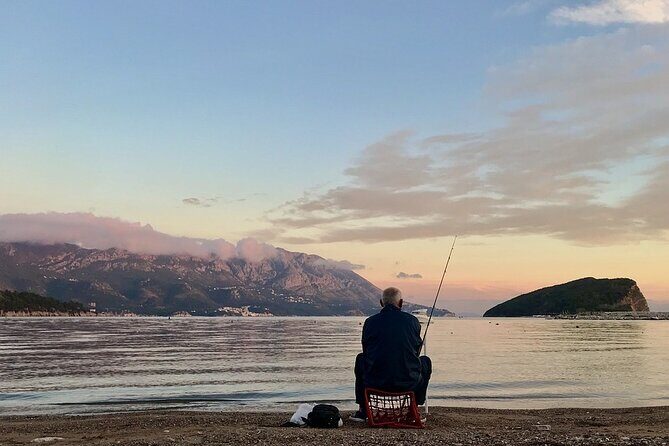
You also stop near Sveti Stefan. This is a photo stop area—interesting to see even from the coastline, especially since the island itself has become an exclusive residential resort and isn’t a typical visitor experience.
Next is Shkoder, Albania’s north-western hub near the largest lake in the Balkans. You visit Rozafa castle, with views over the lake and the three rivers meeting toward the Adriatic Sea. The tour also flags Venetian influence in the architecture, which is easy to spot once you start noticing building styles and street structure.
Finally, you add a fun, hands-on cultural stop: a Venice Art Mask Factory. This is a papier-mâché mask workshop with Venetian traditions, where masks are painted and decorated by hand. It’s the kind of visit that turns souvenir shopping into something you can understand, because you’re seeing the craft steps rather than just buying an object.
Consideration: This is a long transit day. You’ll see plenty, but you won’t feel like you’re living in any single place for long.
Day 5: Slow Food at Mrizi i Zanave, Then Prizren’s Mosques and Fortress Views
Day 5 starts with a stop that’s more about how people eat than what they built: Mrizi i Zanave (Restorant Agroturizëm). You tour the farm, hear the story, and learn how it preserves and processes regional bio fresh products. The tour mentions the farm created jobs for more than 400 people in the surrounding area, and that old communist buildings were adapted for storage.
Then there’s time for a traditional lunch or to buy farm produce. Even though lunch isn’t included in the tour price, this is where your food spending feels purposeful. You’re not guessing what to eat later; you’re tasting the region through a local system.
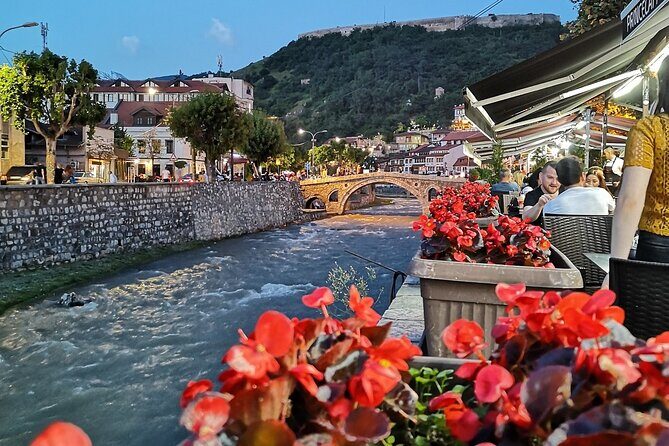
In the afternoon, you head to Prizren, often described as Kosovo’s cultural capital. The tour frames it through tolerance and history at a crossroads of empires. You’ll walk the old town with the river running through it under bridges that cross the city.
You also include Sinan Pasha Mosque, with rich arabesque color and patterns, plus Kalaja Fortress for big panoramic views from above. Then you get free afternoon time, which is perfect here because Prizren rewards slow looking: bridges, houses, artisan details, and side streets.
Consideration: This day blends farm time, city walking, and fortress climbing/viewing. Pace yourself. Bring a light layer for sun-warmed stone and cooling evenings.
Day 6: Gjakova Bazaar, Decan Monastery UNESCO Frescoes, and Rahovec Wine Country
If you like markets, this is your day. You start in Gjakova, known for having the oldest and largest bazaar in Kosovo. The tour doesn’t sugarcoat it: the bazaar was destroyed across multiple Balkan conflicts and then rebuilt to its older form. Walking through it gives you a sense of resilience that’s hard to manufacture with staged explanations.
You’ll spend about an hour with time to look at stores selling traditional handmade crafts and to eat. Again, lunch isn’t included, but you’ll have the choice to stop when you find something that fits your tastes.
Next is Decan Monastery. This one stands out for its white color, and the tour notes that Orthodox monks still live there and produce organic food like cheeses. It’s a UNESCO site, specifically tied to frescoes portraying life in the 14th century and the Palaeologan renaissance that shifted Byzantine painting styles.
Then you head to Rahovec Valley, described as the capital city of viticulture in the region. The tour explains a long timeline of grape cultivation, going back to Illyrian times, and mentions vineyards sitting at altitudes between 350 and 520 meters. If you’re a wine person, this is one of those days where the food system makes sense because you’re seeing the geography behind it.
Consideration: This day is “culture-heavy.” If you want more beach time or seaside views, you’ll get some of that later days, but today is about monuments and production.
Day 7: Krujë Old Bazaar and Castle Tunnels
Krujë is the historic symbol of Albanian resistance to Ottoman expansion in the 15th century, and the tour leans into the story. You start in the area of Kruja on rocky mountainous terrain, then move through the Medieval Old Bazaar—one of the biggest and oldest in the Balkans.
This is where souvenir shopping becomes practical: you can find carpets, jewelry, and handmade items, but also just feel the maze-like street shape that’s part of the town’s identity.
Then you visit Kruja Castle. The tour includes time with the castle and notes hidden paths locals used to leave without being noticed during enemy sieges. That detail matters because it turns the site from a static photo spot into a living idea of how people survived.
You end with free time for traditional lunch, more shopping, or just enjoying the town atmosphere. That last hour helps you catch your breath before the ride ends in Tirana.
Consideration: The castle experience depends on walking and stairs. Wear shoes you’d also wear for a city day with hills.
Day 8: Tirana Food Tour With Byrek, Markets, and Grape Raki
Ending in Tirana feels right because the tour shifts from monuments to daily life and food.
You meet a local companion for a city experience focused on culinary treasures. The tour explicitly asks you to come with an empty stomach—translation: don’t plan to eat a big breakfast and then skim the rest. You’ll stop at a small local place to try byrek, a classic Albanian dish made of thin layers of dough filled with cheese, meat, spinach, or other ingredients.
Then you head toward Çam bazaar, with time to browse and bargain on goods like clothes and kitchen equipment. You’ll also try fresh fruits and vegetables—simple items, but they make the market stop feel like living, not sightseeing.
You continue to Pazari i Ri and then shift into a proper food payoff: you sit down for a traditional Albanian meal with regional specialties, and you taste Albanian grape raki. The raki part is listed as included, and it’s the kind of finishing detail that makes the trip feel complete rather than cut off at the airport.
Consideration: This is a full stop schedule with meals involved. If you don’t eat certain foods, think about asking early or pacing your portions so you don’t feel rushed.
The Guide Team and Small-Group Feel You’re Buying
A semi-private tour lives or dies by the tour leader. Choose Balkans has strong feedback for communication and execution, with named guides in past experiences including Ana (attentive and responsive), Taulant (knowledgeable about local history, culture, and food), Nelly (efficient and experienced), and Gezim (professional and responsive). You also see support called out by name—Sirma helped patiently with tour design and last-minute logistics.
Even with a car and route structure, your comfort depends on how the leader handles timing, questions, and small problems like health concerns. One of the best signs here is that people described feeling safe across Albania, Kosovo, Montenegro, and even Macedonia during other trips—important if you’re traveling with a friend and want confidence.
Consideration: As with any multi-country road trip, you should be flexible. Weather, closures, and external forces can change scheduling, and the tour notes that adjustments can happen.
Who This Tour Fits Best (and Who Should Rethink)
This trip fits you if you want a serious cross-section of the region in one compact week-plus. It’s a good match for travelers who:
- like history that you can see in streets, buildings, and ruins
- enjoy markets and food experiences as much as monuments
- don’t mind early starts and daily driving
- prefer a group size capped at 10 over large coach tours
You might want to rethink it if you:
- want long, slow days with minimal walking
- hate emotional heaviness tied to war-era marks
- need lots of free time in one city rather than quick focused stops
Should You Book This Dubrovnik to Tirana Semi-Private Tour?
Book it if you want a high variety Balkan route with a small-group pace, included breakfasts, and meaningful food stops that feel local instead of touristy. The price may feel big, but once you account for transport, hotel stays with breakfast, and several included admissions plus a Tirana meal and grape raki, it looks more like a full package than a basic sightseeing add-on.
Skip (or compare) if you’re the type who hates being “in transit” every day. This is a structured route. You’ll get glimpses and context, but not weeks of lounging.
My final take: if you’re excited by Ottoman and Balkan crossroads towns, and you’re okay with daily movement, this is a solid way to see a lot without turning it into chaos.
FAQ
Pickup is offered in Dubrovnik Town?
Yes. You’ll be picked up from the nearest point in Dubrovnik Town to your hotel, but cars may not enter some parts of Dubrovnik Town.
What time does the tour start?
The start time is 7:00 am.
Where do you meet the tour leader?
You’ll be shuttled to the border from Dubrovnik, where you meet your tour leader.
How many travelers are on the tour?
The tour has a maximum of 10 travelers.
What kind of accommodations are included?
Accommodation is in 3 stars hotels, and breakfast is included for the overnights listed (7 breakfasts).
Is lunch or dinner included?
No. Lunches, dinners, drinks, and snacks are not included.
Are any admissions/tickets included?
Yes, several stops list admissions as free or included, such as Bišćevića Kuća, Latin Bridge, Saint Ivan Church, Venice Art Mask Factory, Sinan Pasha Mosque, Kalaja Fortress, and Kruja Castle. (Other listed stops have free admission.)
Do you get any included food tastings?
Yes. You get Ottoman style coffee or tea in Sarajevo (Day 2), and a Tirana food tour on Day 8 that includes a traditional Albanian meal and grape raki.
What language is the tour offered in?
The tour is offered in English.
What happens if I cancel?
This experience is non-refundable and cannot be changed for any reason.