REVIEW · DUBROVNIK
Dubrovnik to Athens; Semi – Private tour with Tour Leader & Car
Book on Viator →Operated by Choose Balkans · Bookable on Viator
If you like your Europe with a side of stories, this route fits. The Dubrovnik-to-Athens trip strings together Mostar, Sarajevo, Kotor, Albania, Ohrid, Berat, Gjirokaster, and Meteora with a tour leader guiding the why, not just the what. I like it because it keeps changing scenery fast, from medieval stone towns to lakeside viewpoints.
Two things I really like: first, you get expert-led visits to big sites that are otherwise hard to stitch together on your own (Mostar Old Bridge, Sarajevo Latin Bridge story, UNESCO towns like Kotor and Ohrid, and Meteora with ticket included). Second, the food and daily-life moments feel built into the day, like the Ottoman-style coffee or tea in Sarajevo and the Tirana food tour with byrek and grape raki.
One consideration: expect long road days and a full schedule. You’ll also be responsible for lunches and dinners, and cars can’t enter some parts of Dubrovnik Town, so you’ll walk a bit to the pickup point.
In This Review
- Key points worth your attention
- Price and Logistics: What Your Money Actually Covers
- Day 1: From Dubrovnik Pickup to Mostar’s Old Bridge and Ottoman House
- Day 2: Sarajevo’s War Scars, Latin Bridge, and Turkish Coffee Reset
- Day 3: Blagaj Spring Waters and Kotor’s Maze of Strategic Streets
- Day 4: Budva, Sveti Stefan Photo Views, and Albania’s Shkodra + Mask Workshop
- Day 5: Mrizi i Zanave Slow Food Tour and Prizren’s Mosque-to-Fortress Day
- Day 6: Gjakova Bazaar, Decan Monastery Frescoes, and Rahovec Wine Country
- Day 7: Kruja Bazaar for Souvenirs and Kruja Castle for the Resistance Story
- Day 8: Tirana on an Empty Stomach: Byrek, Markets, and Grape Raki
- Day 9: North Macedonia’s Struga and Ohrid’s Lake Views + Paper Museum
- Day 10: St Naum Springs, Tushemisht Street Stalls, and Drilon Water Oases
- Day 11: Berat’s 1001 Windows and Museums Inside the Castle City
- Day 12: Gjirokaster Stone City, Original Houses, and a Winery Lunch Stop
- Day 13: Ioannina Old Town Sights and Meteora’s Included Ticket for Sunset
- Day 14: Athens Drop-Off or Ferry to Corfu
- Should You Book This Dubrovnik to Athens Tour?
- FAQ
- What language is the tour offered in?
- How many people are on the trip?
- Where does the tour start and what time?
- Is hotel pickup included in Dubrovnik?
- What does the price include for stays and meals?
- Are entrance fees part of the package?
- Is there a ferry included on the last day?
- Does the tour include any specific guided food experiences?
Key points worth your attention
- 10-person max keeps it semi-private, but still organized and easy to manage
- Hotel pickup in Dubrovnik Town starts your day, with a shuttle to the border for the handoff to the tour leader
- UNESCO hits are frequent: Kotor, Ohrid, Berat, Gjirokaster, Meteora, plus multiple medieval towns and religious sites
- Included food moments: Ottoman coffee/tea in Sarajevo and a Tirana food tour with meal and local drinks
- Comfort basics are covered: 3-star hotels with breakfast, transport, tourist taxes, and entry tickets for visited sites
Price and Logistics: What Your Money Actually Covers
This is a long, multi-country run, so the price is less about one city and more about removing friction for 14 days. You’re paying for a professional tour leader, private transportation, hotel and breakfast, entry tickets for sites on the plan, and tourist taxes. There’s also international car insurance, road taxes, and petrol handled in the background.
The group limit matters. With a maximum of 10 travelers, you’ll usually get quicker stopovers and more back-and-forth at the sites, without turning the day into a cattle-car day. You’ll also have a mobile ticket, which keeps check-in simpler when you’re bouncing between small places.
Practical note: Dubrovnik Town has street restrictions. Cars may not reach every part, so pickup happens at the closest point your driver can access. Translation: wear shoes you can walk in on uneven old-stone streets.
Also, lunches and dinners are not included. You won’t starve, but your day plan depends on you being ready to pay for food separately. Bring a little cash mindset or a card, and keep your expectations flexible.
Finally, this trip is non-refundable and can’t be changed once you book. If you like firm plans, make sure your dates are solid.
You can also read our reviews of more private tours in Dubrovnik
Day 1: From Dubrovnik Pickup to Mostar’s Old Bridge and Ottoman House
You start early, around 7:30 am, with the meeting point at Platska ul. 7, Dubrovnik. The day begins with you in Dubrovnik Town first, then the driver picks you up from the nearest accessible point in the town. From there, you transfer toward the border, where you meet the tour leader for the main stretch of the trip.
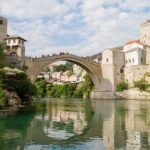
Mostar is the emotional hit of Day 1. You’ll cross into Bosnia and Herzegovina and go straight to Mostar Old Bridge (Stari Most), a UNESCO site built in the 16th century in an Islamic architectural style. What makes it more than a photo stop is the way the bridge connects history with the city’s layout. After that, you’ll walk through the Old Bazaar, with colorful lanes and small reminders scattered around town.
Then you slow down with the Bišćevića Kuća (Biscevic House), a carefully preserved Ottoman residential riverside home. Even if you’re not a museum person, a real home like this helps you picture how people lived—close to the water, tuned to the neighborhood, and shaped by Ottoman-era influences.
How long it feels: the Old Bridge and bazaar are built for a first-day rhythm. Expect one guided chunk, then you’re ready for the next day’s travel.
Day 2: Sarajevo’s War Scars, Latin Bridge, and Turkish Coffee Reset
Sarajevo is where the tour turns from scenic to story-heavy. You drive from Mostar after breakfast and get a walking day with uneven terrain. The point here is not doom-tourism. It’s about how layers of time show up in the street itself: bullet holes and cannon marks are visible around town as reminders of the Yugoslav War.
You’ll cover the origins of Sarajevo and the medieval Bosnian Kingdom, then move into both Ottoman and Austria-Hungarian quarters. That mix is why Sarajevo often gets described as European with multiple identities at once. Markets, bazaars, mosques, churches, and synagogues all show up in the same walking logic.
You also visit the Latin Bridge, famous for the WWI trigger story. The bridge’s name comes from the idea that it connected the right bank with the Catholic quarter, informally called Latinluk. It’s one of those facts that makes you notice geography as history.
Before you head out, there’s a small but smart break at Caffe Divan for the included Turkish coffee or tea, complimentary. It’s a practical reset when you’ve been walking and listening all morning.
Day 3: Blagaj Spring Waters and Kotor’s Maze of Strategic Streets
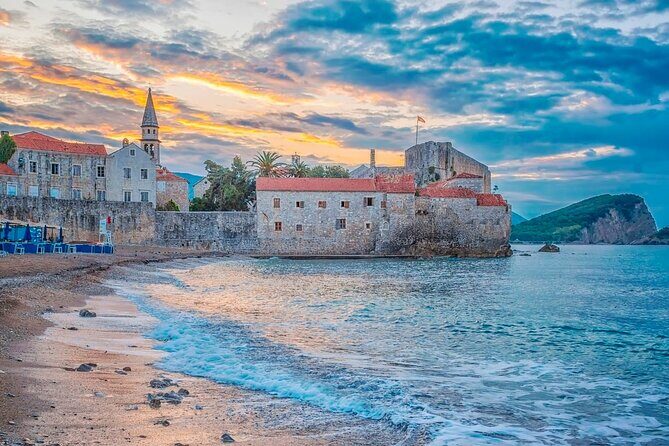
Day 3 starts outside Mostar with Blagaj, an Ottoman medieval town under a cliff, facing the blue waters of the Buna spring area. The best part of Blagaj, from a traveler standpoint, is the calm. It gives you a nature-and-architecture contrast without feeling like you’re leaving the cultural side behind.
Then you drive to Kotor in Montenegro, a UNESCO world heritage old town. The streets here are deliberately chaotic-looking, and that detail matters. The street plan was designed to confuse intruders who tried to plunder the town. Today, it’s part of the charm, with narrow cobblestone lanes looping and climbing.
You’ll have time in the maze and visit Saint Luke’s church, important to locals as a symbol of unity. Your afternoon is free to explore Kotor at your own pace.
One small drawback you should plan around: Kotor’s old lanes are tight. If you don’t like crowds or long walks on uneven stone, slow your pace and take breaks.
Day 4: Budva, Sveti Stefan Photo Views, and Albania’s Shkodra + Mask Workshop
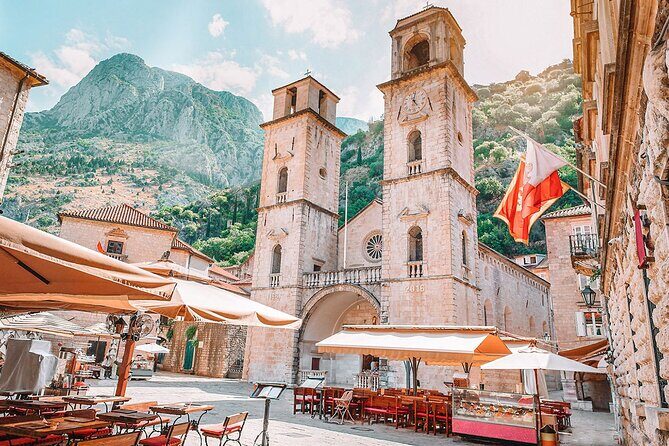
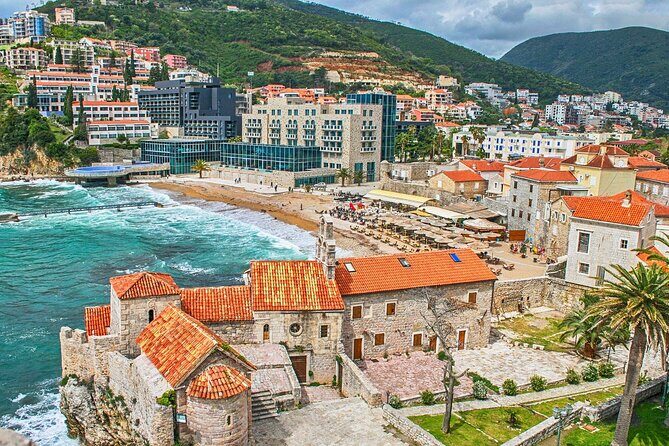
You begin with Budva, split into old and new parts. The Old Budva is the target: medieval center sights like St. Ivan church and the small church of St. Mary. If you want coastline energy without committing to beaches every minute, this is the way to get the city charm with some structure.
On the way toward Albania, there’s a short stop by Sveti Stefan. The island resort is no longer accessible for inside visiting, but you’ll still get strong coast-side views for pictures.
Next comes Shkoder (Shkodër), in Albania’s northwest, with a backdrop tied to lakes and rivers. You’ll visit Rozafa Castle for panoramic scenery where the lake and rivers meet and head toward the Adriatic. The architecture shows Venetian influence, so the city feels like a crossroads of powers.
Then you get a hands-on cultural stop: Venice Art Mask Factory. This is a papier-mâché workshop producing hand-painted Venetian carnival-style masks. Even if you don’t buy anything, it’s a good way to see craftsmanship that didn’t become a theme park.
Day 5: Mrizi i Zanave Slow Food Tour and Prizren’s Mosque-to-Fortress Day
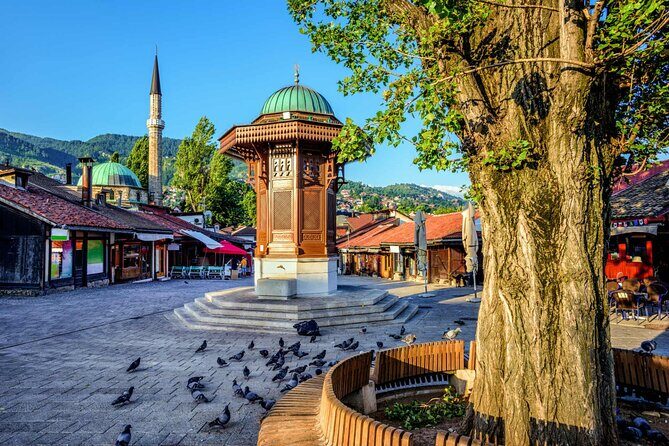
This day starts with slow food and agriculture at Mrizi i Zanave (Agroturizëm). You tour the farm and hear how it created jobs for hundreds of people locally. The emphasis is on preserving regional bio fresh local products, including how the family adapted older communist buildings into storage spaces.
You’ll have time for traditional lunch, or for shopping for produce. Don’t treat this as a quick photo stop. It’s built to help you understand why local food works there: agriculture, preservation, community jobs, and a sense of identity.
In the afternoon you reach Prizren, often described as a cultural capital of Kosovo, mixing religions, architecture, and nature. The river running through the old town adds instant life to the walking experience, and the bridges create natural turning points in your route.
You’ll visit Sinan Pasha Mosque for its colorful arabesque patterns, then climb to Kalaja Fortress for hilltop views over Prizren. You get more free time afterward to roam.
Best for you if: you like towns where different cultures show up in architecture without needing a lecture ticket.
Day 6: Gjakova Bazaar, Decan Monastery Frescoes, and Rahovec Wine Country
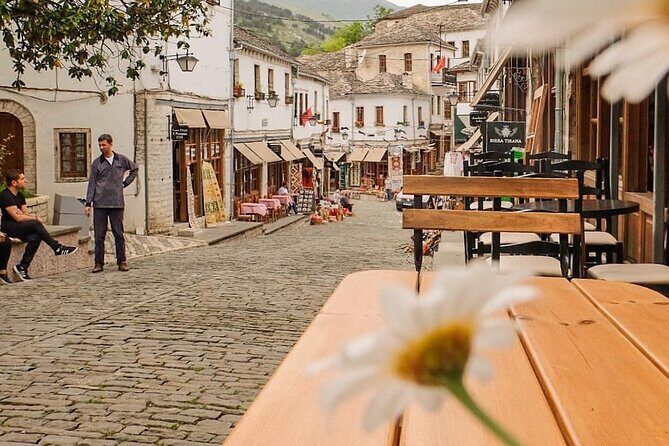
After breakfast, you head to Gjakova, home to the oldest and largest bazaar in Kosovo. Even with a history of destruction and rebuilding, the bazaar vibe still connects you to craft culture. You can watch artisan workshops and browse traditional handmade crafts.
Then you go to Monastery of Decan (Decan), known for its white appearance and for being inhabited by Orthodox monks who produce fresh organic food like cheese. UNESCO status here is tied to frescoes showing daily life in the 14th century and a Byzantine painting shift during the Palaeologan renaissance. If frescoes are your thing, this is a day to pay attention.
Before returning toward Prizren, you drive into Rahovec Valley, the viticulture center of the region. You’ll hear about grape cultivation going back about 2,000 years, with vineyards at 350–520 meters elevation. There’s also mention of an annual wine festival in September.
This day gives you a strong arc: markets, spiritual art, then wine landscapes.
Day 7: Kruja Bazaar for Souvenirs and Kruja Castle for the Resistance Story
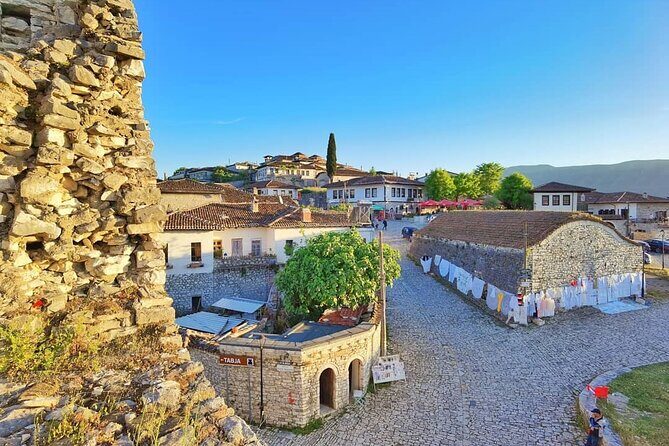
Kruja is the Albanian resistance symbol. You’ll walk the Medieval Old Bazaar, one of the biggest and oldest in the Balkans, with narrow streets and wooden houses that give you a time-warp sense.
Then you visit Kruja Castle. The location on a rocky hilltop explains why it was so hard for enemies to attack. You’ll also hear about hidden paths locals used to escape during sieges, which makes the site feel strategic rather than just scenic.
You get free time for lunch and souvenir shopping. If you want carpets, jewelry, or small handmade gifts, this is one of your best chances.
Day 8: Tirana on an Empty Stomach: Byrek, Markets, and Grape Raki
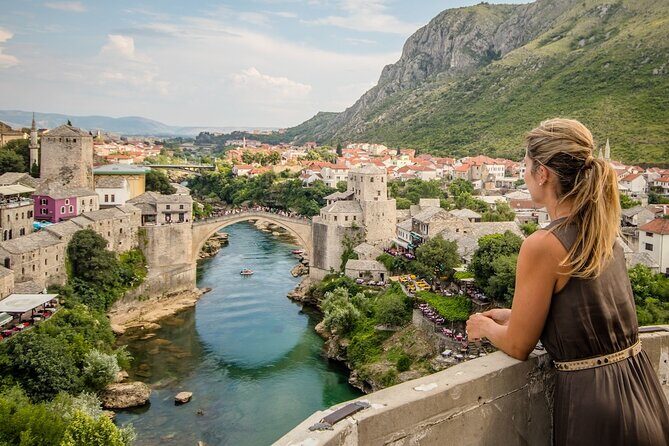
Day 8 is Tirana, and it’s built around food and neighborhood walking. You meet a local companion and get a guided culinary experience across the city. The plan specifically asks you to arrive with an empty stomach, which is a hint the meal portion matters.
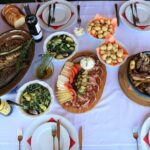
You start at Tregu Çam to try byrek, thin-layer dough with fillings like cheese, meat, spinach, and more. Then you move through a bazaar zone where you can buy goods from clothes to kitchen equipment and bargain.
You also visit Pazari i Ri for second-hand market browsing, then continue to the New Bazaar for a traditional Albanian meal. The included drinks include Albanian grape raki.
Practical takeaway: you’ll likely walk more than you expect in Tirana. Wear comfortable shoes and plan for the rest of the afternoon to feel lighter, because you’re leaving the table full.
Day 9: North Macedonia’s Struga and Ohrid’s Lake Views + Paper Museum
You drive toward North Macedonia with Struga as the first stop. You’ll have a quick drink by the source area of the Drini River and a short visit to the town before heading to Ohrid.
Ohrid is a UNESCO World Heritage site, and the focus is the lake. You’ll visit the viewpoint at Church of St. John at Kaneo. There’s also context about Ohrid’s Roman name link and long-term habitation tied to the Illyrian tribe.
The city’s Orthodox character shows through the claim of 365 Orthodox churches, plus Ottoman-era house architecture that created narrow streets, tunnels, and tiny yards on a hilly terrain.
Then comes Ljupcho Panevski’s National Workshop for Handmade Paper, which is refreshingly small and different. You learn about handmade paper production and you can purchase a piece of handmade paper as a souvenir.
If you want one souvenir that doesn’t feel mass-produced, this is a solid candidate.
Day 10: St Naum Springs, Tushemisht Street Stalls, and Drilon Water Oases
You start at Monastery of Saint Naum, located at the source area of the Crni Drim River feeding Lake Ohrid. The monastery complex sits within the Galicica National Park in a protected area, and the included part here is the setting: crystal clear spring water reflecting greenery and mountain peaks.
After that, you cross back into Albania and stop in Tushemisht, described as a hidden stop where locals sell homemade preserves, honey, herbs, and handmade souvenirs. You can interact with street vendors, learn about traditions, and pick up authentic treats or crafts.
Then you visit Driloni National Park, centered on water springs that form a small lake, surrounded by greenery. You get a gentle, relaxing nature stop with time to absorb the quiet. This day is a good counterweight to the denser city touring.
Day 11: Berat’s 1001 Windows and Museums Inside the Castle City
Berat is famous as the town of 1001 windows and is UNESCO-listed. You’ll walk through narrowed stone streets where Ottoman-era houses create the layered window effect. Another important detail here: people still live inside the castle walls, which keeps the place from feeling like an empty set.
You also visit Berat Castle, plus ancient churches and mosques, the lower town of grand old houses on steep hillsides, an old stone bridge, museums, and remains from the communist era.
Then you include time at the National Iconographic Museum Onufri, tied to Onufri’s painting legacy and a specific reddish color associated with his work.
If you enjoy art and architecture side-by-side, this is a strong day.
Day 12: Gjirokaster Stone City, Original Houses, and a Winery Lunch Stop
Gjirokaster is UNESCO and known as the stone city. The town resembles a fortified structure where houses act like small fortresses. You’ll start with a guided look at the historic foundation linked to the castle dating back to early centuries, and you’ll hear why it’s considered among the best-preserved medieval towns in the Balkans.
You’ll also explore the atmospheric old town with cascading stone streets and a medieval bazaar area. Then you visit one of the best-preserved houses where interiors are described as totally original and authentic.
After the tour, there’s time at The Barrels Winery, a family-run vineyard. The plan offers free time for lunch in a countryside setting, plus local flavors. Lunch is not listed as included, so treat it as pay-as-you-go while you’re there.
Day 13: Ioannina Old Town Sights and Meteora’s Included Ticket for Sunset
You head to Ioannina, where Byzantine and Ottoman traces show in the old architecture and charming streets. You’ll walk the cobbled lanes and then visit Ioannina Castle, with narrow streets and historic buildings inside.
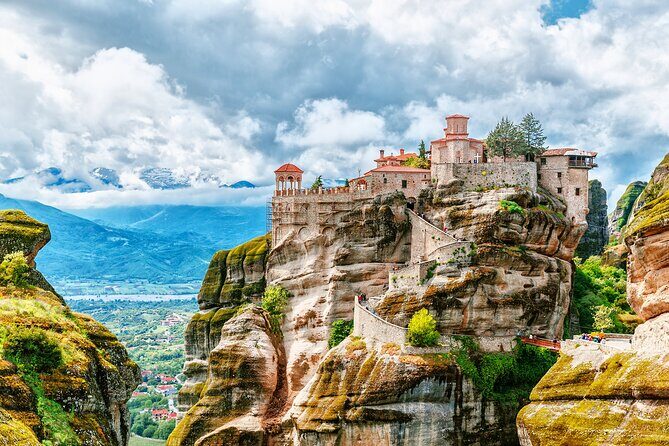
From there, you drive to Meteora, UNESCO-listed for monasteries built on top of dramatic rock formations. The included part is ticket access for the visit, and the main payoff is timing. You’re set up to catch one of the best sunsets you’ve ever seen, with sky colors shifting as the sun drops over the rocks.
For most people, Meteora is the day that turns the whole itinerary from interesting to unforgettable, because it’s visual, spiritual, and cinematic all at once.
Day 14: Athens Drop-Off or Ferry to Corfu
Your final day is flexible based on the exact ending arrangement.
In one version, your tour leader drops you at your hotel in Athens. In the other, your tour leader drops you at the Igoumentisa Port, and you take a ferry to Corfu port, with ferry tickets included, before continuing onward.
Either way, the trip ends with a real sense of completion: your Balkan loop finishes with Greece, and you close the story with coast and island travel instead of another inland city day.
Should You Book This Dubrovnik to Athens Tour?
Yes, if you want one guided package that stitches together UNESCO towns, Ottoman and Byzantine layers, and food-focused stops across Croatia, Bosnia and Herzegovina, Montenegro, Kosovo, Albania, North Macedonia, and Greece.
Book it if you match this travel style:
- you’re okay with long drives and a packed schedule
- you prefer guided context at major sites like Mostar Old Bridge, Sarajevo’s Latin Bridge, Ohrid, Berat, and Meteora
- you want meals to be your own choice most days, but you’re happy with included food moments in Sarajevo and Tirana
Skip it if:
- you hate tight pacing
- you want every meal included
- you need total schedule flexibility, because the trip is non-refundable and cannot be changed
My final take: this is the kind of route that feels like a semester of history and culture compressed into two weeks, but with enough practical structure (pickup, transport, tickets, hotels, breakfasts) that you don’t have to wrestle logistics.
FAQ
What language is the tour offered in?
The tour is offered in English.
How many people are on the trip?
This activity has a maximum of 10 travelers.
Where does the tour start and what time?
The meeting point is Platska ul. 7, 20000, Dubrovnik, Croatia, and the start time is 7:30 am.
Is hotel pickup included in Dubrovnik?
Yes. You get hotel pickup in Dubrovnik Town from the nearest accessible point, since cars may not enter some parts of Dubrovnik Town.
What does the price include for stays and meals?
Breakfast is included with your 3-star hotel accommodations (BB for all overnights). Lunches, dinners, drinks, and snacks are not included.
Are entrance fees part of the package?
Yes. Entry tickets for the sites that will be visited are included, along with tourist taxes.
Is there a ferry included on the last day?
Yes, in the Athens alternative ending: you’re dropped at Igoumentisa Port and take the ferry to Corfu port, with tickets included.
Does the tour include any specific guided food experiences?
Yes. In Sarajevo, you get an Ottoman-style coffee or tea (complimentary), and in Tirana there is a food tour with included tastings and a traditional meal plus grape raki.