REVIEW · DUBROVNIK
Dubrovnik Homeland War Private Tour
Book on Viator →Operated by My Dubrovnik Tours · Bookable on Viator
Dubrovnik’s walls can feel like a living story.
This private Homeland War tour links the city’s survival in the early 1990s to the exact places you see today, guided by a veteran who brings personal, firsthand context. I love two things most: the chance to visit the War Memorial Room in Sponza Palace (with videos and photos) and the way the walk moves from fortresses into Luža Square, then up to the churches and stairways around St Ignatius of Loyola. The main consideration is tone and stamina: it’s a moving subject, and you’ll be walking between major points around the old city, including stairways, so it helps to come with enough energy and good weather.
I also like the practical structure of the tour. It’s about 2 hours 30 minutes, it’s in English, and it’s truly private, so you’re not squeezed into a big group or forced to keep your questions bottled up.
One more thing to keep in mind: the itinerary covers a lot of famous sights in a short time, so if you mainly want laid-back picture-taking without a lot of discussion, this may feel a bit intense.
In This Review
- Key things worth knowing before you go
- Why this tour hits harder than a regular old town walk
- Your veteran guide: personal stories with real-world context
- Revelin Fortress and the city walls: Dubrovnik’s defenses in real scale
- Luža Square and Sponza Palace: where the Homeland War becomes tangible
- Stradun to Rector’s Palace: the Republic era, power, and identity
- Jesuit staircase, hidden lanes, and the climb toward Minčeta
- Church of St Joseph and the Franciscan complex: faith, art, and city rhythm
- Ending at Pile Gate: your grand finish with fortresses and bay views
- Price and value: what $120.16 buys you in the real world
- Who should book this tour (and who might skip it)
- Quick tips to make it feel smooth
- Should you book the Dubrovnik Homeland War Private Tour?
- FAQ
- How long is the Dubrovnik Homeland War Private Tour?
- What’s included in the price?
- Is the tour private, and in which language is it offered?
- Where does the tour start and end?
- Is food or drink included?
- What happens if the weather is poor?
Key things worth knowing before you go
- Veteran-led Homeland War perspective that’s personal and thought-provoking
- Sponza Palace War Memorial Room with videos and photos included
- A route that traces Dubrovnik from the fortifications to key civic buildings and churches
- Stops built around major squares, gates, and palaces (Luža, Rector’s Palace, Pile Gate)
- Private format means more Q&A and a more tailored feel for your interests
- Average booking timing is early (around 48 days in advance), so plan ahead
Why this tour hits harder than a regular old town walk
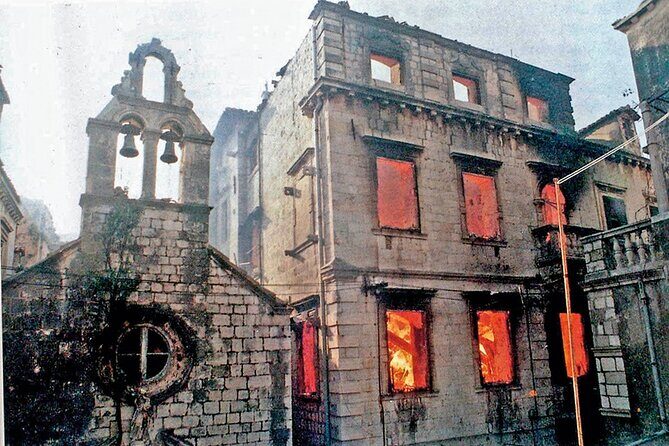
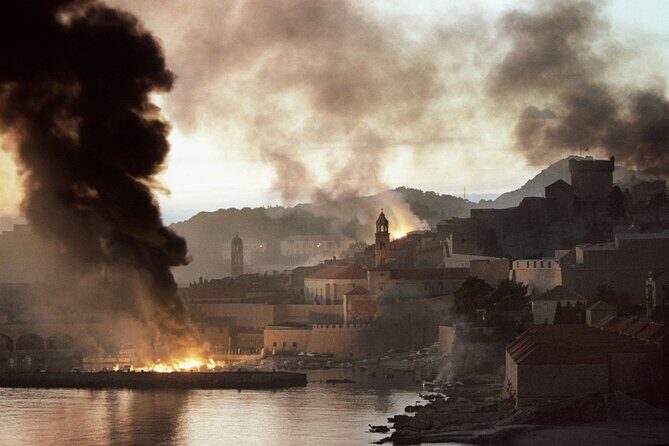
Dubrovnik is famous for looking postcard-perfect. But during the Croatian War of Independence, that beauty wasn’t the main story. The story was survival—about what people saw, carried, and endured when the city was under threat.
What makes this tour different is that it doesn’t treat the Homeland War as a separate lecture you tolerate at a distance. Instead, it plants you right inside Dubrovnik’s physical defense system: harbors, fortresses, walls, squares, and gates. Then your guide—sharing the kind of details that only come from living through it—connects those stones to what happened in 1991–1992.
In the same walking loop, you also get the older Dubrovnik layer: civic power at Rector’s Palace, government and religious landmarks, and the city’s signature urban “stage” on Stradun. A number of people appreciated how the tour makes these places feel connected, not like a checklist.
If you’re the type who likes history that has faces and voices, this tour tends to land well. If you’re the type who wants only light sightseeing, you can still enjoy the sights, but you should go in knowing the emotional weight is part of the package.
You can also read our reviews of more private tours in Dubrovnik

Your veteran guide: personal stories with real-world context
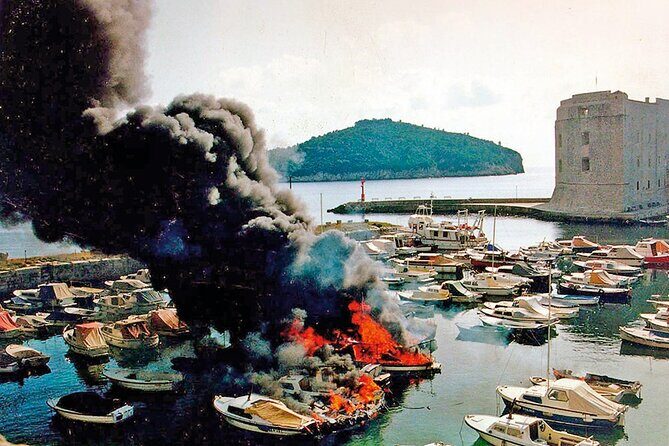
The highlight is the guide’s firsthand experience. The tour is designed to teach the past and recent history of the Homeland War through the perspective of a veteran. That’s a big difference from a standard scripted tour.
Two guide names came up in standout feedback: Mato and Vlaho. Both are described as open, honest, and professional, and that matters because this subject can’t be handled like trivia. The better guides keep the human scale front and center while still explaining the broader situation.
I like that the experience isn’t only about dates and big military moves. It’s also about the civilian side—how the war affected soldiers and city life. People also described the tours as thought-provoking, not just informative.
A nice plus: the private setting gives you room to ask questions. In feedback, people specifically called out how patiently the guide answered a lot of questions, even with younger visitors. If your brain needs to understand how and why things unfolded, you’re in the right place.
Revelin Fortress and the city walls: Dubrovnik’s defenses in real scale
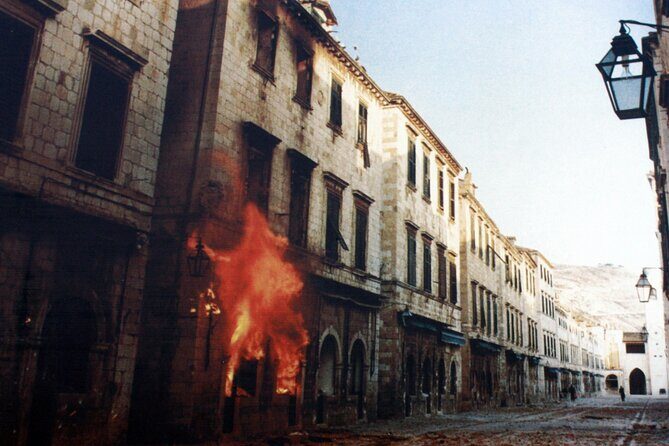
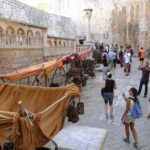
The tour starts at Ulica Vrata od Ploča (near Vrata od Ploča) and takes you to Revelin Fortress. Even if you don’t know the fortress name yet, you’ll quickly understand why it matters: it’s part of the city’s defensive logic, not just a pretty viewpoint.
From there, you move toward the Dubrovnik City Walls, where the guide explains the history while you look out over the old city harbor area. This is the part where it helps to slow down. From the walls and fortifications you can start to picture how a city defends itself—especially a city that has to protect civilians while staying functional.
You’ll also see references to key defense points, including:
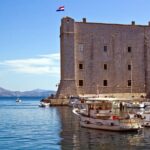
- Fortress of St. John
- Fortifications of St. Luke
- The Dominican Monastery
Not every stop is a museum moment. Some are “look and understand” moments, which I appreciate. You get the geography in your head, and that makes everything else you see later feel more grounded.
Potential drawback: if you get restless with listening while outdoors, this portion may feel like a heavier start. The upside is that once you understand the defense layout, the later memorial and civic buildings hit more clearly.
Luža Square and Sponza Palace: where the Homeland War becomes tangible
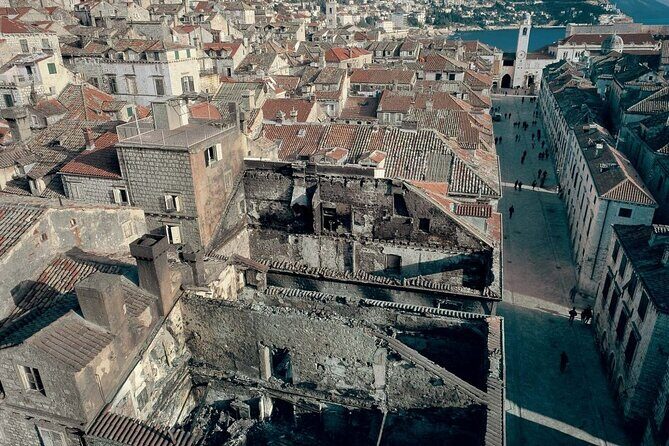
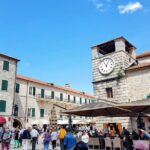
Next is Luža Square, the kind of place where Dubrovnik’s civic life is written into the stone. Here you’ll see the Clock Tower, Small Onofrio’s Fountain, City Hall, and the Church of St. Blaise. This is also where the tour transitions from “defense” to “community.”
The key moment is your visit to the Homeland War Memorial Room in Sponza Palace. Entrance is included, and the memorial isn’t presented as vague emotion. It includes videos and photos, which helps you connect stories to evidence you can actually see.
This is the stop that people often describe as moving, because the memorial room gives the war a human face inside an iconic old-city setting. You’re not just hearing about history. You’re standing in a space built to remember Dubrovnik’s defenders.
After Luža Square, the tour continues along the main old-city spine at Stradun. Even if you’ve walked Stradun on your own before, doing it right after the memorial room changes how you experience it. The street suddenly feels like more than scenery.
Stradun to Rector’s Palace: the Republic era, power, and identity

From Stradun, you also pass toward Ruđera Boškovića street near the Buža Gate. These details might sound small, but they help you understand how Dubrovnik is laid out—how people and movement flow through the city’s planned shape.
Then you hit the Monument of Poet Ivan Gundulić, plus the green market area and sights around the Pucic Palace and a small fountain. This part adds texture. You’re not stuck in war-only mode. You’re seeing how a city holds on to culture and everyday rhythms even in difficult times.
After that comes Rector’s Palace, described as the seat of the government of the Republic of Dubrovnik. This is one of those stops where the architecture helps you get the bigger picture. You start to understand that Dubrovnik wasn’t only a wall—it was an operating civic system with leadership, rules, and public life.
The tour then moves to the Cathedral of the Assumption of the Virgin Mary. Nearby are references to the cathedral treasury, Bishop’s Palace, and the Ponta Gate. If you like your history with a visual map, this sequence helps: you’re seeing religious authority and civic identity side-by-side.

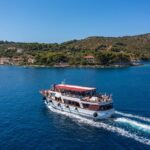


Jesuit staircase, hidden lanes, and the climb toward Minčeta
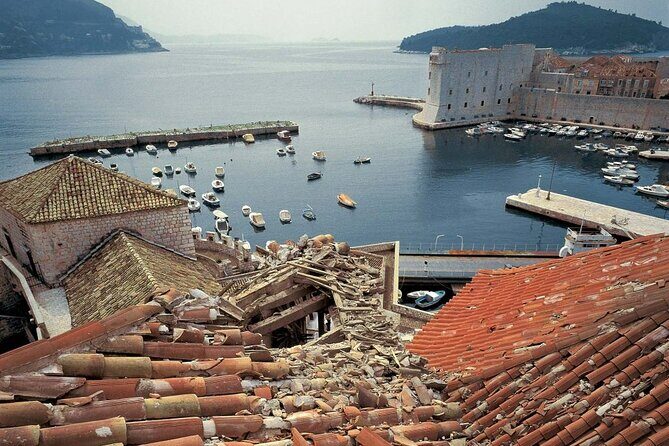
One of the most memorable sections is the walk around Church of St Ignatius of Loyola and its stairways. The itinerary specifically includes the Jesuit staircase plus surrounding streets, so expect a change in pace and perspective as you climb.
Along the way, you’ll pass by sights like the Great Granary and the Tower of Minčeta. Even without “big museum” stops, these names matter because they reinforce how Dubrovnik built and stored, governed, and defended itself over centuries.
This is where the tour can feel especially alive if you enjoy city wandering with meaning. You’re not just seeing landmark after landmark—you’re getting a guided route through the parts of town that give Dubrovnik its layered character.
Church of St Joseph and the Franciscan complex: faith, art, and city rhythm
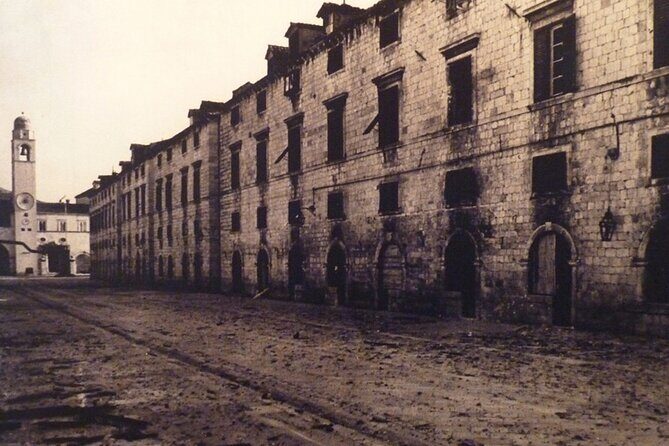
Next is the area of Church of St Joseph and the Placeta. You’ll also see the Wide Street and the House of Ivo Grbić. This is a nice change of mood from the memorial room and civic power sites. The guide can connect the war-era context to older Dubrovnik identity, and the architecture helps you feel that continuity.
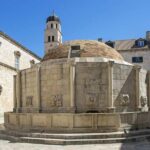
Then you reach the Franciscan Church and Monastery. This stop includes the Large Onofrio’s Fountain and the Church of the Holy Saviour. If you’ve only experienced Dubrovnik as a daytime walking loop, this is where you start to notice the “systems” of the city: religious sites, water fountains, and the way these spaces anchor street life.
I like these later stops because they keep the tour from being all heavy emotion. You’re still in the old city, still moving through key places, but the tone shifts toward a slower appreciation of place.
Ending at Pile Gate: your grand finish with fortresses and bay views
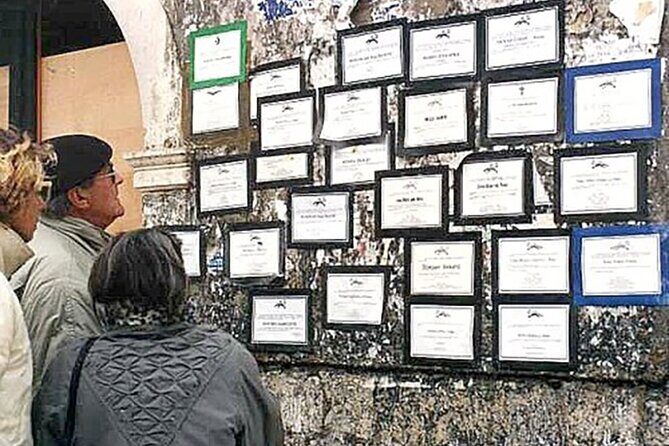
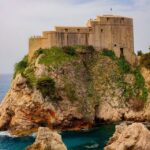
The final stretch brings you to Pile Gate, the west gate. You’ll pass St. Lawrence and Bokar Fortresses, and you’ll be close to Kolorina Bay when the tour ends.
This ending location is helpful for practical reasons. It sets you up to continue exploring nearby without feeling like you’ve been dropped in the middle of nowhere. The tour ends at Nautika Brsalje ul. 3, in the area of the west gate of Pile called Brsalje.
If you want a simple plan: after the tour, take a slow walk around that area and let your brain process what you just learned. The Homeland War memorial might still be front and center, and Dubrovnik’s city geometry will start making sense on its own.
Price and value: what $120.16 buys you in the real world
At $120.16 per person for about 2 hours 30 minutes, this tour isn’t trying to be the cheapest “history in 90 minutes” option. The value comes from two things that are hard to fake:
- A veteran-led perspective on Dubrovnik’s Homeland War experience
- Entrance to the War Memorial Room in Sponza Palace
Most other stops are listed as free admissions, so your money mostly goes toward guidance and that one important memorial entrance.
It also helps that it’s private: only your group participates. In a private format, you get more space for questions, and you can usually steer the level of detail you want. Some visitors specifically praised the guide for customizing the experience to interests—like mixing in context beyond strict war history, including references people associated with popular culture such as Game of Thrones.
One more practical detail: the tour is offered in English and uses a mobile ticket, which can make the start smoother on a busy day.
Who should book this tour (and who might skip it)
Book this tour if you want Dubrovnik in a way that feels real, not just photographed. It’s a great fit for:
- Anyone interested in the Croatian War of Independence and what it meant to a city
- People who like history tied to exact streets, gates, and buildings
- Couples and small groups who want a private guide and room to ask questions
- Families with teens who can handle serious topics (feedback included a 14-year-old who absorbed the information)
Consider a different tour if you:
- Prefer purely light sightseeing with minimal emotional content
- Don’t want a lot of walking and stairways
- Are traveling on a schedule where a single longer, structured walk would be stressful
Quick tips to make it feel smooth
- Wear shoes suited for stairways and walking between old-city points, especially around the Jesuit staircase area.
- Bring a bottle of water and plan for breaks as needed, since food and beverages are not included.
- If you’re sensitive to heavy subjects, mentally prepare for a moving memorial moment at Sponza Palace.
- If you want the best chance of matching your preferred timing, book early since the experience is often booked around 48 days in advance.
Also, confirmation is received at booking, and the meeting area is near public transportation, which helps if you’re coordinating with other stops in Dubrovnik.
Should you book the Dubrovnik Homeland War Private Tour?
Yes—if you want Dubrovnik with meaning. The combination of veteran perspective and a visit to the Homeland War Memorial Room gives you something you can’t replicate with a self-guided stroll alone. The itinerary also does a smart job of connecting the war story to the city’s civic and religious identity, not just to fortifications.
Skip it only if your ideal trip is mostly low-effort sightseeing and you’d rather avoid emotionally heavy content or guided structure.
FAQ
How long is the Dubrovnik Homeland War Private Tour?
The tour is approximately 2 hours 30 minutes.
What’s included in the price?
You get professional tour guidance, and entrance to the War Memorial Room is included.
Is the tour private, and in which language is it offered?
It’s a private tour/activity, so only your group participates, and it’s offered in English.
Where does the tour start and end?
It starts at Ulica Vrata od Ploča in Dubrovnik, and it ends at Nautika Brsalje ul. 3, in the area of the west gate of Pile (Brsalje).
Is food or drink included?
No. Food and beverages are not included, and the tour doesn’t include personal purchases or expenses.
What happens if the weather is poor?
The experience requires good weather. If it’s canceled due to poor weather, you’ll be offered a different date or a full refund.