REVIEW · DUBROVNIK
Crime and Punishment in old Dubrovnik
Book on Viator →Operated by Haunted Dubrovnik · Bookable on Viator
Crime in old Dubrovnik was not just paperwork. This 1 hour 40 minute walking tour turns the historic center into a living story about justice, fear, and everyday life. You’ll cover Gradac Park, Onofrio’s Large Fountain, and end inside the Rector’s Palace where courtroom and prison cells take center stage.
I especially like the way the route nudges you off the guidebook track. You’re not just staring at big sights; you’re moving through smaller lanes and key entry points that help you understand how the city controlled, punished, and remembered. I also really appreciate the focus on story-driven context, with stops that connect street corners to real concepts like executions, medieval medicine, and criminal cases.
One practical drawback: there’s a moderate amount of walking on uneven old-town streets, and the Rector’s Palace portion may require extra admission since it’s noted as not included. If you want zero-darkness history or very short legs, think twice.
In This Review
- Key things you’ll notice on this Dubrovnik crime-and-punishment walk
- Why crime-and-punishment history fits Dubrovnik so well
- Meeting in Pile and stepping through the old city’s western entrance
- Gradac Park: where public executions shaped the city’s fear
- Onofrio’s Large Fountain and the Franciscan medicine story
- The southern old town: criminal cases you can map in real streets
- Executioner’s house, the old synagogue, and the approach to Stradun
- Rector’s Palace: courtroom and prison cells in one stop
- Evening timing, group size feel, and what moderate walking means
- Price and value: what $144.49 buys you in practice
- Who this Dubrovnik crime tour is best for
- Should you book Crime and Punishment in Old Dubrovnik?
- FAQ
- How long is the Crime and Punishment in old Dubrovnik tour?
- Where does the tour start and end?
- What is included and what isn’t in terms of tickets?
- What language is the tour offered in?
- Is there a lot of walking?
- Is it a private tour?
Key things you’ll notice on this Dubrovnik crime-and-punishment walk
- Gradac Park: a stop tied to public executions, right after you enter from Pile.
- Onofrio’s Large Fountain: learning about Franciscan friars and medieval medicine.
- Southern old-town lanes: criminal cases show up in the street layout and architecture.
- Executioner’s house + old synagogue: you’ll pass through key sites before reaching Stradun.
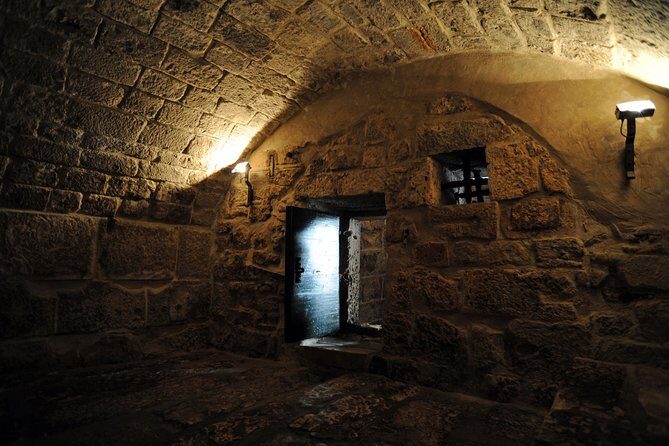
- Rector’s Palace courtroom and prison cells: a clear payoff at the end.
- Private by design: it’s set up for only your group, so the pacing can feel more personal.
Why crime-and-punishment history fits Dubrovnik so well
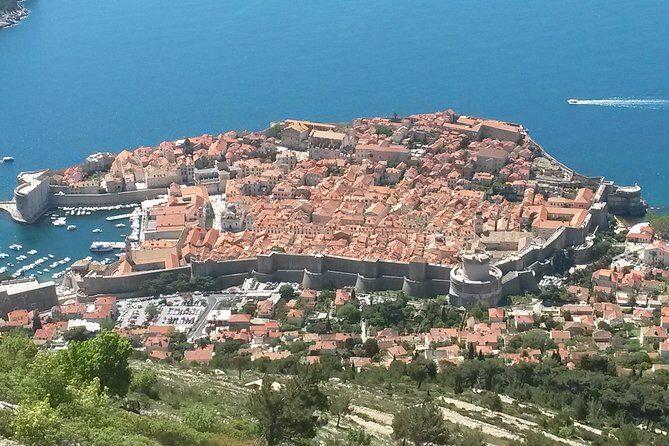
Dubrovnik’s old walls get the attention, but the real point of this tour is that history also lives in rules—who judged, who was punished, and how power shaped daily life. You’ll see the city as a system, not a postcard.
The smart part is the structure of the walk. It starts near places linked to punishment (Gradac Park), moves through locations connected to care and authority (Onofrio’s Fountain and the Franciscan story), then builds toward the legal heart of the city at Rector’s Palace. By the time you reach the end, you’re not only learning facts—you’re picturing how justice operated in physical space.
This style works well if you like history that feels human and specific. The tour isn’t just about dates. It’s about connecting what you’re looking at to why the city felt strict, controlled, and sometimes brutal.
You can also read our reviews of more tours and experiences in Dubrovnik.

Meeting in Pile and stepping through the old city’s western entrance
You start at Ulica Dante Aligheri in the Pile area, meeting in the evening at 7:00 pm. From there, you head straight toward Gradac Park before you really settle into the old-town streets.
I like this approach because it gets your bearings fast. Pile is the natural jumping-off point, and the walk through the Pile area and the western entrance to the old city helps you understand the flow of the historic center. You’re not wandering randomly. The route is guiding your eyes.
Also, this is a private tour/activity, which matters more than you’d think. You’ll have your group only, so the guide can adjust pacing and answer questions without the usual stop-and-go rhythm that happens on bigger tours.
Wear comfortable shoes. Old Dubrovnik streets can be uneven, and it’s an evening walk, not a slow stroll on flat ground.
Gradac Park: where public executions shaped the city’s fear
Your first major stop is Gradac Park, and the connection is direct: it was used for public executions. It’s only about 10 minutes there, and the time is short on purpose. This isn’t a long sit-and-lecture spot. It’s a jolt of context.
What you’ll take from this stop is the emotional backdrop behind everything you’ll see later. When you understand that public punishment happened here, it changes how you read the old town. Even if you didn’t know a thing about the location, standing in the place tied to executions gives the whole tour a grounded, slightly uneasy realism.
The admission at this stage is listed as ticket free, which makes it easy to appreciate without thinking about extra costs. The tradeoff is that it’s brief—if you want to linger, you’ll do that on your own after the tour’s main flow.
Onofrio’s Large Fountain and the Franciscan medicine story

Next up is Onofrio’s Large Fountain, also about 10 minutes. The key thread here is learning about Franciscan friars and their role connected to medieval medicines.
This is a clever pivot. It prevents the tour from becoming only grim. It also frames the city’s response to human suffering as a mix of punishment and care. Even though the tour is titled around crime and punishment, this fountain stop shows that authority in medieval towns didn’t only mean courts and cells—it also meant practical knowledge and religious institutions involved in health.
From a “what’s in it for me” angle, this stop helps you connect systems. You’re not just being told that people were punished. You’re also being shown how communities managed illness and survival.
Another plus: this stop is listed with admission free. It’s an information-heavy stop without extra entry hassle.
The southern old town: criminal cases you can map in real streets
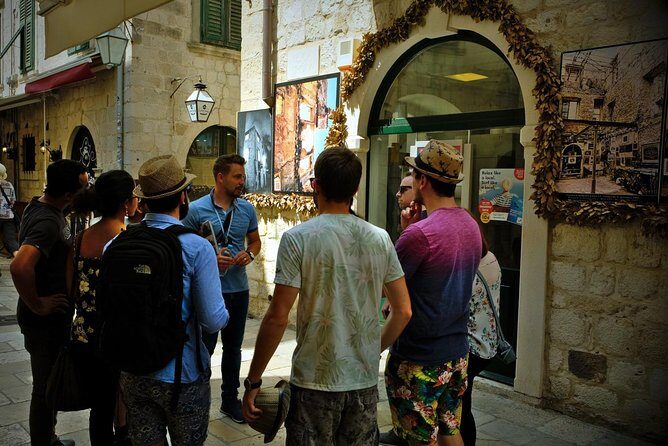
After you pass into and through the old city, you’ll walk through the southern part of the old town with the guide explaining intriguing criminal cases. The tour doesn’t position this as random storytelling. The idea is that you’re moving through a landscape that shaped—or at least reflected—how crime was handled.
Then you’ll pass through the old port. This matters because ports are where cities breathe and where trouble can start. Even without getting lost in specific plotlines, the port-area walk helps you imagine movement, secrecy, arrivals, and exposure. The old city isn’t sealed from the world; it’s tightly connected to it.
A practical note: because this is a walking tour built around stories, you’ll get the most if you keep your attention up during transitions. The payoff comes when the guide ties a corner of the city to the idea of punishment, law, or criminal life.





Executioner’s house, the old synagogue, and the approach to Stradun
As you head toward the main spine of Dubrovnik, you’ll see the executioner’s house and the old sinagogue before reaching Stradun. Then you continue past Stradun to finish at Rector’s Palace.
This segment is one of the tour’s best ideas because it sets up a contrast. Stradun is the main public walkway in the old town, bright and obvious. You get there after walking past places tied to punishment and law, which makes Stradun feel different. It’s no longer only the “pretty street.” It’s the street people had to walk through, under rules and surveillance you’re now understanding.
Also, the executioner’s house detail is exactly the type of thing I enjoy on historical tours: a small named location that turns an idea into a specific place. It helps you stop thinking of punishment as abstract.
If you’re sensitive to darker themes, this is where you’ll feel them most. But it’s also where the tour earns its title—this isn’t sugarcoated history.
Rector’s Palace: courtroom and prison cells in one stop

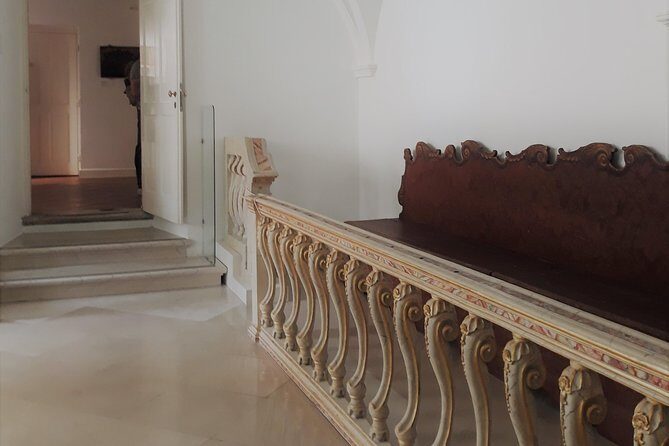
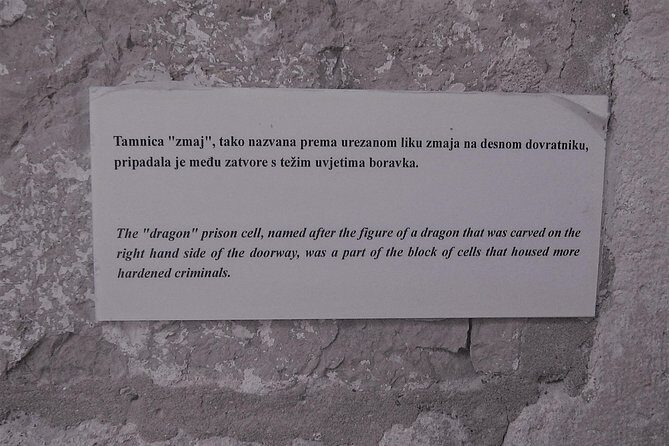
The final stop is Rector’s Palace. Inside, you’ll go through the old courtroom and the prison cells, ending in the atrium. The time listed here is about 15 minutes, and the admission ticket is not included.
This is worth planning for. If you want the full effect of the palace visit, you may need to budget for that extra entry. The tour covers the key areas for the crime-and-punishment theme, but because admission isn’t included, you should treat the palace as your optional add-on beyond the guided core.
Why this ending works: you’re not just learning about punishment. You’re walking through the space built for it. Courtroom → cells → atrium is a clear arc. Even if you didn’t follow every detail, the physical sequence teaches the story.
You can also continue exploring on your own afterward to see the palace’s cultural-historical museum of Dubrovnik. That’s a nice option if you want to extend the visit without needing another guide-led tour.
Evening timing, group size feel, and what moderate walking means

This tour starts at 7:00 pm, which can be a smart choice in Dubrovnik. The light gets softer, and you often get less stress than midday crowds. Still, this is a real walking route on old streets.
It’s described as moderate walking, and the advice is plain: wear comfortable shoes. If you’re used to museum hopping with lots of stairs, you’ll probably be fine. If you prefer flat ground and short distances, be cautious.
The duration is about 1 hour 40 minutes. That’s long enough for a full story arc but short enough that you won’t feel trapped late in the evening. You’ll finish at Rector’s Palace, either inside (if you follow the tour all the way through) or in front of it if you skip stepping inside with the guide for any reason.
Because it’s private-only your group, you can also expect the guide’s pacing to feel less rushed. In one case described in feedback, the booking ended up being just two people, which effectively turns it into a near one-on-one walk.
Price and value: what $144.49 buys you in practice
The price is $144.49 per person for a tour lasting about 1 hour 40 minutes in English, with a mobile ticket provided. For Dubrovnik, this isn’t a “cheap add-on.” It’s priced like a guided experience built around interpretation, not just access to sights.
Here’s the value math that matters:
- Multiple story-linked stops along a logical route through the old city.
- Admission ticket-free for the first two major themed stops (Gradac Park and Onofrio’s Fountain).
- A strong anchor at the end with Rector’s Palace courtroom and prison cells, though that palace admission is not included.
- A format designed for private groups, which often improves the quality of the conversation and pacing.
If you’re the type of person who enjoys learning how a place works—how power and punishment shaped the city—this price starts to make sense. You’re paying for a guided narrative that changes how you look at streets you’d otherwise treat like scenery.
If you only want a quick overview and already feel confident with old-town self-guided history, you might decide it’s more than you need. But for people craving a different angle—one that’s darker, specific, and connected to place—this is the kind of tour that can feel worth it.
Who this Dubrovnik crime tour is best for
I think this works best for:
- History buffs who like more than generals and kings.
- People who enjoy story-driven walking tours with a clear theme.
- Anyone who wants the old town to feel more real, less postcard.
- Visitors who like a tour that includes both punishment and the institutions around it (religion, health, legal spaces).
It’s also a good choice if you’re trying to avoid the same old Dubrovnik route. Instead of only focusing on walls and views, you’re walking the city like a map of power.
One caution: the subject matter is crime and punishment, including public executions. If you want a purely upbeat evening walk, this might not match your mood.
Should you book Crime and Punishment in Old Dubrovnik?
Book it if you want Dubrovnik to feel like a place with rules, consequences, and institutions—not just scenery. The combination of Gradac Park, Franciscan medicine at Onofrio’s Fountain, and the end at Rector’s Palace courtroom and prison cells creates a satisfying storyline you can actually follow by walking.
Skip—or at least reconsider—if you dislike darker history or if you’d rather spend your time inside museums and scenic viewpoints with less walking and less “human consequences” tone.
If your ideal trip includes a guided narrative that helps you see the old town in a new way, this is a strong bet—especially as an evening plan starting at 7:00 pm.
FAQ
How long is the Crime and Punishment in old Dubrovnik tour?
It lasts about 1 hour 40 minutes.
Where does the tour start and end?
It starts at Ulica Dante Alighieri (in the Pile area) and ends at Rector’s Palace on Ul. Pred Dvorom 3. The tour can end inside Rector’s Palace or in front of it if you choose to skip entering.
What is included and what isn’t in terms of tickets?
Stops like Gradac Park and Onofrio’s Large Fountain are listed as ticket free. Rector’s Palace admission is not included.
What language is the tour offered in?
The tour is offered in English.
Is there a lot of walking?
The tour involves a moderate amount of walking, so comfortable shoes are recommended.
Is it a private tour?
Yes. It’s set up as a private tour/activity, meaning only your group participates.